One year ago today: the Sikh response to Grenfell

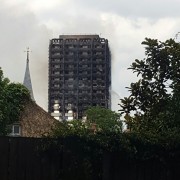
As the nation marks one year since the Grenfell Tower fire, some Sikhs who were among the first to respond recall their experiences that day.

While the nation woke up to pictures of the blaze, local Sikh sevadaars were already on the scene. Nearby resident Satnam Othee was woken in the early hours by the noise of the commotion. He tied his dastaar (Sikh turban) and left his house, buying as many bottles of water as he could from nearby supermarkets to distribute to the survivors and firefighters.

Screen Shot 2018-06-14 at 18.55.29

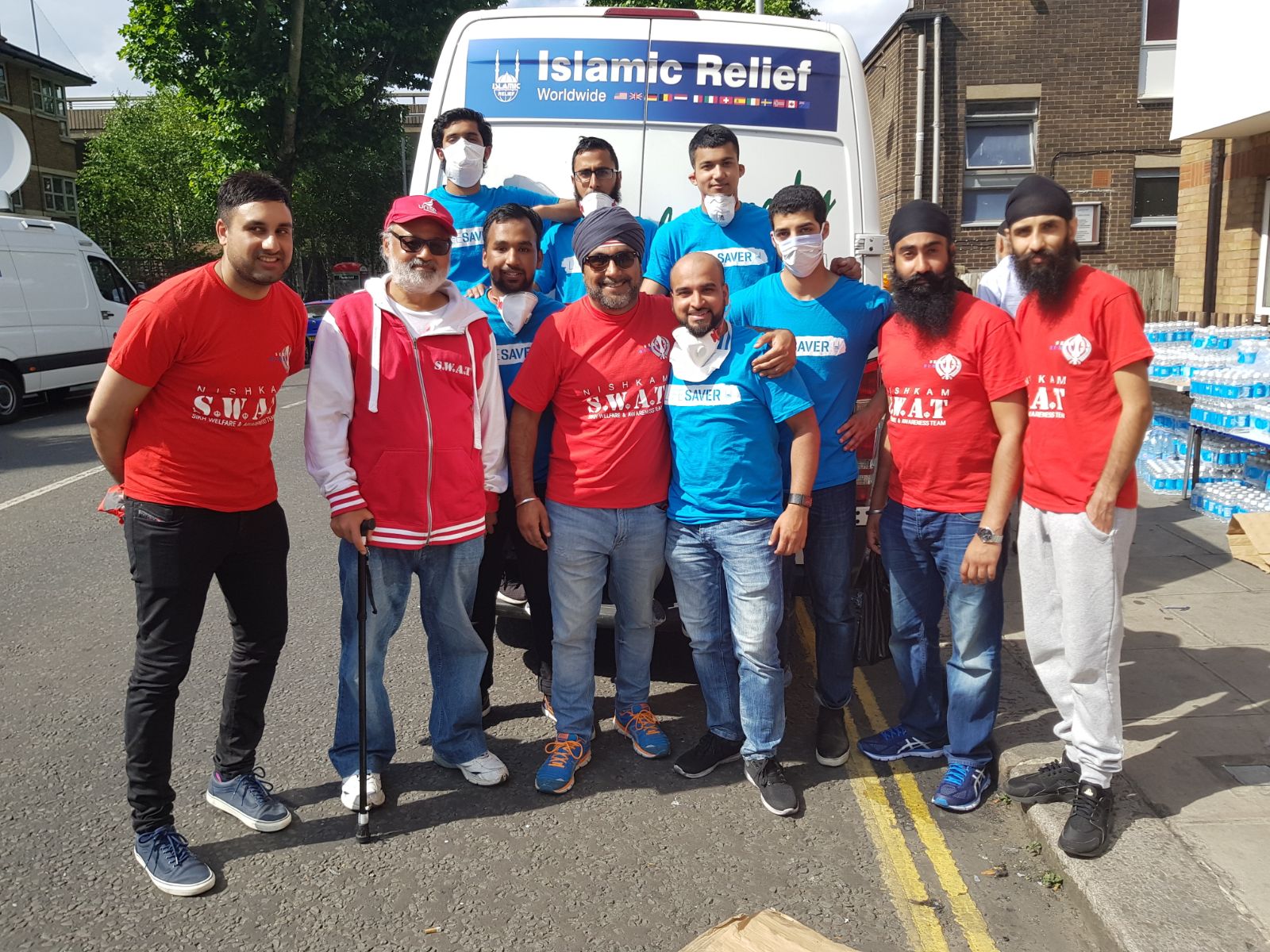
A few hours later he was joined by Khalsa Aid founder and CEO Ravi Singh. Numerous other Sikh charities including SWAT, MLSS, and Basics of Sikhi arrived throughout the morning as the scale of the seva requirement became clear. There was coordination not just between Sikh organisations, but between all organisations – people of different faiths and backgrounds – who had come together to do as much as they could.


Islamic-Relief-and-Sikh-Community

Reflecting on the day, Ravi Singh told Sikh PA:

‘The tragedy of Grenfell touched us all, it was something beyond imagination. The whole country was in shock. The response from the public was simply amazing. It seems we all became part of Grenfell. Out of such a terrible tragedy came hope & humanity, It made me proud to be a Brit!’

While the Central Gurdwara Khalsa Jatha is mere minutes away from the site, at the time of the fire it was undergoing renovation. However, its sevadaars were on the ground, relaying requests to wider sangat via social media. That day a Facebook page was launched to coordinate between different Sikh organisations.

Screen Shot 2018-06-14 at 18.57.37


By the afternoon several donation centres had opened and the Sikh sevadaars present went to each of them to ascertain what was needed.

One of the most pressing needs was for food and water. It is a testament to the fact that langar (the Sikh communal kitchen) can function anywhere, that despite the renovation of the local gurdwara, langar was set up at Grenfell and continued for months afterwards.


Screen Shot 2018-06-14 at 18.47.20

Instrumental in this was Bhupinder Singh, who recounted the process to Sikh PA:

‘The first task was to serve volunteers, survivors and family members with food and water. Then we found out lots of donations were arriving. So we helped managed the task, people and arranged for transport and storage.’

The langar, staffed by sevadaars and provided by Sri Guru Singh Sabha (Southall) as well as other organisations, played a greater role than just the food it served: ‘Our langar stall became a night stop for residents that couldn’t sleep.’

35302115_1765353036877857_7753467862605365248_n

By the end of 14th June 2017, Sikhs and their gurdwaras from across the country had pledged manpower, langar and donations. While so much had been achieved by the community in a single day, this was to be just the beginning of the Sikh contribution to the Grenfell response.


Screen Shot 2018-06-14 at 18.49.53


Judge orders declassification of British government papers relating to Operation Blue Star

British government papers on Indo-British relations from 1983 – 1985 must be declassified, an information tribunal has ruled.

The UK government had persistently resisted the release of the documents, which are thought to relate to the Indian Army attack on Darbar Sahib in 1984.  

Judge Murray Shanks issued the judgement yesterday, saying that the government had to release the papers by July 12th if it did not appeal the decision.

The government’s argument that such a release would damage diplomatic relations with India was dismissed by the First Tier Tribunal (Information Rights). The judgement said: ‘the fact that 30 years has gone by is bound to have reduced any prejudice that may have resulted from release of the withheld material’.  This was with the exception that one file could be retained because it was from the Joint Intelligence Committee (JIC) which oversees the British security services.  

The tribunal held arguments over three days in March in secret under unusually strict conditions. The case was brought forward by investigative journalist Phil Miller, who first uncovered the original evidence of British involvement in Operation Blue Star, and subsequently authored the Sikh Federation UK report Sacrificing Sikhs. Regarding the judgement, Miller said in a statement to the Economic Times: ‘After nearly four years of asking for disclosure of these files, it is a great victory for a judge to rule that more transparency would not harm diplomatic ties or risk national security’.

The Cabinet Office has said it will respond in due course. It has two options: appeal against the decision by July 11th or release the documents to Miller by July 12th.

For more information on Sikh community reaction to this news or to arrange interviews, email Sukh@SikhPA.com.

1984 Sikh Genocide Remembrance Book to open longer as MPs continue to sign

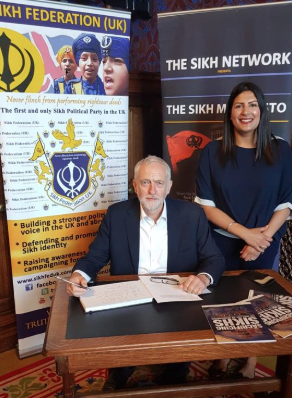
A 1984 Sikh Genocide Remembrance Book in Parliament that MPs have been signing through a week of remembrance will stay open next week, offering more opportunity for parliamentarians to sign it.

The book was opened by Preet Kaur Gill, Chair of the All Party Parliamentary Group for British Sikhs and the first female Sikh MP, to commemorate the Sikhs killed in the 1984 Sikh Genocide, which was triggered by events in Amritsar 34 years ago this week.


Screen Shot 2018-06-08 at 17.29.52

June 1984 saw the Indian army attack Sri Harmandir Sahib, one of the Sikh’s holiest sites, as well as various other places in Punjab, killing thousands of Sikhs. Thousands more Sikhs were then massacred across India in November.

By signing the book, MPs have been expressing their sympathies for the Sikh victims of genocide and, according to Sikh community political lobbying group The Sikh Federation, showing support for Section 9 of the Sikh Manifesto which calls for:

  • UK Government recognition of the events of June and November 1984 as Sikh Genocide and backing for a UN-led inquiry into the atrocities committed by the Indian authorities
  • The UK Government and MPs accept the series of events in June 1984, the killings and disappearances in the months that followed and the systematic and deliberate killing of innocent Sikhs in November 1984, separately and collectively constitute Genocide
  • The UK Government joins other countries to call for a UN-led inquiry into the atrocities committed by the Indian authorities in 1984.
  • The UK Government backs relevant UN rapporteurs and independent experts to carry out independent investigations into the torture, disappearances, false encounters, extra-judicial executions and use by the police of criminals, goons, gangsters and smugglers to impersonate Sikh ‘militants’, widely known as Black Cats.

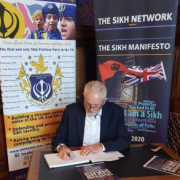
Labour leader Jeremy Corbyn reaffirmed Labour’s commitment to an independent inquiry into UK involvement in the attack on Darbar Sahib. His message in the book said:

‘We remember the thousands of Sikhs murdered and displaced especially by the mass killing in 1984 at the Golden Temple. The Labour Party will honour their memory by instigating an independent investigation into that killing and the allegations of UK involvement. I urge the Prime Minister to launch a new investigation to bring justice to those who have been awaiting answers to their questions for over 30 years.’

Screen Shot 2018-06-08 at 17.28.24

Preet Kaur Gill MP paid tribute to those who signed, saying: ‘Parliamentarians across the House have this week come together to sign the Sikh Genocide Remembrance Book. It was great to have Jeremy Corbyn, who is a strong supporter of human rights, pledge his support to the Sikh community on an independent investigation into the then government role in Operation Bluestar.’

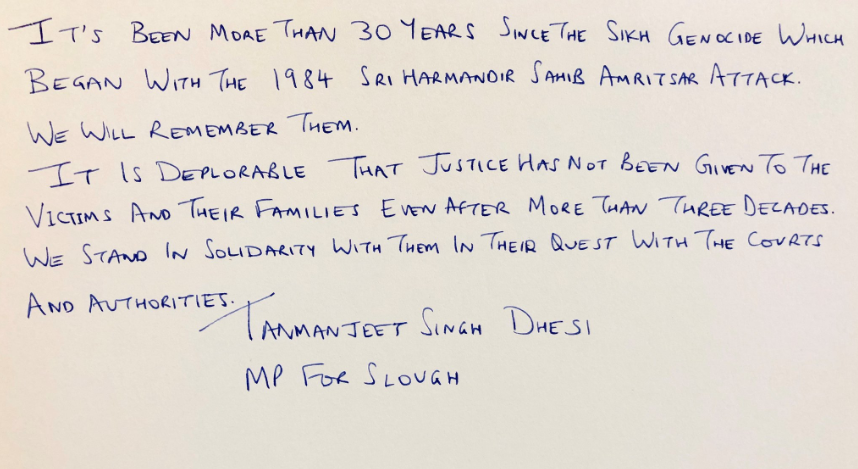
Tanmanjeet Singh Dhesi, MP for Slough and the country’s first turbaned Sikh MP, wrote a message saying that ‘it is deplorable that justice has not been given to the victims and their families even after more than three decades.’

Screen Shot 2018-06-08 at 15.36.36

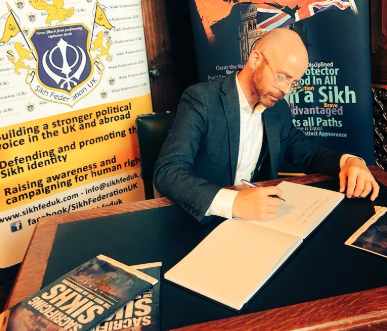
The book was also signed by Martin Docherty Hughes, MP for West Dunbartonshire, whose constituent Jagtar Singh Johal has been held in Indian custody for over 200 days with no sign of due process.

Screen Shot 2018-06-08 at 15.39.03

Other signatories include Deputy Commons Speaker Rosie Winterton, MP for Ealing Southall Virendra Sharma and Feltham and Heston MP Seema Malhotra.

The book is accompanied by copies of Sacrificing Sikhs, the report commissioned by the Sikh Federation into UK government involvement into the 1984 Amritsar massacre based on declassified government files.

Sikhs for Justice to hold ‘London declaration’ for 2020 Punjab independence referendum

Sikh advocacy group Sikhs for Justice have announced that they will hold a ‘London Declaration’ on an independence referendum for the Indian state of Punjab.

On August 12th of this year, a public gathering of Sikh political activists will see Sikhs for Justice put the case for the Sikh right to self-determination in Trafalgar Square.

The group is campaigning for an independence referendum to be held in 2020 in Punjab, underpinned by Article I of the Charter of the United Nations which embodies the principle of self-determination as a basis of UN engagement.

Jatinder Singh, Director of International Policy for Sikhs for Justice, advocates the referendum as a peaceful, democratic solution to the demand for an independent Punjab.

He said: ‘Once we raise the issue of the referendum, it changes the dialogue. For a long time, the Indians have been framing the conversation with terrorism, violence and those types of activities. However, what we’ve said is that we want a democratic solution to this question. It’s clearly not going away.’

He argued that a referendum was in India’s interest, both domestically and internationally, saying: ‘Do the Sikhs wants independence? If you’re content that the majority of the Sikhs don’t want independence, as India propagates all over the world, then they should be in favour of a referendum, because that will come in their favour.

‘In 2018 the Indians are damaging their relationship both with Canada and with the United Kingdom based on the activities of Khalistanis and those people that want independence.’

Of what is frequently described as the world’s largest democracy, he asked: ‘Why are the Indians running away from this democratic process?

‘If they are a peace-loving country they should allow a referendum. If they’re not going to allow it, and use fear, violence and intimidation to try to coerce the Sikh people to stay within the Indian union… well the international community is no longer blind.’

Singh encouraged people to come out and ‘see what happens’ at the declaration on August 12th. He said: ‘We want to put the Indian government on notice, that we are coming. This isn’t an issue that’s going to go away. It’s going to get louder and bigger and violence is not the way to resolve it. A peaceful referendum is the only solution that’s viable for all parties.’

Man arrested for Gurdwara arson attack – updates

Yesterday we shared news of a Gurdwara being attacked by someone attempting to set fire to the Guru Nanak Nishkam Sewak Jatha Gurdwara in Leeds. Here we share two statements today in regards to the arrest.


Official West Yorkshire Police statement

Wednesday, June 6, 2018

Detectives investigating two linked arson attacks on places of worship in Leeds have arrested a man.

The 42-year-old was arrested at an address in Leeds last night on suspicion of arson in relation to the fires started at the front doors of the Jamia Masjid Abu Huraira Mosque, in Hardy Street, Beeston, and the Guru Nanak Nishkam Sewak Jatha Gurdwara, in Lady Pit Lane, in the early hours of yesterday.

He remains in custody at this time and enquiries into the incidents are ongoing.

Detective Inspector Richard Holmes, of Leeds District CID, said: “We are continuing to progress the investigation and the man in custody will be interviewed about the incidents today.

“We are continuing to carry out extensive enquiries, including a detailed trawl of CCTV in the areas surrounding both incidents.

“We are still very keen to hear from anyone who witnessed anything suspicious at either location or who saw any person or vehicles around the time the incidents have occurred between 3am and 4am.

“We are continuing to liaise with our colleagues in the local neighbourhood policing team who are maintaining an increased presence in the area and having regular contact with key representatives from the communities affected to keep them updated and to reassure the wider community.”

Anyone with information is asked to contact Leeds District CID via 101 quoting crime reference 1318270739 or call the independent charity Crimestoppers anonymously on 0800 555 111.

Shared via https://www.westyorkshire.police.uk/news-appeals/man-arrested-over-arson-attacks-beeston-leeds


Community group Sikh Youth UK also spoke on the arrest and indicated grassroots investigations by members of the Sikh community helped flush out the culprit.

See their own statement here.

Sikh PA will provide further updates as soon as possible.

Statements on Gurdwara arson attack

Following an arson attack on a Gurdwara in Leeds, UK, this morning, Sikh PA have been in contact with both media and Sikh community figures to provide clear and accurate information about what happened and what the response has been. Here we share a statement directly from the Gurdwara involved and also the West Yorkshire Police on the incident.


ਹਿਗੁਰੂ ਜੀ ਕਾ ਖਾਲਸਾ,

ਵਾਹਿਗੁਰੂ ਜੀ ਕੀ ਫਤਹਿ।।


PRESS RELEASE 


An incident took place at Guru Nanak Nishkam Sewak Jatha (GNNSJ) Gurdwara, Lady Pit Lane, Beeston, Leeds around 4am this morning when someone attempted to set the Gurdwara on fire. The smoke from the front door triggered the alarm and the situation was contained. A nearby mosque was also targeted around the same time.


INVESTIGATION

We have attended a police emergency meeting today at 1:00 pm and have been assured by the Chief of Police that they are doing all they can to catch the criminals and will add extra police patrols in the area. They are working through the CCTV footage from around the mosque.


POLICE REASSURANCE

Focusing on south Leeds and the wider city, especially around all Gurdwaras and mosques, there will be more police presence strengthened by Leeds City Council community watch via CCTV.

If anyone in Leeds experiences any sort of hate crime incident they can report this to the Gurdwara Hate Crime Reporting Centre in partnership with the Police.

Fire prevention officers can be invited to visit all Gurdwaras to help make sure we have adequate provisions in place.

It is damaging for children to see their Gurdwara or mosque threatened like this. The police are happy to come to talk to children if the community feels this will not deter youngsters coming to the Gurdwara on their own.


TOMMY ROBINSON

Though this incident is days after Tommy Robinson’s court trial in Leeds, there is no evidence connecting this hate crime event with Tommy Robinson.


WHAT CAN WE DO?

Dalbir Singh Sagoo, coordinator of GNNSJ Sikh community Hate Crime forum based in Guru said: “Everyone must be more vigilant and must report any suspicious activity to the Hate Crime Reporting Centre in the Gurdwara or directly to the Police . We thank Waheguru for saving us all today as the Gurdwara is preparing the 35th barsi of Sikh Saint Sant Baba Puran Singh Ji Kericho-wale who initiated the GNNSJ organisation.”

Regards

Dalbir Singh Sagoo on behalf of Jathedar Pritpal Singh Dhanjal


West Yorkshire Police statement – Stronger communities team

Police are appealing for information following two arson attacks on places of worship in Leeds early today.

At 3.42am this morning (5/6) police were contacted by the fire service who were attending the Jamia Masjid Abu Huraira Mosque, in Hardy Street, Beeston, where the main door had been deliberately set on fire.

Firefighters had extinguished the fire before it had chance to spread, and damage was confined to the door and surrounding brickwork. It is believed flammable liquid had been used to start the fire.

At 4.19am, police were contacted by staff at the nearby Guru Nanak Nishkam Sewak Jatha Gurdwara, in Lady Pit Lane, reporting someone had set fire to the front door around 30 to 40 minutes earlier.

The fire had triggered the smoke alarm and been put out quickly causing damage to part of the door and a pillar.

Detective Inspector Richard Holmes, of Leeds District CID, said: “We are treating both these incidents as linked given the closeness of the locations and the similar times that they have occurred.

“While our investigation is still at a relatively early stage, we do believe these premises have been specifically targeted as places of worship and we are treating both incidents as arsons and hate crimes.

“We are currently carrying out extensive enquiries, including checks on CCTV in both areas, and we would like to hear from anyone who has witnessed any suspicious activity or seen any person or vehicles in the areas around the time these incidents have occurred.

“We would also like to hear from anyone who has any other information that could assist the investigation.

“Clearly we will always treat incidents of this nature very seriously and will be doing everything we can to identify those responsible and bring them to justice.”

Inspector Ian O’Brien, who heads neighbourhood policing for south Leeds, said: “These incidents will cause an understandable level of concern in both the Muslim and Sikh communities in this area and we are working closely with key representatives from those communities to reassure them.

“Although it appears both locations have been specifically targeted as places of worship for these communities, there is nothing at this stage to suggest they are part of any wider pattern.

“We have increased our patrols of the area to provide visible reassurance to people living there and will continue to keep key community representatives informed as the investigation develops.

“Hate crimes that target particular communities and have the potential to cause divisions and tensions cannot and will not be tolerated and we will continue to do everything we can to find those responsible and support and reassure the communities affected.”

James Elliott
PC 6669
Stronger Communities Team
07525 407882
James.elliott@westyorkshire.pnn.police.uk
Twitter: WYP-SaferBD

Sikhs in Shillong – What’s the story?

Sikhs across the world were both shocked and concerned following news this weekend of a mob attacking Sikh families and attempting to set a Gurdwara alight in the city of Shillong, in the Northeastern Indian state of Meghalaya. 

With lots of misinformation and a lack of insight into where the issue stemmed from, Sikh PA were able to speak with a contact from India who helpfully explained the situation and the status of Sikhs in the region, whilst also providing facts based on reports, including from humanitarian charity United Sikhs who are on the ground in Shillong.


Facts on the situation via United Sikhs
  • A mob of 200-300 gathered on the evening of 31 May which led to the trouble
  • Guru Nanak Darbar Gurdwara was attacked
  • Local authorities have disabled phone-lines and internet access (believed to be done to prevent rumour spreading which has led to rampaging mobs)
  • A curfew was imposed by police on 1 June to prevent mobs from gathering

United Sikhs can be followed on Facebook or Twitter for updates.


Indian journalist  shared the following with us;

There are two versions about the incident that set off the violence. Some members of the Sikh community in Punjabi Line said that after a Sikh woman was harassed by Khasi men, she and four other women living in the settlement beat them up. The Khasis say that after the argument about parking, they were assaulted by men from the Punjabi Line colony.

The Meghalaya police have arrested one man from Punjabi Line in connection with the assault.

Despite the competing claims, the feuding parties reached a formal compromise at the local Cantonment Board police station on Thursday afternoon. The agreement, written by the bus driver in Khasi, stated that he had no hard feelings towards the Sikh woman and man accused in Thursday’s altercation. “I feel no anger or bitterness,” the statement reads. “And they have given us money [Rs 4,000] for medicines for the conductor and the two passengers.”

But on Thursday night, fake news soon spread on Whatsapp that a group of Punjabi people from the colony had decapitated two Khasi boys. A mob soon gathered near the colony, intent on violence. The mob clashed with personnel of the Central Reserve Police Force and state police, resulting in injuries on both sides. Superintendent of Police (City) Stephan Rynjah was injured after he was hit by a rod. The police had to fire tear gas shells to disperse the crowd.

Curfew was imposed in several parts of Shillong early on Friday morning. In other places, restrictions on the assembly of more than four people were also put in place. Internet and text messaging services were also shut down across the city to prevent rumours from spreading. The Army was put on standby. On Friday night, the Army carried out a flag march in areas where curfew had been imposed. The Army also fed and housed more than 300 civilians from the “disturbed areas” in the cantonment, according to a release from the Press Information Bureau.

Read here full report here.


Via Nishant Upadhyay and Shuranjeet Singh.

How long have the Sikhs lived in the area and what are the group’s characteristics in the state?

 
The Sikhs in the northeast of India begun migration to the area in the 1960s, largely from Bihar. The community exists in major urban centres of Shillong, Kohima, and Aizawl exclusively, including a large community in Guwahati.
The history of violence against Sikhs comes in two forms: First, there are Sikhs from Scheduled Tribe (a term used for Indians of a perceived lower status) and Other Backward Caste (a term used in India for the collective of Indians perceived to be of lower castes) backgrounds in Bihar which are not recognised by political actors. This pushed them into disprivileged positions as minorities within minorities. Secondly, the Sikhs are not understood as separate from mainland Indians. The nature of the conflict is not religious, but rather geographical and land-based. This leads to political actors categorising Sikhs as the ‘Other’ without taking into account the political dynamics of the Sikh community in mainland India, where they exist as a minority throughout with a complete history of violence against them.
Simply, Sikhs are seen as and are equated to mainland Indians, thus, seen as a threat to local culture and ethnic dynamics. For a conservative political actor, there will be no difference in mainland Hindu and a Sikh as both are seen as outsiders.

What is the current political situation in the North-Eastern States?

The current political situation is a mixture between hope and paranoia. On one hand, there has been a push for economic integration of the region with the mainland which, in crude neoliberal terms, is equated with development. On the other hand, there is a shift in the discussions around social change, which, after a long period of conflict, has changed into one that is fearful of the future. Previously, the region was embroiled in constant conflict between militant groups and Indian military. Now, people have realised that certain demands were not met or diverted.
The political climate is one of confusion; the much awaited development has forced ethnic groups to drop demands in hope of larger connectivity. This has the result of an influx of labour from mainland India which might threaten the cultural and social independence of indigenous, ethnic tribes, who fought for many years to win them.
This has led to an increased push against the internal ‘Other’, aka migrants from India. Some migrants communities have lived there for two generations but are now facing more stiff opposition.
A subsequent identity crisis has ensued with there being confusion between integration and assimilation. The Christian majority population define their ‘cultural distinction’ from the mainland Indians on the grounds of their distinct religion. They are fearful of what they see as domination by the ‘Hindi belt’ – central Indian states.
The area wants to preserve its cultural identity, pursue economic development and growth after years of conflict. The latter has proven to be in conceptual opposition to the former, manifesting in the form of sporadic, targeted and low-intensity political violence.

Sikhs demand apology from Mayor and Commissioner for putting lives of thousands of Sikh protesters at risk

On June 3rd, participants of the annual Sikh remembrance march, held in memory of those lost in the events which led to the 1984 Sikh Genocide, were left ‘angry about the no show from traffic police’ to escort the thousands of marchers through London’s traffic.

Here we share an official statement from the Sikh Federation UK on this incident and details of their campaign to encourage Sikhs to address the ‘negligence’ of London’s authorities in not providing an escort for the march by sending a letter (a template for which can be found below) to their local MP.


London – 4 June 2016

The Sikh Federation (UK) has written to Sadiq Khan, the Mayor of London and Cressida Dick, the Metropolitan Police Commissioner demanding an apology for police negligence and incompetence by putting the lives of thousands of peaceful Sikh protesters at risk yesterday in central London.

Every year since June 1984 thousands of Sikhs, young and old from across the UK have gathered in central London to protest against the 1984 Sikh Genocide, remember the thousands killed by the Indian authorities for which there has been no justice and demand a separate Sikh homeland, Khalistan.

For the first time in 35 years the Metropolitan Police failed to turn up to stop traffic to allow the protest march between Hyde Park and Trafalgar Square.  Although the organisers believe this is down to police negligence and incompetence and are demanding an apology there is speculation the police may have backed away from supporting the protest due to pressure from the Indian authorities.

In a recent incident in Parliament Square the police have been heavily criticised by the Indian authorities for watching the official Indian flag for the Commonwealth Heads of Government Meeting (CHOGM) being torn down and ripped to pieces by protesters in Parliament Square.  Some in India have also suggested action against the UK Government in international courts.

Sikhs are angry about the no show from traffic police yesterday and said it is unacceptable that the Sikh community is being left without police support and penalised for being well behaved and law abiding.

Bhai Amrik Singh, the Chair of the Sikh Federation (UK) said:

“What sort of message are the police trying to send?  We only police events if you are going to cause problems or break the law?”

“It appears we are being punished as we are guilty of being a law-abiding community that keeps its own house in order.”

“Anything is possible given the revelations in UK government papers last year that in June 1984 the Home Office were under intense pressure from the Indian authorities to arrest and intern Sikh leaders (the Presidents of all UK Gurdwaras) to disrupt the very first protest in London to highlight the 1984 Sikh Genocide.” 

“When the police refused to arrest UK Sikh leaders in June 1984 the suggestion was made by an Indian Minister to the British High Commissioner in Delhi that Sikh protesters should be shot dead in London.”

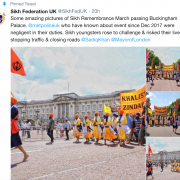
There was significant disruption to the protest march yesterday before our own stewards and Sikh youth took matters into their own hands and risked themselves by putting their bodies between the ongoing traffic and the protest march to close roads themselves. Protesters were unnecessarily put at risk, especially families with young children and the elderly.  The Sikh Federation (UK) expect over 100 MPs to receive letters in the next 48 hours from constituents upset and dismayed with the lack of police presence urging them to contact the Mayor and Commissioner.

What was very strange was police were worried about a potential flash point at Speakers Corner as they expected there to be a large group to support Tommy Robinson and counter demonstrators, but traffic police failed to turn up forcing Sikh protesters to flood Speakers Corner.  Police were also there at the start of the protest in a CCTV van monitoring Sikhs suggesting a more sinister role.

An urgent meeting has also been requested by the Sikh Federation (UK) with the Mayor and Commissioner to discuss what took place and to prevent anything like this from reoccurring.

ENDS

Gurjeet Singh
National Press Secretary
Sikh Federation (UK)


Chronology of events – Sunday 3 June 2018

Yesterday soon after we arrived in Hyde Park just before 10am we realised a large crane was blocking the planned route of the protest march and Piccadilly was closed.  This would have been known to TfL, MPS and Westminster City Council in advance, but they were negligent in informing us or making alternative arrangements for the protest march.

We franticly spoke to Met Police officers based in Hyde Park and two sets of other Met Police officers that were in Hyde Park to explain the need to find an alternative route for the protest march and for police to assist our stewards with stopping traffic.  In all cases the officers concerned were helpful in trying to assist, but also embarrassed with the total lack of police support. Incidentally one set of Met Police officers were in a CCTV van that informed us they were specifically there to monitor those at our protest march, which suggested police involvement for purposes other than assisting.

Police officers told us that a potential flash point was at Speakers Corner as they expected there to be a large group to support Tommy Robinson and counter demonstrators.  However, to our complete dismay as the protest march left Hyde Park and entered North Carriage Drive the police had not turned up to manage traffic ‘congestion’ as indicated and protesters were forced back into Hyde Park near Speakers Corner.

In our view this was negligent and putting at risk young children and the elderly in a volatile situation.  At this point the matter was escalated and police realised they had a volatile and dangerous situation that needed police intervention.

We stopped the protest march near Speakers Corner for about 10-15 minutes, but as police who were being rushed to assist failed to turn up we took matters into our own hands.  Our stewards and Sikh youth stopped traffic on Park Lane, Cumberland Gate and Bayswater Road to get the front of the protest march to the other side of Park Lane.  However, many protesters towards the back were left stranded and forced in large numbers to cross roads and walk on the area between the carriages on Park Lane that are north and south bound.  Eventually we managed to get all protesters together on Park Lane.

Traffic officers eventually turned up more than half way through the protest march at Hyde Park Corner near Piccadilly to guide us towards Constitution Hill. Due to the closure of Piccadilly the alternative route we took was Constitutional Hill and The Mall as this is closed to traffic on Sundays.  However, this was the route we had suggested four hours earlier and had to force upon the police as no one competent was able to make the decision.


SFUK Campaign and letter template

Urgent letter to send your constituency MP. We would like 100 MPs+ contacted in the next 24 hours. Confirm the name of your MP when contacted.

For questions or requests please email sikhfederationuk@yahoo.co.uk.


Dear *Insert MPs Name*

Lives of thousands of Sikh protesters, including some of your constituents, put at risk by Metropolitan Police on Sunday 3 June 2018

Can you please write to the Mayor of London and the Metropolitan Police Commissioner to raise concerns about police negligence and incompetence. A public apology is in order to the British Sikh community.

You will be aware that every year thousands of Sikhs gather in central London to mark the 1984 Sikh Genocide. This was the first time in 35 years the Metropolitan Police failed to turn up and manage traffic to allow Sikhs to walk from Hyde Park to Trafalgar Square, although they were there to gather intelligence and film the protest.

Many present on Sunday 3 June could not understand why Sikhs who are law-abiding were being penalised and put at risk on the streets of London and forced into Speakers Corner with supporters of Tommy Robinson and counter demonstrators.

As traffic police failed to arrive our own stewards and Sikh youth were forced to take matters into their own hands and risked themselves by putting their bodies between the ongoing traffic and the protest march to close roads. It was only due the bravery of our stewards and youth and with God’s grace there were no casualties or fatalities. The police must support this event each year and this should not be allowed to happen again.

I attach the letter the Sikh Federation (UK) has sent to the Mayor and Commissioner that provides all relevant background information.

*Insert your name and full address with postcode*


Mayor of London 
City Hall 
The Queen’s Walk 
London 
SE1 2AA

Metropolitan Police Commissioner
New Scotland Yard
London
SW1A 2JL

 4 June 2018

Dear Sadiq/Cressida

Metropolitan Police negligence and incompetence putting lives of peaceful Sikh protesters from across the UK at risk – Apology and urgent meeting

Every year since June 1984 thousands of Sikhs, young and old from across the UK have gathered in central London to protest against the 1984 Sikh Genocide, remember the thousands killed by the Indian authorities for which there has been no justice and demand our freedom.

It is ironic that it appears the problem is Sikhs are law abiding therefore police involvement in recent years has been minimum.  The Metropolitan Police Service (MPS) has concluded the risk of public disorder at this annual event is very low and therefore police involvement has been confined to assistance with helping close roads to traffic to allow for a safe protest march between Hyde Park and Trafalgar Square and minimum disruption to road users.  

The Federation of Sikh Organisations UK that organise the annual protest and remembrance march and rally leave many of the practical and logistical arrangements for the event to representatives of the Sikh Federation (UK). 

We usually begin correspondence with all interested parties around six months before the annual event and are always willing to make adjustments, even a the 11th hour recognising events can take place that result in other pressures on police time.  For example last year with the London Bridge incident les than 24 hours before our event we responded by cancelling the gathering in Hyde Park and the protest march by holding a static event in Trafalgar Square only. 

Those we write to include:

  • the Greater London Authority (GLA) on the use of Trafalgar Square where a massive rally is held to conclude the event;
  • Royal Parks Agency (RPA) on the use of Hyde Park as the gathering point for the protest march;
  • Transport for London (TfL) on the closure of roads and to minimise the impact on public transport and road users;
  • the Metropolitan Police Service (MPS) on the planned route for the protest march, drop off and pick up points for around 150 coaches and issues relating to safety and security; and
  • Westminster City Council as the other main interested party given the location of the protest and rally.     For the event that took place yesterday on Sunday 3 June 2018 we wrote to all concerned in December 2017.  We obtained all necessary permissions and licences from the GLA on the use of Trafalgar Square and RPA on the use of Hyde Park.  Six days before the event we met representatives of the RPA and TfL. However, all were disappointed with the absence of the MPS that had in previous years co-ordinated and hosted meetings. 

    We specifically then wrote to the MPS and Westminster City Council last Thursday to express our disappointment with the complete lack of engagement since December 2017 and the need for police assistance with road closures for the protest march to ensure it was peaceful and orderly. 

    The MPS wrote back the same day to state their ‘intelligence’ suggested there would be no public order issues and they would not be ‘policing the event’ under the ‘core policing responsibilities’ of ‘maintaining the peace or crime and disorder’. However, the MPS continued that its Roads and Transport Policing Command were aware that the TfL had obtained a Traffic Management Order from Westminster City Council.   

    On Friday morning the MPS telephoned at 11am to tell us TfL had requested police assistance to deal with traffic ‘congestion’ as a result of the large protest march. However at 5pm on Friday the same police officer called again and had the cheek and incompetence to suggest a static event at the 11th hour that we rightly dismissed.

    In the attached annex we set out what took place yesterday that indicates gross negligence on the part of the MPS and others, some of which you have ultimate responsibility that put the lives of Sikh protesters at risk.  It was only due to the speed or reaction of our stewards and Sikh youth that no one was seriously injured or killed.  There were several potential flash points and also incidences of road rage partly due to the complete absence of traffic police until we reached the end of Park Lane.

    It is unacceptable the Sikh community is being left without police support and penalised for being well behaved, law abiding and too accommodating. There was significant disruption and delay at the start of the protest march with protesters put at risk, especially families with young children and the elderly.  We will later today be asking those present who were upset and dismayed with the lack of police presence to write to their MPs and ask MPs to write to you both.

    The Sikh community deserve an immediate public apology from the Metropolitan Police Service at the highest level and would like an urgent meeting with you both to prevent anything like this from reoccurring.    

    This letter is being copied to Sophie Linden, London’s Deputy Mayor for Policing and Crime.


Yours sincerely

Bhai Amrik Singh

Chair of the Sikh Federation (UK)



Khalsa Aid CEO Ravi Singh refuses ‘Indian of the Year’ Award nomination

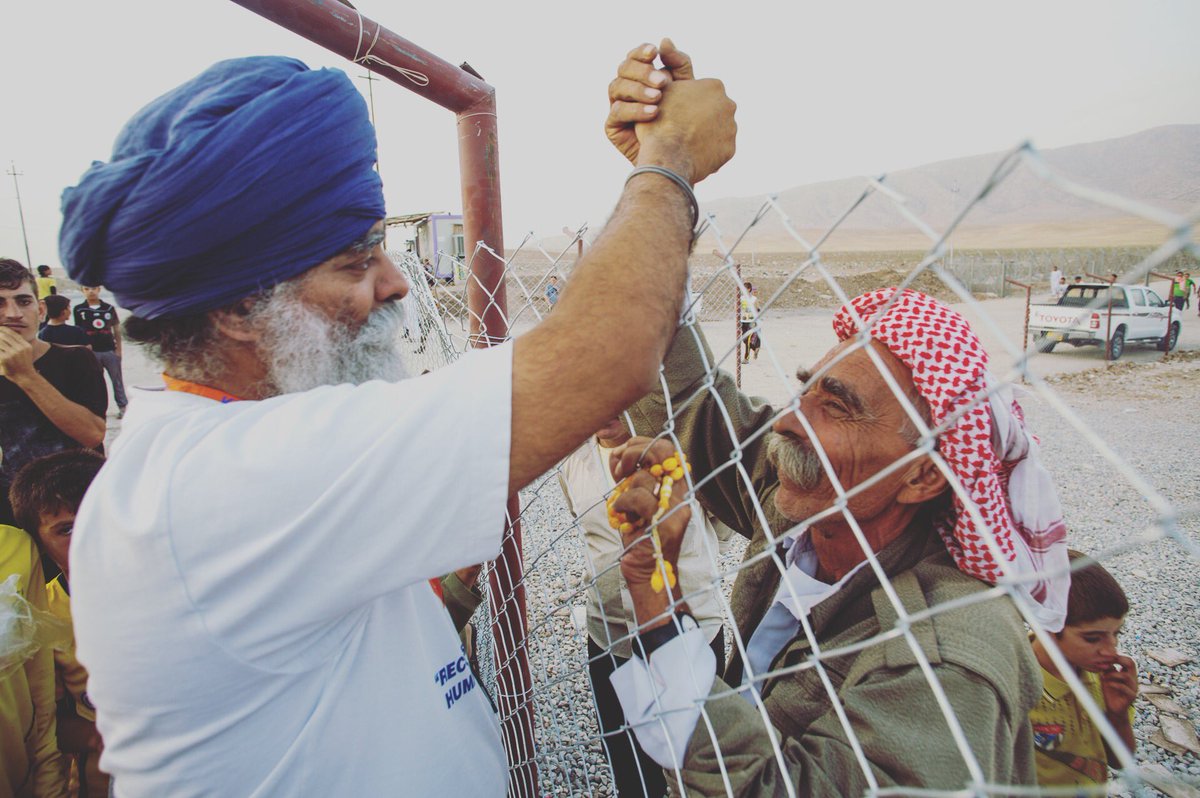
Internationally renowned humanitarian Ravi Singh respectfully declined an Indian award nomination this week, saying: ‘I don’t identify myself as Indian.’

Singh announced his declining of the award on his personal facebook profile on 22 May, having been nominated for the prize of ‘Indian of the Year’ from an undisclosed organisation. The move saw him receive hundreds of messages of support for taking the principled stance based on his own identity.

Singh founded Sikh ethos humanitarian charity Khalsa Aid in 1999. Since then it has grown to provide aid and disaster relief worldwide, becoming one of the most famous Sikh organisations across the planet. Throughout that time, Singh has consistently campaigned for justice for all the Sikhs who were killed, tortured, and suffered at the hands of the Indian authorities, especially in 1984 during the Sikh genocide.

In recognising this oppression and injustice by the Indian state, Singh identifies as Sikh and Punjabi, but not Indian.
His social media timelines are frequently punctuated with reminders about the Sikh Genocide in 1984 and the fact that many of its perpetrators roam free to this day.

CEO of Khalsa Aid, Ravi Singh is a respected humanitarian.

On his public Facebook page, he wrote:

Let me REPEAT! Why I am Panjabi foremost.

I will happily call myself INDIAN if the following 3 conditions are met by the Indian government. These aren’t very big conditions and in fact can be easily implemented. But sadly I know this won’t happen.

1) Jail Sajjan Kumar, Tytler & Kamal Naath for their role in Genocide of the Sikhs.
2) Set up an independent enquiry into the Indian army atrocities during Operation Blue
Star and the extra judicial killings/disappearances of the Sikh youth In Panjab from 1982-
1994. Including putting on trial the police officers who carried out the mass killings.
3) Recognise Sikhi as a separate faith.

I will change my name on my Facebook as Ravi Singh Indian if these conditions are met! I don’t hate any country, people or faith but I cannot turn my back to injustices! It hurts me deep that the Sikhs have been reduced to a level in India that even seeking justice is denied to them.

It’s disappointing to see that even the educated new generation in India following such dirty politics! Until there is justice for minorities in India voices like mine will continue to grow.

Singh has spoken about how the brutal actions of the police in Punjab led to his reawakening and the founding of Khalsa Aid. In 2016 he told a BBC documentary:

‘In the mid 90s I discovered my childhood friend in the village, Channi, was brutally tortured by the police in India in 1989 and killed through torture because he was a practicing Sikh. And I was clean shaven, living it up outside in London, didn’t care about my faith or anyone. That really hit me so hard, saying “What the hell am I doing? Look at me! My best friend’s been killed by the police so far away!” I hadn’t spoken to him. There were so many things I wanted to say to him then. Everything came flashing back, that it’s all gone. So the next day I wore a turban. And I’ve never taken it off since […] His killing didn’t make me into a hateful person or a vengeful person. It made me more into a humanitarian – that hate achieves nothing.’

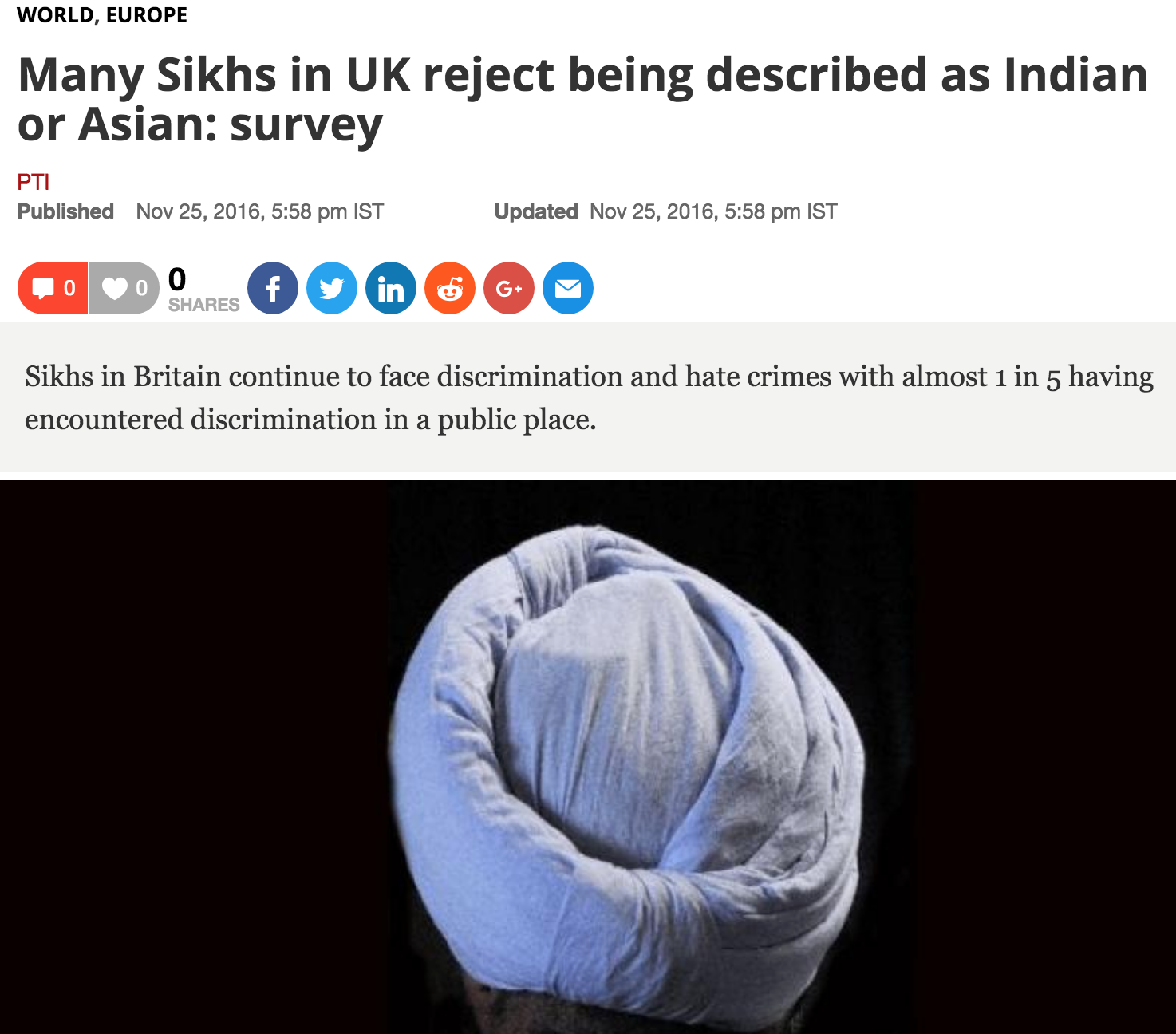
Singh reflects the sentiments of many Sikhs in not identifying as Indian over the continued oppression and denial of justice to Sikhs by the Indian authorities. This has also been verified by a Sikh Network survey from 2016 that approximately 4500 Sikhs took part in, which showed 19/20 Sikhs rejected the label of Indian.

Screen Shot 2018-05-24 at 17.00.25

As one of the world’s most famous and widely respected Sikhs alive today, Ravi Singh’s resolve has been applauded by many on social media as inspiring others.

Moreover, he is often praised for taking care to ensure that his remarks are not misappropriated as being anti-Hindu. As he says himself: ‘Don’t hate a faith or people because of corrupt regimes!! People are people all over the world!’.

Why for Sikhs, every wedding is a royal wedding

Here we share an article by Basics of Sikhi parcharak Sukhdeep Singh, looking at today’s royal wedding between Prince Harry and Meghan Markle and how it relates to the Sikh Anand Karaj.


This weekend, the eyes of the world will be on Windsor for the royal wedding. There is no doubt that it will be a spectacle of pomp, pageantry, and glamour. But as a royal wedding, the religious dimension of it carries great importance both to the Royal family and the Church of England.

This is because the Monarch is the Supreme Governor of the Church of England. They are the titular head of the Church, which itself was established by a British monarch. That is why religious protocol is strict within the Royal family. The Monarch’s family cannot (be seen to) compromise the Church they are the titular head of. The Sikh wedding ceremony – the Anand Karaj – is held in the darbaar (the court) of the Sikh scriptural Guru, Guru Granth Sahib Ji. The Guru is not just royalty in the way we think of worldly rulers. Instead, the Guru is divine. The very essence of Guru is their divinity – the fact that they are the complete and perfect light of the One.

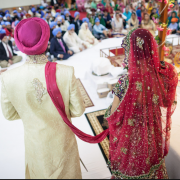
The Anand Karaj is more than just the marriage between the bride and groom. It is the couple’s collective union with The One via the Guru. It is their embrace of not just the Guru’s teachings but the Guru as SatGur Gur Poora – the perfectly/completely True Guru (fourth line of the first verse of the Laavan – the Sikh marriage hymns).

Hence, the Anand Karaj is only for the marriage of two Sikhs. A Sikh is defined by the Rehat Maryada, which binds all Sikhs and Sikh institutions by a common code of conduct, as somebody who faithfully believes in:
i) One Immortal Being
ii) The ten Gurus, from Guru Nanak to Dev Ji to Guru Gobind Singh Ji
iii) The Guru Granth Sahib
iv) The utterances and teachings of the ten Gurus
v) The baptism bequeathed by Guru Gobind Singh Ji (the Amrit Sanchar ceremony)
And who does not owe allegiance to any other religion.

Even a prima facie reading of the Laavan is enough to understand that somebody cannot accept and partake in it unless they are a Sikh. In any case, the Rehat Maryada states that the Anand Karaj ceremony can only be conducted between two Sikhs.

Despite this obvious and intuitive condition, there has been outrage at people protesting such abuses of the ceremony when they do occur. Gurdwaras breaking Sikh protocol, going against the declaration of the highest Sikh seat of authority – the Akal Takht – by commodifying the ceremony and allowing anyone to take part, led to such protests.

Screen Shot 2018-05-19 at 00.59.56

An article on the anand karaj protests.

The media treatment of this stance has been harsh to say the least. Those wishing to uphold the sanctity of the Anand Karaj ceremony (simply by requiring that you believe in the ceremony you are partaking in) have been branded fundamentalists and extremists.

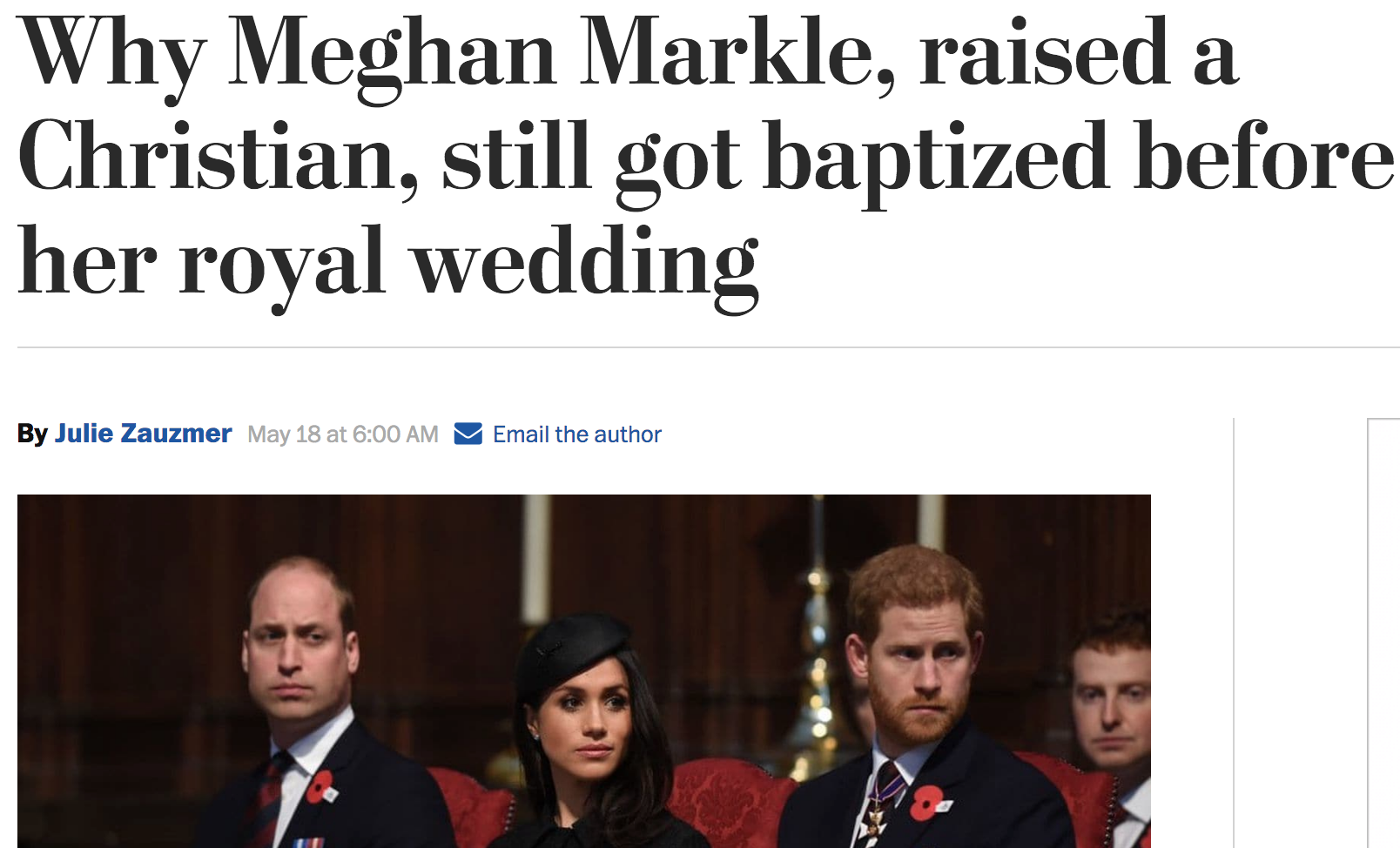
Once the royal wedding was announced, Meghan Markle was baptised and confirmed into the Church of England out of respect to both the Church and the Queen. This is no different from what the Anand Karaj demands, a commitment to the Sikh Sovereign: The Guru. For today’s wedding, Markle’s formal acceptance of the Church was considered inevitable and logical. When Sikhs demand a similar commitment for their marriage ceremony they face calls of religious bigotry and accusations of fundamentalism.

Screen Shot 2018-05-19 at 01.05.23

How many people know that the current Duchess of Cambridge, having been christened as a child, was then confirmed before she married the future king? Royal history is of full of examples where adherence to the faith, when it comes to marriage, is non-negotiable. As any viewer of The Crown on Netflix knows, The Queen’s own sister was denied the love of her life because at the time the Church did not permit the remarriage of divorcees.

And even when that specific ruling was relaxed, it was still not enough for the heir to the throne to remarry in a church. If anything is astonishing, it is the fact that the future Monarch did not marry in the church that he will one day be the Supreme Governor of.

Instead, in 2005, he and Camilla had a civil wedding followed by a Church of England Service of Prayer and Dedication, which, by the way, included an act of penitence as a nod to the fact that their relationship began as adultery. Edward VIII abdicated altogether to avoid breaking the rules of his Church.

The Anand Karaj has been gifted to Sikhs by the Guru, for those who truly believe in and accept the Guru. The royalty and divinity of the Guru is encapsulated in their description as Sache Patshaah (True Sovereign King). Nothing – including the participants – should undermine that fact during the Anand Karaj in the Guru’s own darbaar. Otherwise it is a
sham ceremony. The defence of this is treated more harshly by both general society and the media than the practices of the Royal family. Nevertheless, the sentiment is the same.

If royal weddings tell us anything, it’s that not even their (worldly) status excuses them from undermining the Church of England. In fact, it is the royal status which confers the responsibility of upholding the teachings of the Church; a subsidiary title of the Monarch is ‘Defender of the Faith’. The divinity of the Guru confers a similar obligation on their Sikhs
and especially when it comes to activities within the Guru’s darbaar including the Anand Karaj. That is how for Sikhs, every wedding is a royal wedding.

Learn more about Sikh educational organisation Basics of Sikhi here.