
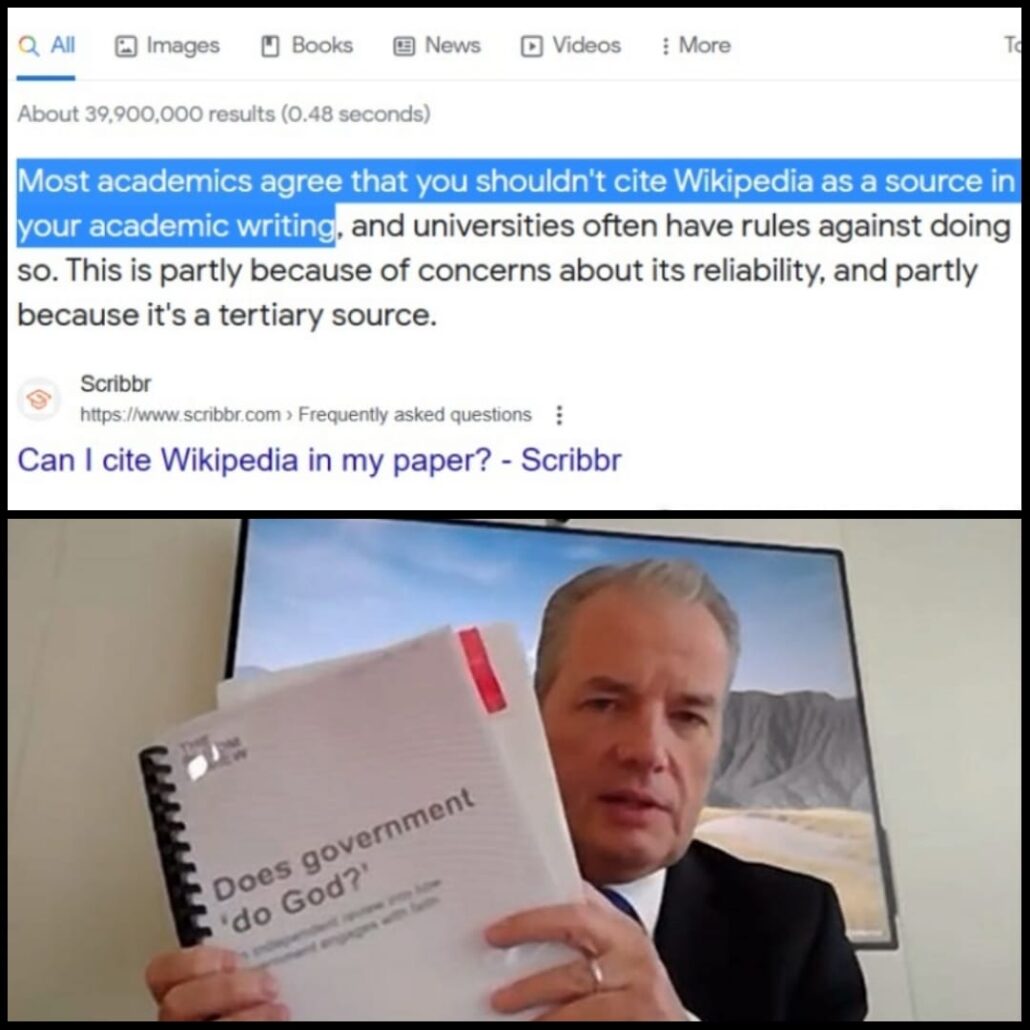
“Citing Wikipedia- LOL!”: Sikhs react to UK Govt “Sikh extremism” report
This week the UK government Department for Levelling Up released their long awaited report on religion, which has been described as one of the most comprehensive reviews on faith ever by the UK government. The review was written by Colin Bloom, former head of Conservative Party faith alliance group the Conservative Christian Fellowship and current government faith advisor. His review included approximately 11 pages dedicated to the topic of “Sikh extremism” which are based on “the power struggle over who will represent them (Sikhs) at official levels” and “extremist fringe ideology within the pro-Khalistan (free Sikh homeland) movement”. The only other group to be tagged with the “extremism” label in the report was Islam. Here we share reactions that reflect wider sentiment about the review, which used sources such as Wikipedia for its conclusions.
One of the biggest concerns regarding the report’s allegations about Sikhs and Sikh community dynamics is the sources of information cited. This includes referencing Wikipedia on three occasions about Khalistan. Citing Wikipedia is considered inappropriate for serious academic work. Furthermore, Wikipedia has headquarters in Delhi and has been noted by educators for having inaccurate and biased Sikh takes on the site. India is ranked 150th of 180 countries for press freedom.
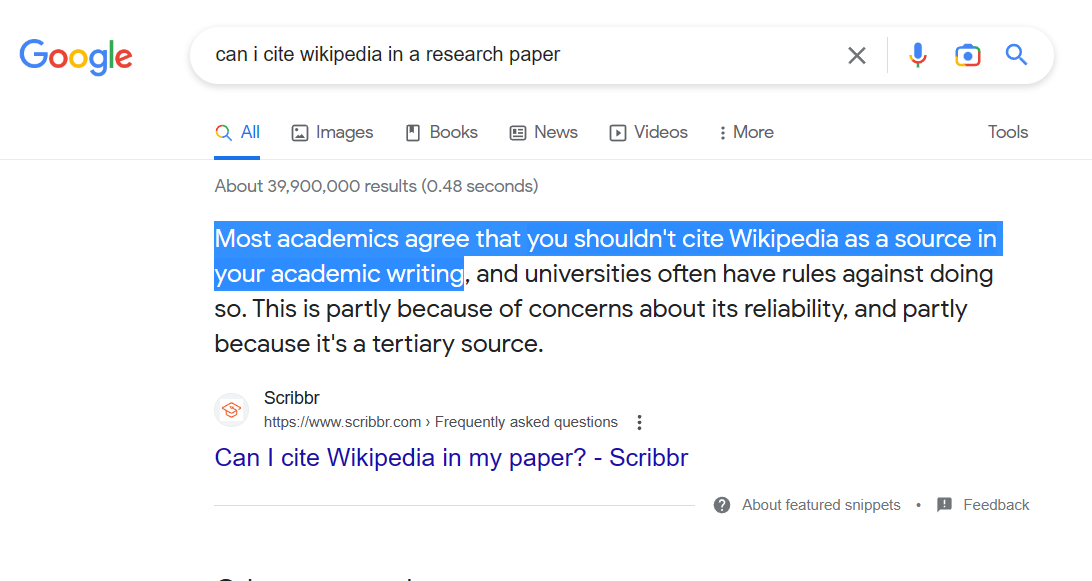
Along with the amateurish use of Wikipedia, the review also used two highly criticised reports; the UK Counter-Extremism Government report on Sikh activism (2019) and Canada’s Macdonald-Laurier Institute’s “Khalistan: A Project of Pakistan”.
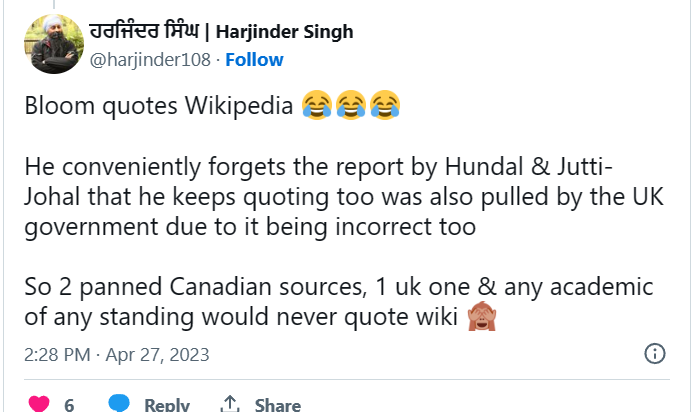
The 2019 UK report on Sikh activism was authored by journalist Sunny Hundal and Dr Jagbir Jhutti-Johal. Hundal has previously received mass criticism from Sikh orgs for hyperbolising “Sikh extremism” whilst having no real presence within the community at any significant level. Dr Jagbir Jhutti-Johal is an academic affiliated with the Sikh Nishkam group, headed by religious figure Bhai Mohinder Singh who received criticism for being part of a Sikh welcoming party for India’s Prime Minister Narendra Modi in 2015. Jhutti-Johal met with Punjab Chief Minister Captain Amarinder Singh just weeks before the 2019 report was released. Captain Amarinder has long been a fanatical voice against Sikh activism, underlined by his accusations towards Canada’s Sikh Defence Minister Harjit Sajjan. Amarinder was also behind the incarceration of British Sikh political prisoner Jagtar Singh Johal, labelling the Scot “guilty” at a press conference before any trial began. The duo’s report was taken down by the government within 24-hours of its release, before being amended and re-released. This was not mentioned by Bloom. Read more about their report here.
The other report referenced by Colin Bloom was written by Terry Milewski, a now retired journalist who is most known for his racistly titled “Samosa Politics” documentary on Canadian-Sikh political engagement and Khalistan support in the country. The Macdonald-Laurier Institute behind his “Khalistan: A Project of Pakistan” report promote trade between India and Canada. The movement for a free Sikh homeland within India is considered destabilising to India’s trade agreements with Western countries. As well as being condemned as “vitriolic” by 56 Canadian academics, the reports contents became extra questionable after Terry Milewski was forced to admit “he does not know whether Pakistan is involved” in the Khalistan Referendum, the current biggest global Khalistan support movement, after a lawsuit was issued against him by organisers Sikhs For Justice for making the claim they are Pakistan funded. None of this is mentioned in Colin Bloom’s review.
The telling effort Bloom makes to compare so-called “Sikh extremism” with Hindutva (Hindu extremism) directly is also prompting concern, as he was seen doing so on BBC Newsnight this week. Just last year Hindu mobs partly incited riots in Leicester, which would logically suggest Hindutva warrants more focus then conjecture about Khalistan support. Not to Bloom though.
Furthermore, the violent ultranationalist fascism plaguing India and oppressing Sikhs is well documented, including by groups like the European Consortium for Political Research. Yet, Bloom only dedicated two paragraphs to “Hindu nationalism” (not labelling it extremism), without making any overseas references as he did repeatedly about Khalistan. For example, the issue of fanatical violent Hindus in Australia attacking Sikhs is ignored. This stance raises concerns of Indian State influence on Bloom’s review. You can read more about anti-Sikh Indian interference in Western countries in this report by the the Ontario Gurdwaras Council- Indian Foreign Interference: Canadian Gurdwara Bodies Publish Report (panthpunjab.com).
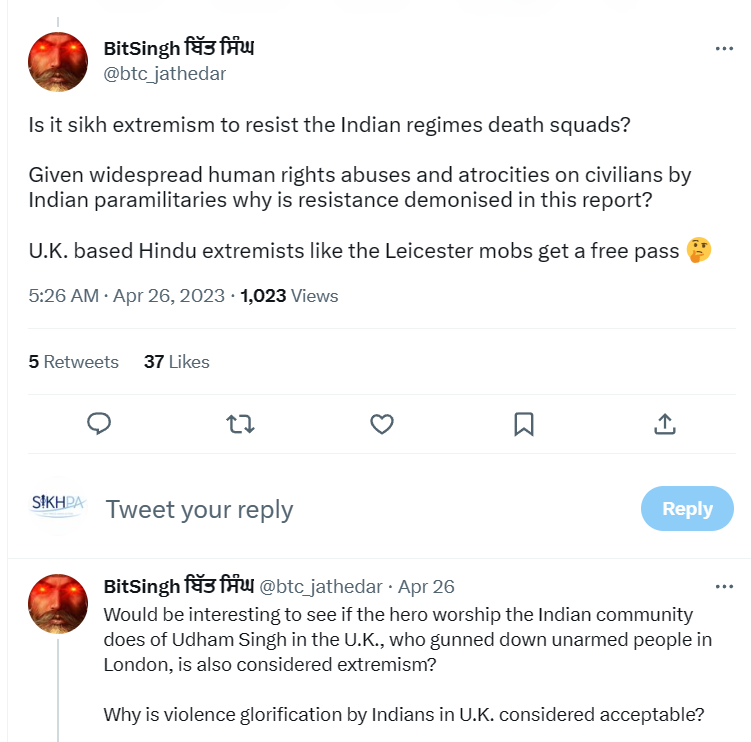
Within the Sikh faith, reverence for freedom fighters and Shaheeds (martyrs) is part of Sikh practice. For the likes of Shaheed Udham Singh, this is widely accepted and understood within mainstream media, with his assassination of a British military figure covered favourably by the likes of the BBC. Yet, support for freedom fighter Shaheeds of the Khalistan movement is being labelled as “promoting violence, including murder, as acceptable” by Bloom. This shows a complete lack of understanding of Sikh philosophy.
In consideration of the reason behind a recent uptake in anti-Khalistan rhetoric in the UK, the influence of the trade relationship between India and the UK has to be considered. Margaret Thatcher’s government’s support for India’s attack on Sri Harmandir Sahib (part of the #SikhGenocide) in 1984 was due to military trade between the countries. SNP MP Martin Docherty-Hughes has been very vocal about his belief that India’s trade with the UK is why his constituent and British Sikh political prisoner in India Jagtar Singh Johal is not being given more support by the UK.
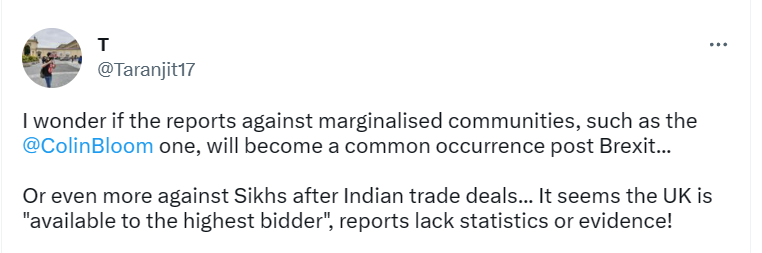
In 2017 Leeds University research fellow Dr Jasjit Singh conducted the largest and most open consultation process by an academic within the Sikh community for his report on “Sikh Radicalisation in Britain”. The report found that although there were internal conflicts within the Sikh community, there was nothing to suggest there was a wider threat from so-called Sikh radicalisation. For some reason the report was overlooked by Colin Bloom, even though it was submitted to him by Dr Jasjit Singh.
The Sikh leadership disputes, which are highlighted mainly from the perspective of Lord Singh of Wimbledon, frame alleged “bullying” in this area within the “Sikh extremism” issue. However, the UK government has its own issue of bullying still unresolved, which are not framed as an “extremist” issue. Lord Singh of Wimbledon has long been arguably the most prominent figure of UK government-Sikh political engagement. Many feel there should be a broader range of Sikh representatives the government engages with. Bullying accusations fly in both directions within this dispute, with some political figures claiming they are berated for their (perceived lack of) engagement efforts, whereas others at a more grassroots level feel they are bullied through ostracisation and condescension when attempting to get involved in UK-Government engagement.
The National Sikh Youth Federation released a comprehensive statement on the review by Colin Bloom, ending it with a call for further discussion with Bloom which Sikh PA are working on arranging. A standout piece of information is the highlighting of Bloom using SATP as a reference, an org started by convicted sex offender KP Gill, a notorious Indian police officer known as “The Butcher of Punjab” for his involvement in the extrajudicial murders of Sikhs.
For more information on Sikh panth (community/path) responses to the review, media can email media@sikhpa.com.


Leave a Reply
Want to join the discussion?Feel free to contribute!