
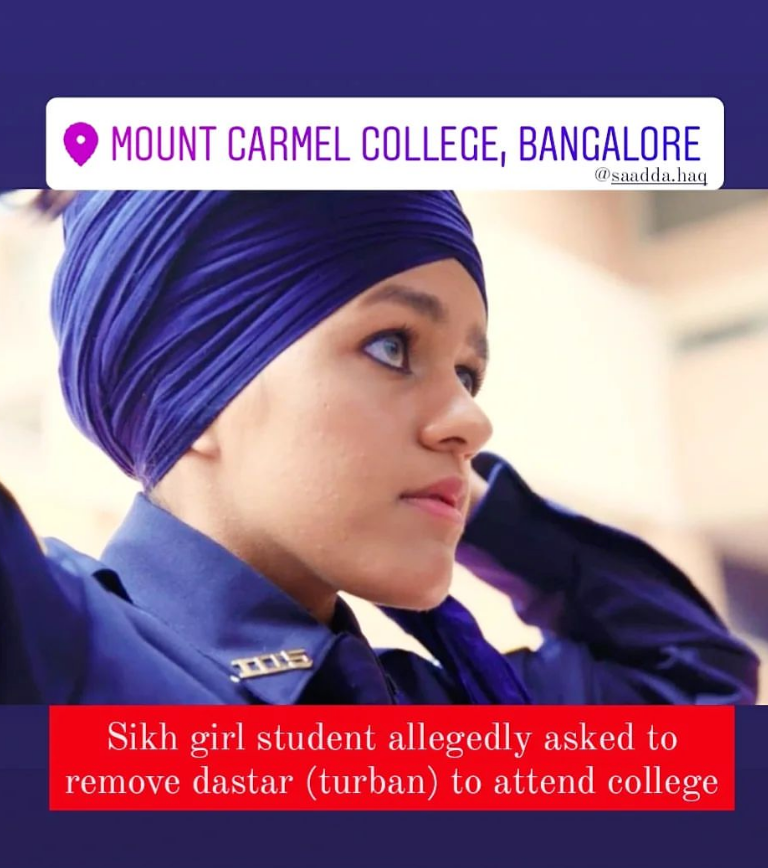
After pressure to ban the hijab, Hindutva efforts made in India to ban the dastaar (Sikh turban)
A ruling based on the actions of Indian nationalist Hindutva (Hindu extremist) mobs stopped two Sikh students from entering places of education whilst wearing dastaars (the Sikh turban).
The anti-Sikh efforts came in mid February following an incident of an Indian nationalist mob aiming to prevent a Muslim student from entering her university unless she removed her hijab, which turned into a nationalist movement against non-Hindu religious wear.
The incidents occurred in the state of Karnataka and seemingly started with a random nationalist mob of men deciding to target Muslim girls on 8th February at PES College of Arts, Science and Commerce. This unravelled into a national issue which many Indian nationalists (and their apologists) claiming it was about advocating secularism in public spaces in the country, despite the fact Hindu prayers occur and garb is regularly worn in colleges and other public spaces across the nation. Nationalist Hindutva mobs were soon gathered outside various colleges and schools, with some violently attacking hijab wearing attendees. Pro-hijab counter-protests also took place across India.
The BJP (right-wing Indian party in power under Narendra Modi’s rule) govt in charge of the state decided to issue a three day closure of all places of education in the state after the incidents. This ended with a Karnataka High Court interim order restricting the use of religious symbols by students in educational institutions, although how this was to be implemented in regards to the dastaar and hijab remains disputed and unclear, reflective of India’s chaotic and often arbitrary judicial system.
The nationalist Hindutva movement soon targeted Sikhs in later February, with Sikh apex authoritative body the SGPC highlighting incidents involving a six-year-old Sikh boy and a 17-year-old Sikh woman being denied entry into places of education in Mangaluru and Bengaluru (the capital of Karnataka) respectively.

The father of the Sikh woman said the college authorities first wrote to him in an email demanding that his daughter stop wearing the turban in accordance with the Karnataka High Court’s interim order. Since then reports have suggested the girl and others have been allowed to attend classes with religious wear intact, although it remains unclear how this is viewed in relation to the interim order. Sikh legal advocacy group United Sikhs are in touch with the family.
Following the incidents, the Hindutva movement has increased and led to outright public calls for genocide, which hundreds of Hindus have been seen to support.
The long-term outcome of the Karnataka ban on religious wear remains unclear after a “order reserved” (still pending) outcome to hearings was issued on 25th February.
Many have highlighted how recently passed popular Sikh activist Deep Sidhu correctly stated the dastaar would next be targeted by Hindu nationalists, when asked about the hijab ban issue.
Information on the outcome of the high court religious wear ban will be shared as it comes in.


Leave a Reply
Want to join the discussion?Feel free to contribute!