
Two suspects arrested following CCTV footage release – German Gurdwara Bombing Latest Updates

Police have arrested two people suspected of being involved with a bombing a Gurdwara in Essen (Germany) on the evening of April 16.

The arrests come after a €5000 reward was offered to anyone that could help find two men seen on CCTV vacating the area moments after the attack. No charges have yet been levelled at the men, with investigations still ongoing.

The German Sikh community have applauded the swift work of German authorities. The condition of a 60-year-old Sikh granthi (priest) who was seriously injured as a result of the explosion has improved and he is now out of danger.

SEE CC TV FOOTAGE OF THE SUSPECTS HERE – https://www.facebook.com/nrwaktuelltv/videos/1156074464414535/

Witnesses reported seeing a man in dark clothing with his face covered throwing a bomb outside the Gurdwara Nishan Sahib (Sikh flag). The bomb went off as Vaisakhi celebrations were taking place and kids classes were going on inside the Gurdwara. Vaisakhi is a time of year when Sikhs hold very visual and open celebrations.

POL-E: Food: explosives exploded at Sikh temple - 2nd Update - camera captures suspects - explosive device in a backpack - Photos - Police are looking for more witnesses

A rucksack one of the suspects was seen carrying.

Latest statement from Mayor of Essen and Police Commissioner

In a press conference this morning (17.04.16) the following statements were made.

Mayor of Essen Thomas Kufen:

“Our free society guarantees freedom of religion. Any form of violence is totally unacceptable. Through my visit today and talks with the representatives of the Sikh community I have expressed the solidarity of the city. “

Police Commissioner Frank Richter:

“We have set up a commission of inquiry. The protective measures will be extended. We have found no evidence of a terrorist background in relation to this attack. We are determined to look in all directions for a possible motive. We will work closely with the Indian authorities.”

Other information released includes;

  • Confirmation the Nanaksar Gurdwara of Essen and the home of the Mayor will remain under police protection for the time being.
  • The Indian Consulate of Germany have been in touch with both the police and the Sikh community of Essen to offer sympathies and help investigations.

There have also been calls from India – including from Deputy Chief Minister of Punjab Sukhbir Badal – for India’s Minister of External Affairs Sushma Swaraj to get involved in the case.

The aftermath of the bomb.

Local media subsequently said that three people had been arrested and were being questioned in connection with the incident but have since been released without charge.

Far-right groups have marched through Essen in the last year.

Hear the sound of the bomb going off as kirtan (devotional hymns) was being played:

The Granthi (a male priest) was the biggest casualty and was taken away by the emergency services. There is no further update on his health yet.

A spokesman for Essen police told the Associated Press that a masked person was reported to have fled the scene shortly after the blast at 7pm. Mr Lindemann said the police were working on the assumption that the explosion was caused deliberately but that there are no indications it was a terrorist incident. Spokesman Lars Lindemann said the explosion was “quite violent”. The bomb was so powerful that windows of flats around the Gurdwara were destroyed upon it going off.

Sikh Council UK stated via social media “Sikh Council UK are requesting a full investigation of this incident as a hate crime in a climate of terrorist attacks, and we will be writing to German Ambassador in UK and others expressing Sikh community concerns.”

German bomb attack Gurdwara - Outside emergency services

The Sikh Coalition, an American organisation experienced in dealing with hate attacks against Sikhs, stated on their Facebook page “Thoughts and prayers are with the injured, their families and the Sangat (congregation). The motive is still unknown, but we are following this very disturbing story closely.”

Local residents have come to the Gurdwara to show their support and are standing with the Sikhs. Ravi Singh, noted humanitarian and head of charity Khalsa Aid stated on Twitter, “Bomb attack in a Gurdwara, a place of worship for Sikhs, in Germany !! We harm NOBODY yet we continue to be targeted for hate!! “.


Is now the time for David Cameron to apologise for the Amritsar Massacre?

This week Canada’s Prime Minister Justin Trudeau confirmed that he would be making an apology on behalf of the nation to all those affected by the Komagata Maru incident.

With this in mind, many Sikhs have questioned whether it is about time the UK government apologised for the infamous Jallianwalla Bagh incident, also known as the Amritsar massacre. See how Sikhs feel by viewing our online poll here.

Here we share statements from prominent Sikh activists, organisations and educators in regards to Justin Trudeau’s proposed apology and whether there should be a similar statement made by David Cameron, especially considering he is due to meet Sikhs for a Vaisakhi meeting on April 13th.


Statements from UK Sikh Groups

Jagraj Singh, educator for Basics of Sikhi:

“It is a highly commendable gesture of Justin Trudeau to offer an apology for the Komagata Maru incident. Many are still hurt at the treatment of all those that were on the Komagata Maru. With Sikhs playing such a prominent role in Canadian society, it only makes sense to put that whole incident to rest with an apology from the government.

“British history doesn’t always recognise the fact that The Raj wasn’t as harmonious as is often made out. Following the lead of Justin Trudeau by apologising for what occurred at Jallianwalla Bagh in 1919 would be a wise move for David Cameron, if he wishes to show he values Britain’s Sikh community.”

Shamsher Singh, National Sikh Youth Federation:

“The apology of Canadian Prime Minister Trudeau for the Komagata Maru incident is both welcome and timely as Sikhs all over the world celebrate Vaisakhi. This apology, which has taken 102 years, is a small step in the right direction. The brutality and trauma European settlers inflicted upon the world, through genocides, both physical and cultural and oppressive colonial policies impacts our reality till this day.

The diaspora and Sikhs in Punjab are starkly reminded of this reality in the legacy of the crimes of British imperialism, for which Britain is not only unapologetic, it barely even acknowledges. We will never forget the partition of our homeland which displaced a whole nation and the horrific episodes of violence unleashed by the colonisers to maintain their control and further their exploitation. We remember Guru Ka Bagh, Jaito, Nankana Sahib and Jalianwala Bagh to name but a few incidences that scar our collective memory. No apology will ever right the wrongs of colonialism nor restore to life the countless massacred. We hope that Britain and the descendants of European settlers give us more than words of apology, we hope they join us in rebuilding and reclaiming what they destroyed.

As Sikhs all over the world look to Vaisakhi as a celebration of Sikh sovereignty, we’re inspired by those sovereign ideals to once again liberate the Khalsa Panth.”

Sarbjit Singh, Rajoana TV:

“The decision made by Justin Trudeau’s government to apologise is welcomed and it paves the way for other governments to follow suit. However, an apology for a historic tragedy does little for those who were affected by it. I believe Governments should take ownership of tragedies and genocides that have happened more recently so those affected by them can have some redress.”

Sikh organisations speak on India fake encounters massacre scandal

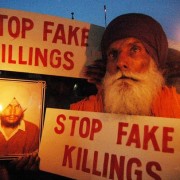
On April 1st a special CBI court in India found 47 policemen guilty of killing 10 Sikh men in three fake encounters in a single night in the Pilibhit district of Uttar Pradesh in July 1991.

The ruling is further proof of assertions – made largely by Sikh activist organisations based in the West – that Sikhs in India have been systematically killed in masses by Indian government authorities. This issue has been at the heart of many demonstrations made against the Indian government by Sikhs both in India and abroad, with a belief that authorities have been protecting those involved and hiding information about the massacres.

America based Sikh activist organisation Ensaaf have uncovered evidence of unlawful killings in over 12,000 villages in Punjab to date, whilst there are still to this day regular allegations of fake encounters resulting in the deaths/disappearance of Sikhs all over India. For decades Sikhs have highlighted India’s callous approach to dealing with issues which affect the nation’s minorities; from the incarceration of political prisoners to the governing of agriculture, with the fake encounters massacre scandal being the most damning of the lot.

Below we have shared statements from Sikh organisations that have previously spoken out about the fake encounters massacre scandal.


Statement from humanitarian charity Sikh Relief who power SOPW (Sikh Organisation for Prisoner Welfare)

“Sikh Relief support many people whose entire families were killed during the murderous regime orchestrated by state officials between 1978 through to 1995. A common theme that has been recounted by all these families is that it was the very people who had a duty of care to protect its citizens from harm – the police – who were the ones committing the crimes. Where does one then hope to seek shelter and protection?

“Sikh Relief welcome this decision and hopes to see justice delivered, especially for all those families whose loved ones were brutally murdered and their reputations needlessly and falsely blemished with labels of ‘extremists’ and ‘terrorists’ to validate the killings.

“News of over 47 suspects is not surprising for many of us, who have known of the horrors that surrounded the 1984 Sikh genocide that saw tens of thousands of men, women and children murdered in cold blood. What makes this distressing fact worse is that their surviving relatives have watched as the perpetrators of these heinous crimes not only escape prosecution but have been promoted and placed inhigh positions across government establishments.”

Sukhvinder Kaur, Sikh Relief spokeswoman.

“While we welcome these prosecutions, the verdict also raises questions:

  • Why has it taken 30 years for these cases to come to light?
  • Will the surviving members of the families that were murdered by these 47 police officers be offered any form of compensation?
  • Will other State governments follow suit and prosecute other prominent faces that were also known to be behind the genocide of 1984?

It is a positive step forward that police officers are being held to account, but we wait with baited breath to see whether others will finally be brought to justice.”

Balbir Singh, Sikh Relief chairman. 


Statement from political organisation Sikh Federation (UK)

Picture via Sikh Federation (UK)

Picture via Sikh Federation (UK)

“Tens of thousands of Sikhs were killed in fake encounters in a period from the mid 1980s until the mid-1990s. The Pilibhit case with a conviction of 47 police officers for killing innocent Sikh pilgrims is the tip of the iceberg.  Thousands of Sikhs have lost loved ones and have grown old or died waiting for justice.  Police officers responsible for the extra-judicial killings have escaped justice for far too long.”

Bhai Amrik Singh, Chair of the Sikh Federation (UK).

47 Indian policemen found guilty of killing Sikhs – Indian Tribune

1991 Pilibhit fake encounter: 25 years on, 47 cops held guilty of killing 10 Sikh men

A total of 57 policemen were chargesheeted in the case of which 10 died in the course of the trial. On Friday, 20 policemen appeared before the court, which sent them to judicial custody.

A special CBI court Friday held 47 policemen guilty of killing 10 Sikh men in three fake encounters in a single night in Pilibhit district of Uttar Pradesh nearly 25 years ago — in July 1991. The CBI had investigated the case on the directions of Supreme Court.

A total of 57 policemen were chargesheeted in the case of which 10 died in the course of the trial. On Friday, 20 policemen appeared before the court, which sent them to judicial custody. The court also issued non-bailable warrants against the remaining 27 accused. The court will pronounce sentence on April 4.

“Special Judge Lallu Singh held 47 policemen guilty of the fake encounters. Sixty-seven prosecution witnesses were examined before the court during the trial,” CBI counsel Satish Jaiswal told The Indian Express.

According to the prosecution, the case dates back to 1991 when the state’s Terai region witnessed a surge in militancy-related incidents. A local Hindi daily had published a report stating that some people involved in criminal activities were on a pilgrimage with their family members. Acting on the news, police “collected details” and found that “a group of men” along with some women were on pilgrimage. They were travelling in a bus, which had obtained temporary permit from the regional transport office in Bareilly.

According to CBI, the bus was on its way to Pilibhit on July 12, when a police team stopped it at Kachlapul ghat. Eleven Sikh men were allegedly dragged out of the vehicle. The other passengers, including women and children, were taken to a gurdwara in Pilibhit while the men were made to sit in another vehicle. Late in the evening, additional force joined the police team and they divided the Sikh men in three groups.

On the intervening night of July 12 and 13, the policemen gunned down the Sikh men in three encounters in the thickets falling under three different police station areas — Bilsanda, Niuria and Pooranpur— in Pilibhit.

The police then claimed that these men had criminal cases against them and claimed to have recovered arms and ammunition from their possession. The CBI probe found that the police got the autopsy done on 10 of the bodies and got them cremated the same day. One body could not be found.

VIA – http://indianexpress.com/article/india/india-news-india/1991-pilibhit-fake-encounter-25-years-on-47-cops-held-guilty-of-killing-10-sikh-men/

Los Feliz’s Sikh Temple Offers a Taste of Community, at No Cost – L.A Weekly

Every morning, inside the marbled halls of the Golden Temple in Amritsar, India, 1.5 tons of lentils are simmered, stewed and spiced to feed its 100,000 daily visitors. Pilgrims and tourists alike find nourishment within the world’s largest communal kitchen — and it’s all free, embodying Sikh ideals of community and inclusion.

On the corner of North Vermont and Finley Avenues, the Vermont Gurdwara (Sikh place of worship) is smaller in scale but not spirit. After Friday and Sunday services around lunchtime, you’ll find families and first-timers seated on the floor, enjoying some of the homiest vegetarian North Indian fare in L.A.

On a recent visit, lunch included hot basmati rice and dhal makhani, silky black lentils simmered with onions and garlic (usually weighed down with cream in stateside Indian restaurants, but blissfully forgone in this version, allowing the flavors to shine through). Rounding out the plate was sabji, a catch-all term for curried vegetables — this particular permutation featuring potatoes, carrots and peas, all glistening in thick tomato gravy. Also being served were handmade roti and a coriander-spiced yogurt raita, which offered a cool complement to the meal.

In the kitchen, volunteers chopped their way through bulk bags of onions and stirred pots of dhallarge enough to be featured in a fable. We asked Bhajneet Singh, a former volunteer at the Vermont Gurdwara and current member of the Khalsa Care Foundation Gurdwara, to talk more about langar, or the concept of the communal, come-one-come-all kitchen.

“The idea of it is that there’s equality and universal brotherhood amongst all people, regardless of faith,” he said. “Whether you’re a king or a beggar or a shoemaker, you’re going to sit on the same level and eat the same meal, and interact with your neighbor.” Langar, he explained, is one of the fundamental pillars of Sikhism, and each gurdwara has one. All over the world, meals are mostly served by volunteers and the food is funded by community tithing, which is also a tenet of the religion.

Three Sikh-American Soldiers File New Lawsuit Against U.S. Department of Defense – NBC

Three Sikh-American soldiers filed a new lawsuit against the U.S. Department of Defense Tuesday morning, according to The Sikh Coalition. Specialist Kanwar Singh, Specialist Harpal Singh, and Private Arjan Singh Ghotra are seeking to serve in the U.S. military while also practicing their Sikh faith and keeping their Sikh articles of faith — turban, unshorn hair, and beard — intact.


Specialist Kanwar Singh, Massachusetts Army National Guard
Specialist Kanwar Singh, Massachusetts Army National Guard, seeks to serve in the U.S. military without being forced to compromise his religion. Courtesy of The Sikh Coalition


“Three Sikhs filed suit against the Army to ensure that their requests for religious accommodation are resolved by their basic training ship dates in May,” Harsimran Kaur, The Sikh Coalition‘s legal director, told NBC News. “The lead plaintiff has been waiting over seven months. The Army has been failing to make decisions on whether these patriotic Sikhs will be able serve their country while abiding by the tenets of their faith. In doing so, the Army is violating their constitutional and statutory rights.”

Despite making requests for religious accommodation months ago, Singh, Singh, and Ghotra said they are seeking an answer now so that they can begin basic combat training with their units in May. They are represented by The Sikh Coalition, the Becket Fund for Religious Liberty, and McDermott Will & Emery. The three organizations also represented decorated Sikh-American soldier Captain Simratpal Singh, who won a temporary restraining order March 4 against additional non-standard, discriminatory testing. A final decision on Captain Singh’s case is expected March 31.


Private Arjan Singh Ghotra, Virginia National Guard
Private Arjan Singh Ghotra, Virginia National Guard, seeks to serve in the U.S. military with his articles of faith intact. Courtesy of The Sikh Coalition


“We believe that the court will find that the Army is continuing to discriminate against observant Sikhs, and will enjoin the Army to allow the Sikh plaintiffs to serve with articles of faith intact,” Kaur said.

Before 1974, Sikh Americans were allowed to serve in the U.S. military with their articles of faith intact. But since 1981, stricter grooming regulations have required requests for religious accommodation on a case-by-case basis, and only three have been granted. In contrast, about 50,000 U.S. soldiers have permanent beard exemptions for medical reasons.

In December 2015 remarks at Harvard University’s John F. Kennedy School of Government, U.S. Secretary of Defense Ash Carter expressed to Specialist Kanwar Singh his support for allowing observant Sikhs to serve in the U.S. military, referencing Canada’s new minister of defense and the United States military’s need for the best possible volunteers.


Specialist Harpal Singh, U.S. Army’s MAVNI program
Specialist Harpal Singh, U.S. Army’s MAVNI program, seeks to serve in the U.S. military while also being allowed to practice his religion. Courtesy of The Sikh Coalition


In addition, 27 retired U.S. generals, 15 U.S. senators, 105 U.S. representatives, and 21 national interfaith and civil rights organizations have expressed their support of Sikh Americans’ right to serve in the U.S. military with their articles of faith intact, according to The Sikh Coalition.

“These men are exactly what the Army says it wants: soldiers of integrity, patriotism, and courage,” Eric Baxter, senior counsel at the Becket Fund, said in a statement. “It’s embarrassing that the Army is still quibbling over their beards when militaries in Canada, the United Kingdom, Australia, and India all accommodate Sikhs without a problem. Hasn’t the Army ever heard of Ulysses S. Grant?”


Via – http://www.nbcnews.com/news/asian-america/three-sikh-american-soldiers-file-new-lawsuit-against-u-s-n547331

Chile gives legal recognition to Sikh faith – News Gram

Chile has over 200 legally recognized spiritual paths. But until January 25th 2016, the Sikh religion was not one of them.

After 4 years of consistent effort, however, the fledgling Sikh community in Chile achieved legal recognition of Sikh Dharma as a religion.

“Now we will be protected, with more safety in our jobs, in our health system and political system,” Rupinder Kaur Khalsa of Sikh Dharma Chile said of the legalization. “That is very good news for all of us…We can have the right to have gatherings in public places, also.

“We started the legalization process 4 years ago. Creating legal documents that describe what a turban is, what Sikh Dharma is, who we are, what do we want to legalize for Sikh Dharma Chile, and what our values are as Sikhs. Then, the legal process was about waiting for the government to approve this.”

The Chilean government did so in January.

The Sikh religion was introduced into Chile in the late 20th century by the Sikh missionary Siri Singh Sahib Bhai Sahib Harbhajan Singh Khalsa Yogiji, also known as Yogi Bhajan.  Through his inspiration, people in Chile began to adopt the Sikh faith. Now, there is a thriving community of Chilean born Sikh families in Chile, who host many spiritually uplifting events in their country.

See the reaction from a Chilean Sikh on this news – https://youtu.be/AnjjsA32p9Q

Via – http://www.newsgram.com/chile-gives-legal-recognition-to-sikh-dharma/

Teens Found 500-Year-Old Grammar School’s First Sikh Society – Huff Post UK

Two cousins have made history at their 500-year-old grammar school in Manchester after they founded the institution’s first Sikh society.

The Sikhi Society at The Manchester Grammar School now boasts more than 70 members – including students from non-Sikh backgrounds.

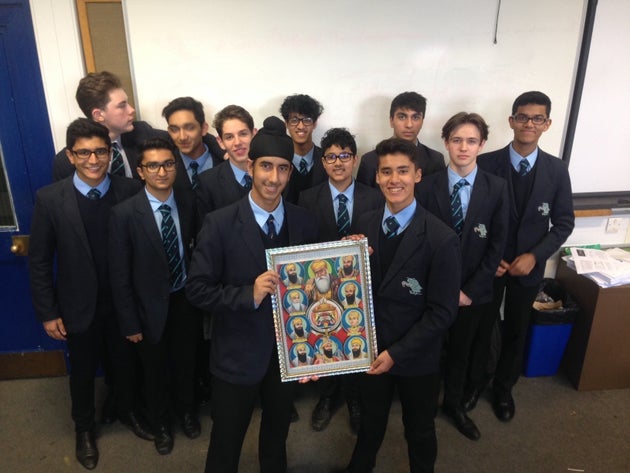
The newly-founded Sikh society


Hukam, 16, and Mahavir Singh Nerwan, 15, decided to start the society after they noticed a “lack of knowledge” of the Sikh religion among their friends and peers.

“We created it with the aim of educating teenagers about key aspects of the Sikh faith and in the process to help clear stereotypes and misconceptions about our religion,” Hukam told The Huffington Post UK.

“With this in mind, we started giving talks during our school’s lunchtime and have held successful fundraisers such as a Punjabi style dance off and a karaoke contest, which raised £600 for charity.”


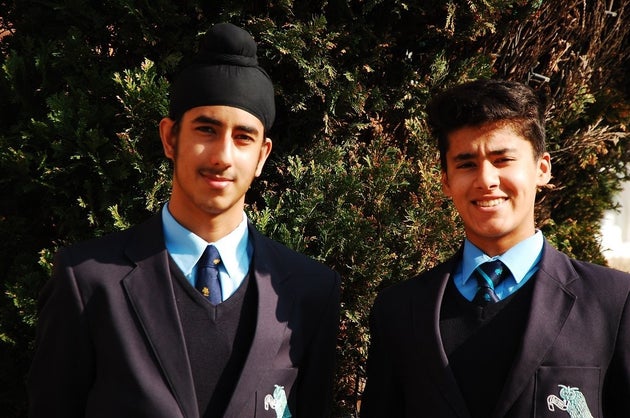
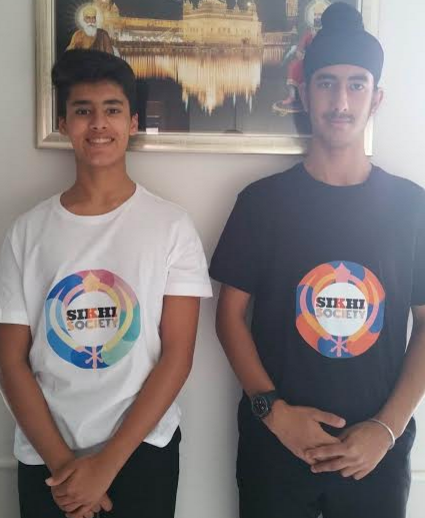
Hukam and Mahavir Singh Nerwan


The pair say students of other faiths are attracted to the society thanks to the “friendly and informative environment”.

“We also provide a forum for discussion,” Hukam adds.

The cousins are now keen to expand their society beyond the school, and are creating a website which will be launched in June to give young Sikhs in Manchester a platform to come together.


“When we saw some of the young Year 7 Sikhs who started at the School this year, they looked a little bit lost and it can be daunting starting at such a big school,” says Hukam. “So we wanted to do something that would unite them.”

Mahavir added: “For us, it is all about bringing together people from different backgrounds and religious persuasions and creating a strong sense of community between them.”

Without Fear, Without Hate – Belgian Sikh speaks out


My name is Dr. Japjeet Kaur. I am originally from Weelde near Turnhout, Belgium. I lived half of my life in Leuven, 15km away from Brussels.


As a practising (Khalsa) Sikh, I’m very sad to hear about the terror attacks in Brussels today. This is a terrible tragedy and I want all of Belgium to know that the Sikh community globally sends its love and goodwill to the families of the dead and best wishes to those injured so they recover both physically and psychologically.


The Sikh community I am part of look very different to most people in the West, especially as we have turbans. Sikh men also have full beards. To some who may not have seen a Sikh before we look strange and they may associate this look with terrorism.


But there are many Sikhs in Belgium and we have many Sikh temples here in Liege, in Vilvoorde (in Brussels), in Ghent, in Sint-Truiden, in Alken and in Borgloon. Many Sikhs came to Europe in WW1/WW2 and fought against tyranny and oppression. There are many Sikh names at the memorial in Neuve Chapele and also at Ypres.


Sikhs believe that all humans are equal and that everyone should have freedom to live in peace. One of the key principles of Sikhi is to have free food available for anyone who comes to the Sikh temple.


As a Belgian Sikh, I want to reach out to the grieving masses and say that we should all try not to give in to the fear and anger that these terrorists want to create within us. The very first verse in Sikh scripture, our root mantra, says that God is Without Fear and Without Hate. In the spirit of this, we invite all of you to come and visit a Gurdwara in Belgium, have a meal with us and share in our hospitality. Instead of Hate and Fear, let’s unite and break bread together.

Dr Japjeet Kaur
PhD and former postdoc at KULeuven University/University of Louvain, Belgium


To find out more about Sikhs, here are two videos:
French conversation in Ypres, Belgium – https://www.youtube.com/watch?v=BEKhWEFR8jA
Flemish/Dutch conversation in Leuven – https://www.youtube.com/watch?v=BO5A022LvWM