How American Sikhs became Collateral Damage in the War on Terror – Fusion.Net

By Sujay Kumar


Technically, what happened to Inderjit Singh Mukker was a case of mistaken identity. The 17-year-old who leaned into his car and punched him until he was unconscious thought Mukker’s thick black beard and turban were signs that he was a “terrorist” or “bin Laden.”

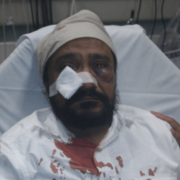
But what happened to Mukker was a brutal anti-Sikh hate crime that left the 53-year-old with a fractured cheekbone, an eye swollen to the size of a plum, and his white shirt soaked with blood.

“Holy shit. Holy shit, this happened in my family.”

That’s how Harvind Kaur Singh said she felt in September after being told that her cousin was beaten only a few blocks away from his house in Darien, a suburb 25 miles outside of Chicago, where he has lived for 27 years. Mukker, held by his seatbelt, was trapped like a hamster in a cage.

Courtesy of the Sikh Coalition

Inderjit Singh Mukker after he was attacked.

“People need to always find a way to put a face on the hatred,” she told me recently, referring to the slurs that were yelled at her cousin. She ran her pink fingernails through her long, black and brown hair. “How does a 17-year-old have so much hatred in his heart?”

The attack on Mukker is the most high-profile anti-Sikh hate crime in the nation since the FBI started recording the data in 2015. This year, for the first time since 9/11, violence against Sikh Americans—who are often mistaken for Muslims by their attackers—is not just considered collateral damage in the pursuit of Islamophobia, but broken out it into its own category in federal reports.

The new hate crime data collection training manual distinguishes between anti-Arab, anti-Hindu, anti-Muslim, and anti-Sikh hate crimes. Here’s the detailed (and well-sourced) blurb for what constitutes a Sikh:

Mentioning a dastarr and kanga may not seem momentous, but consider that before this year, incidents of hate-fueled violence against Sikhs were stuffed into the numbers of anti-Muslim hate crimes. For most of the 2000s, the more than 300,000 American Sikhs in the nation were forced to grapple with a question: How do you feel like you count as a citizen when crimes against you aren’t even counted?

Everything changed on August, 5, 2012, when white supremacist Wade Michael Page opened fire at a Sikh temple in Oak Creek, Wisconsin, killing six and catapulting violence against an often ignored people into the spotlight.

“When you have the spotlight and the nation’s sympathy is with you, you essentially get one request,” said Simran Jeet Singh, religion fellow at the Sikh Coalition, a group formed to protect the civil rights of American Sikhs. Reforming the FBI statistics, Singh said, was the stricken community’s one request. Enough was enough. The FBI had essentially said attacks against Sikhs weren’t significant enough to be tracked separately, but the massacre of six innocent Sikhs proved otherwise.

Today the doors on the temple are locked, there have been $75,000 in security additions (24 cameras, bullet-proof windows, safe rooms that can house 500), and Sikh Americans have the dignity of being a statistic.

“If we were to address the ignorance, and people just knew who Sikhs were, then would xenophobia end?” asked the Sikh Coalition’s Jeet Singh. “We know from history, unfortunately, xenophobia doesn’t work that way. People who are bigoted are bigoted.”

The shooter’s motive will never be known for sure. He killed himself before he could be arrested.

Anti-Sikh sentiment was amplified after 9/11—there were an estimated 200 cases of anti-Sikh hate in the days after the terrorist attack, according to a Sikh organization—but it wasn’t born in the rubble. The price of wearing a turban was not a new phenomenon. In the ‘70s Sikhs were called Khomeini (Iran), then Saddam Hussein (Iraq), then bin Laden (Saudi Arabia), and now—for example, when aiding Syrian refugees—as ISIS. Even in India, “Sardar jokes,” which are basically blonde jokes, are rattled off at the expense of Sikhs.

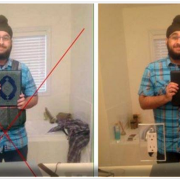
Last month, a photoshopped selfie of Canadian Sikh Veerender Jubbal, making him appear to be one of the Paris terrorists, went viral. In the doctored photo, Jubbal’s iPad was changed to a Quran and his flannel shirt was now covered by an explosive vest.

The earliest case of bigotry directed at Sikhs in America can be found in the forgotten Bellingham riots of 1907 (explored here by Slate). Indian immigrants from Punjab–predominantly religious Sikhs who didn’t drink alcohol–were accused of stealing logging-industry jobs from white Americans in the Pacific Northwest. Whites rounded up hundreds of Sikhs, beat them up, and kicked them out of town. One startlingly racist front page of The Puget Sound American chronicled these “hindu hordes invading” in a story headlined “Have we a Dusky Peril?” (Image provided by the South Asian American Digital Archive.)

When police first responded to the scene of Mukker’s attack, there wasn’t an immediate understanding that racial bias was involved. To the officers it was just an incident of “road rage.”

A few days later, after outcry from the Sikh Coalition and a more thorough review of the evidence, the State’s Attorney’s Office filed a hate crime charge. (The teen also faces five counts of felony aggravated battery—one for punching a police officer who arrived at his house to arrest him). It is unlikely the case will be moved to an adult court.

Mukker’s cousin, Harvind Kaur Singh, said she wasn’t surprised that authorities had to be prodded into adding the hate crime charge. She has two daughters, 11 and 7, who keep their hair long, while her husband wears a turban. She said that the girls often ask about what happened to Mukker, who they call their uncle.

“He’s afraid. That doesn’t go away,” she said. “My kids are afraid.”

Harsimran Kaur, legal director of the Sikh Coalition, said the police’s initial oversight was telling: prosecutors and law enforcement must be culturally competent enough to understand that being told things like “go back to your country!” is evidence of bias. It’s not enough to notice that Mukker was beaten senseless. Motive matters.

To prove a hate crime, prosecutors have to show evidence of religious-fueled malice at the moment of violence. When an attacker yells a racial epithet, this becomes obvious.

“I’m appalled and disgusted by this decision,” Mukker had said before the hate crime charge. “What happened to me on Tuesday night is the definition of hate.”

Mukker hasn’t spoken much publicly since the incident, though he has returned to work now. His 20-year-old son told the Chicago Tribune,“Respect your elders and there is no point in hating.”

Family from India landed in Chicago the day after his brutal attack, a visit planned months earlier. They were shocked that something like this could happen in America. I asked whether Mukker is angry. There’s a common, though misguided, refrain for Indian immigrants in the face of racism: America will never be our country.

“It’s not the Indian in them or the faith in them that’s keeping them from being American,” she said. “It’s other people. It’s other people who are having a hard time accepting that they’re American.”

http://fusion.net/story/240946/american-sikh-hate-crimes/

Sikh Man Attacked in Poland Another Sign of Islamophobia Affecting Sikhs

A Facebook post by a Sikh man detailing abuse he received in Poland has gone viral and made news the world over.

Navjot Sawhney of Malmesbury states he was punched and spat on by a bouncer of Krakow nightclub Shakers due to his appearance and a perceived association with terrorism. This story reiterates an issue Sikh PA have been attempting to have discussed in wider, more public spheres; Sikhs are among the biggest victims of Islamophobia due to connotations between a beard/turban and terrorists.

For further comment on this issue from campaigners and activists or if you are a Sikh that has suffered similarly, please contact us on Media@SikhPA.com. See below for links to coverage on the issue.


INTERNATIONAL BUSINESS TIMES – http://www.ibtimes.co.uk/british-sikhs-compassionate-response-alleged-racist-attack-poland-goes-viral-1531479


EVENING STANDARD – http://www.standard.co.uk/news/uk/sikh-londoner-spat-on-by-polish-bouncer-at-krakow-nightclub-and-called-muslim-terrorist-a3128021.html


WILST AND GLOUCESTERSHIRE STANDARD – http://www.wiltsglosstandard.co.uk/news/14114813.Malmesbury_blogger_s_impassioned_response_to_racism_in_Poland_ignites_the_internet/


TELEGRAPH – http://www.telegraph.co.uk/news/worldnews/europe/poland/12029627/Polish-police-tell-British-Sikh-man-what-do-you-expect-after-Paris-attacks-after-nightclub-beating.html


MIRROR – http://www.mirror.co.uk/news/world-news/sikh-victim-sickening-racist-attack-6940503


SAKSHI POST – http://www.sakshipost.com/index.php/news/international/68812-british-sikh-visiting-poland-spat-at,-punched-in-the-face.html?psource=Home-Category

Sikh PA Receives ‘Media Services Award’

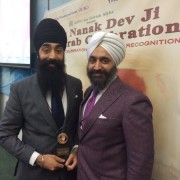
Monday 30th November 2015, London, UK – Sikh Press Association press officer Jasveer Singh was named winner of the Media Services award at a historic Gurpurb event held at the Houses of Parliament last week, hosted by The Sikh Network, Sikh Federation and All Party Parliamentary Group.


The event was attended by MP’s Fiona Mactaggart, Pat McFadden, John Spellar, Emma Reynolds, Keith Vaz, Stephen Timms, Kate Green, Seema Malhotra, Marie Rimmer, Jonathan Ashworth, Imran Hussain, Khalid Mahmood, Julian Knight, Bob Blackman.


Jasveer Singh says, “It is impossible for me to accept this award as an individual, as everything I have done has been part of a team effort. We would humbly like to thank The Sikh Network for this recognition. The Sikh Network is an organisation which encompasses many sevadars representing various organisations that work hard on panthic matters, making this award all the more special”.


Sikh Press Association advisor Randeep Singh collected the award and said, “The Gurpurb celebrations in parliament were fantastic and the perfect occasion to highlight the contribution of those tirelessly working for the Sikh community”. 


Jas Singh of the Sikh Network says, “Through identifying a gap to better connect with and be represented by the mainstream media, Sikh PA have aided the Sikh community. The organisation was launched just a year ago. In that year, they have been bridging that gap and Jasveer has been covering key Sikh issues nonstop. His tireless accurate reporting and coverage has been a huge asset to both the Sikh Community and the wider UK public. Although Jasveer is awarded the recognition, we also acknowledge the excellent contribution by the whole Sikh PA team.”


The Sikh Press Association was formally set up in February 2015 with a remit to provide an interface between the mainstream media and the Sikh community, delivering publicity for the panth. During this time we have received lots of support from the community as well as a growing number of mainstream media outlets and journalists.


Sikh PA work under the banner of charity Everythings13 and are run entirely on donations.


Sunny Singh, Director of Everythings13 says, “It was lovely to see Jasveer being recognised for the work he has done. It’s a great responsibility to ensure that the Sikh community have fair media representation and receiving this award from well-respected organisations in the Sikh community provides the Sikh PA with greater encouragement that it’s making a positive impact.”


To see our work please visit www.sikhpa.com. To donate to The Sikh Press Association click here: http://www.everythings13.org/make-a-donation/

Fears rise over possible hate crimes targeting British Sikhs following Paris attacks – International Business Times

By Priyanka Mogul (@PriyankaMogul)


Several British Sikh organisations have warned against potential hate crimes targeting Sikh men in the aftermath of the Paris attacks. Concerns were raised following incidents of Sikh men being mistaken for terrorists in the US as fears spread over the Islamic State (IS) attack in France on 13 November.

Sikh leaders noted a possibility of similar incidents of hate crime occurring in the UK as Sikh men are visibly identified by their turbans. Many pointed out that while most people are aware of the difference between Muslims and Sikhs, some remain less knowledgeable, resorting to cases of “mistaken identity”.


“We need to make it apparent that this isn’t about trying to single out Muslims from Sikhs. It is about removing the perception that brown people could be terrorists”
– Jagmeet Singh, Basics of Sikhi

“The Paris attacks have put the Sikh community on alert,” Gurjeet Singh from the Sikh Federation UK told IB Times UK. “As turban wearers Sikhs are one of the most visible communities, whenever terrorist incidents linked to Islamic groups occur, Sikhs are subject to hate crimes that can range from verbal abuse to physical attacks on individuals and gurudwaras (Sikh places of worship).”

Many Sikhs in the UK agreed that hate crimes against Sikhs worldwide had increased following 9/11. Jagmeet Singh from the Basics of Sikhi, an organisation that educates people on Sikhism, said that the UK had already begun to see Sikhs being subject to hate crimes after the Paris attacks. He noted an incident shortly after the Paris attacks where a Sikh woman was accused of being an IS member when travelling on the Tube, despite her not wearing a turban. Singh said that this showed how “anyone with brown skin could be a target”.

“With the Sikh male identity being so visible, practising Sikhs are likely to be obvious targets,” said Singh. “Sikhs need to engage more with the media and the general public to show who the men in turbans and with beards actually are. We also need to make it apparently that this isn’t about trying to single out Muslims from Sikhs. It is about removing the perception that brown people could be terrorists. Anyone is capable of bad, no matter a person’s race or religion.”

Other British-Sikh groups echoed Singh’s views, saying that the increase in hate crime was not only a problem for Sikhs. They noted that people with “brown skin, uncut beards, and turbans” have all become synonymous with terrorists. Varinder Singh Bola, a member of the Sikhs Against the EDL group, said that attempting to make a distinction between Sikhs and Muslims would only play into the hands of far-right groups.

“The Sikh community across Europe might find itself more vulnerable to xenophobic and racist attacks than other BME (black and minority ethnic) communities due to their distinct physical appearance,” said Bola, who is also a Councillor in the London Borough of Redbridge.

“However, asking for special treatment from openly racist and Islamophobic groups at the cost of other faiths would not only be politically naïve, but morally wrong and against the teachings of Sikhism. Nobody should have to be a victim of crime due to their gender, race, religion or sexual orientation.”

Meanwhile, City Sikhs referred to the rise in “abhorrent” crimes against British Muslim women following the Paris attacks. Chair of the organisation Jasvir Singh said that although there had been “growing anxiety” among British Sikhs, all hate crimes based on religion must be condemned.

Lord Singh of Wimbledon has reportedly echoed concerns of possible hate crimes against British Sikhs after the Paris attacks. According to the Network of Singh Organisations, Lord Singh has raised the issue with the UK government. While the Home Office said that it was unable to comment on private correspondence, it noted that crime motivated by hatred over a person’s religious beliefs was “deplorable”.

A spokesperson for the Home Office said: “We will work with the police to provide a breakdown of religious based hate crime as part of the data recorded by the police. This will ensure that in the future there is accurate data on crimes committed against people because of their faith and race, including crimes committed against Sikhs.”

If you or someone you know has been a victim of hate crime in the UK, you can report it online atreport-it.org.uk.

http://www.ibtimes.co.uk/fears-rise-over-possible-hate-crimes-targeting-british-sikhs-following-paris-attacks-1530655

Fake Image of ‘Sikh suicide bomber’ is no joke – International Business Times

Respected journalist Hardeep Singh tackles the issue of Sikhs becoming victimised because of a stigma attached to the Sikh identity


“It’s a tragic irony that the identity of the Khalsa is today being conflated with that of Islamic extremism – a force it fought so strenuously against.”


There is good reason Veerender Jubbal, a Canadian Sikh, fears for his safety following publication of a doctored selfie of him in a ‘suicide vest’ holding a copy of the Quran. The image was presented as taken by one of the suicide bombers shortly before the Paris terror attacks – deliberately conflating Sikh identity with that of an Islamic extremist.

I, like many, feared for Jubbal’s well-being. Sikhs in America have faced the brunt of backlash,especially in the aftermath of major Islamic terror attacks. Jubbal fell foul of the most vindictive of pranks, making him a legitimate target for hate and violent reprisals.

READ FULL ARTICLE HERE – http://www.ibtimes.co.uk/paris-attacks-fake-gamergate-image-sikh-suicide-bomber-veerender-jubbal-no-joke-1529364

Arrested Sikh Leaders not allowed Lawyers – Hindustan Times

NOTE – The featured picture is not an image of any of the Sikhs mentioned in this article.

Punjab lawyers on Saturday criticised the Punjab government for not allowing the advocates to meet Sikh leaders, who have been booked on sedition charges and are currently lodged in various jails in complete violation of their fundamental human rights.

Addressing a press conference here, a group of lawyers, led by Amar Singh Chahal and Harpal Singh Cheema, said the advocates defending people against state repression, wrongful killings and false implications in criminal cases are not being allowed by the Punjab government to meet the accused in jails.

“It is unheard of that a person who has been arrested in a criminal case is not being allowed to meet his lawyer in the jail to prepare his defence,” said lawyers.

The lawyers claimed they have been denied permission to meet Sikh leaders Dhian Singh Mand, Mohkam Singh and Bhai Gurdeep Singh Bathinda who were arrested recently by Punjab Police on sedition charges. “I was also denied permission by officials when I went to meet Jagtar Singh Hawara in Tihar Jail on Friday in New Delhi. How can we prepare our defence, if we are not able to meet our own clients”, asked Cheema.

http://www.hindustantimes.com/punjab/lawyers-not-being-allowed-to-meet-jailed-sikh-leaders/story-MzYx7PU5Ua5TbuSRf4s4pN.html

Woman Accuses Sikh Man in Cafe of being Terrorist – TV NZ


FOLLOW LINK BELOW FOR VIDEO INTERVIEW

Medical student Jaspreet Singh, 21, was meeting his professor at the cafe and walked in listening to music on headphones before removing them and putting them in his bag.
The cafe was adjacent to Auckland City Hospital and the woman says she and her colleague were concerned about the possibility the wires were attached to, or part of, a potentially dangerous device.
Mr Singh was spoken to by police, who apologised after he showed them his headphones.
“The fact this gentleman wore a turban was not a contributing factor in my decision to call the police,” the woman says in a statement to ONE News.
I would report any incident that in my opinion threatened the safety of people regardless of their ethnicity.”
– Concerned woman
She says the police welcomed and supported her call, “assuring me of the validity of my decision” while reiterating that such calls are never a misuse of police time or resources.
“As a New Zealand citizen I would report any incident that in my opinion threatened the safety of people and property regardless of the ethnicity of the parties involved.”
And she says while Mr Singh sought no one to blame and “forgave” her, she does not feel any need to forgive herself for making the call and “would not hesitate” to do the same again.
“Aotearoa New Zealand, like every country on our globe, is not immune from any potential terrorism activities.”
Mr Singh says the incident occurred due to racial biases, ignorance and fear, but he did not blame the police for acting on a tip-off.
It was understandable that in the wake of the Paris attacks people were on edge, but society couldn’t let its fears get the better of it.


https://www.tvnz.co.nz/one-news/new-zealand/woman-who-called-cops-on-auckland-sikh-over-wires-says-ethnicity-not-a-factor

Sikh Societies address Media regarding Bapu Surat Singh Coverage

Via Nishaan, an Inter-University Sikh Society Network

An open letter to UK News and Media Agencies,

We, the Presidents of twenty-three University Sikh Societies, are writing this letter on behalf of thousands of Sikh students from across the UK. We are deeply concerned that the media in this country is not covering the peaceful protest of Bapu Surat Singh Khalsa.

Bapu Surat Singh Khalsa is an 82 year-old Sikh activist who has been on hunger strike since 16th January 2015. He is campaigning for the release of Sikh political prisoners who have served their sentence but are still being imprisoned, some of whom were originally convicted under the controversial Terrorist and Disruptive Activities (Prevention) Act (TADA).

We are sad to see that there has been little or no media coverage on an individual who has clearly taken a remarkable stand to champion the human rights of these prisoners. He is now into the eleventh month of his hunger strike and has remained resolute, he will not eat until these prisoners are released. This concern for the welfare of his fellow citizens has resulted in his health reaching a critical state and he is currently being cared for in an Advanced Cardiac Department.

We implore you to investigate this campaign and cover it across your news channels so that the world hears about his protest. Sikh Societies from across the country will be holding awareness campaigns at their respective universities. We invite you to engage with us so that you may learn what drives our community to support Bapu Surat Singh Khalsa.

Please send your response to this letter via email to our Nishaan address, nishaanuk@gmail.com. We will ensure that this is communicated with the University Sikh Society Presidents who have signed this letter below. For your reference, Nishaan is an Inter-University Sikh Society network and has coordinated this collective statement (www.nishaan.net).

Yours faithfully,

Imperial College London                                                University of Birmingham Sikh Society

Queen Mary University of London Sikh Society        University of Keele Sikh Society

University College London Sikh Society                      University of Leicester Sikh Society

University of Westminster Sikh Society                       University of Leeds Sikh Society

City University Sikh Society                                            Cardiff University Sikh Society

King’s College London Sikh Society                               Strathclyde Univeristy Sikh Society

London School of Economics Sikh Society                   Brunel University Sikh Society

SOAS University Sikh Society                                          Anglia Ruskin University

University of Hertfordshire Sikh Society                       Aston University

Kingston University London Sikh Society                    St George’s, University London Sikh Society

University of Oxford Sikh Society                                 University of Warwick Sikh Society

University of Medway Sikh Society                               Royal Holloway Sikh Society

Why Sikhi and Terrorism Cannot Co-Exist

By Dawinderpal Singh


Are Sikhs extremists? Well, extremely nice maybe. Yet, this isn’t always how we are portrayed.


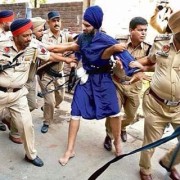
Sikhs are facing a tough time these days. There are people photoshopping images to make them look like terrorists. Indian politicians are spreading libellous dossiers on them whilst police murder Sikh civilians in Punjab. Even a peaceful protest in Britain saw Sikhs being arrested, making news all over the UK, yet ended up with the London Metropolitan police apologising for its conduct on the day.


And it makes me wonder why Sikhs are being subjected to this. We have been in the UK en masse for over fifty years now, and most British people seem to have formed the opinion that Sikhs are nice people. We’re polite and friendly. We’re law abiding, helpful neighbours. Our organisations and temples feed homeless people of all backgrounds without discrimination all over this country.


In Sikhi there is a very important concept called “Sarbat da Bhalla”. The term is repeated in our scriptures and is emphasised heavily in our daily prayers. It means “blessings for everyone” or literally “may everyone prosper”. This is actually what Sikhs pray for; not for our own prosperity, nor blessings solely for the Sikh community, and not even for the welfare of our own family. Sikhs are so committed to the concept of equality and freedom for all of humanity that we explicitly pray for it several times a day.


Is that really the behaviour of terrorists?


Sections of the British public often criticise Muslims for not condemning the violent acts committed by groups in the name of Islam. Well, as a Sikh, I wholly condemn the actions of any and all terrorists. Those who aim to strike fear into the masses and cause terror are the very people who the Sikhs stand up against.


We do not want the public to live in fear. We want people to have the freedom to say what they want, to express their beliefs and to be who they are. Sikhs want a world in which everyone is able to express themselves whether they are male or female; black, white or brown; Christian, Muslim, Hindu, Jewish or any other faith; straight, gay, bi – we don’t care.


We would like for all of humanity to live peacefully as one, and for us all to celebrate in our diversity. “Extreme” Sikhs are those who simply pray for it more often than the rest of us.


The Daily Mail recently reported claims that Sikhs are learning how to make explosives in their places of worship (Gurdwaras). This is defamatory nonsense. Gurdwaras are usually open plan, and in all cases there are no private areas; anyone off the street is allowed into them. It would be a ridiculous place to try to devise any strategy of terrorism.


Another ridiculous assertion in the same report is that a Sikh organisation has collected close to £100,000 to form a separate Sikh country. Sikhs typically tend to be well-educated people, while some Sikh gurdwaras in the UK are decked in marble and have gold trimmings all over them. Realistically, British Sikhs would not attempt to create a nation using a budget that does not even not cover the price of a studio flat in Southall.


These are clearly lies being spread by people who know little about British Sikhs or the key principles of Sikhi.


It’s no secret that there is animosity between India’s authorities and the Sikh community. Indian politicians have recently been accused of corruption and illegally exploiting the Sikh farmers of Punjab. Many Sikhs are still not satisfied that justice has been served following the genocide perpetrated against innocent Sikh civilians in 1984, which the government and armed forces of India supported. Just last month, two Sikh peaceful protesters were killed by Indian police. The Sikh diaspora are shedding their loyalty to India as a nation and today, a lot of UK-born Sikhs consider themselves simply as British; not British-Indian or British-Asian.


There is indeed a movement taking place. Sikh youths are beginning to take an interest in their faith. They are being inspired by seeing Sikh organisations offer free food to stranded or homeless people in the UK, as well as providing food, shelter and first aid to victims in war-torn or disaster-struck nations all over the world. And they are discovering for the first time how Sikhi preaches equality and freedom for all. It would be unjust to label this as a negative “radicalisation”.

Atam Academy Given Clearance to Open – Ilford Recorder

The Atam Academy, which is due to open in September next year, will be situated in Little Heath, Chadwell Heath.

A statement from the school said that after “many months of hard work” by the Education Funding Authority (EFA), the five acre site on the former Redbridge College playing fields had been allocated to the new school.

The Atam Academy will be opening the primary school with reception and Year 1 classes in September.

The secondary school will open in September 2018. Initially the school will be based in temporary accommodation on the permanent site while the new build progresses. The permanent site is envisaged to be complete by early 2018.

The statement read: “Our pupils will be fortunate to have a new build school with state of the art facilities.

“We look forward to fulfilling our commitment to educate all our students to become everything that they can be and are meant to be, and prepare them to play their part in all dynamic, multi-faith, multi-ethnic and multi-talented society.”

Mankamal Singh, co-founder and chairman of governors, said the past few years had been “challeging”.

“To reach this milestone is a huge achievement,” he said.

“We would like to thank all the parents, the governors and members of the community for supporting the Atam Academy. The EFA have worked tirelessly to secure a suitable site and we can now bring to life what was just a concept in 2013.

“I am extremely excited and looking forward to working with the project team to get us to September 2016.”


http://www.ilfordrecorder.co.uk/news/education/former_redbridge_college_site_set_to_become_borough_s_first_sikh_school_1_4315094