

Panjab rises against Indian government university subjugation
An organic largely Sikh led protest movement dominated Panjab over the last two weeks, triggered by opposition to Indian State overreach into higher education in the state.
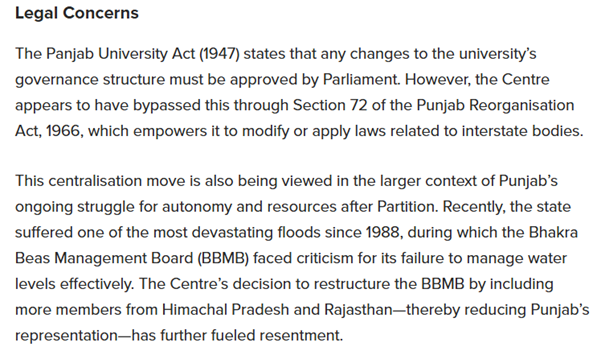
On 28th October, the Indian Ministry of Education issued a notification that Prime Minister Narendra Modi’s BJP government would be making changes to Panjab University, both at a leadership level and regarding student right to protest.
Panjab University, based in Chandigarh and nearly 150-years-old, has a history of student activism and is a site of efforts to preserve Panjabi culture and history, something which many Panjabis feel is under attack from India’s Hindutva (Hindu extremist) regime, which is seen as trying to force an umbrella Hindu/Hindi culture on all states considered part of India.
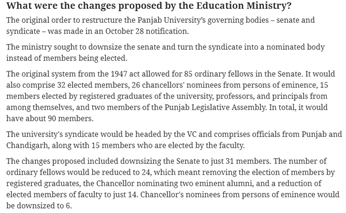
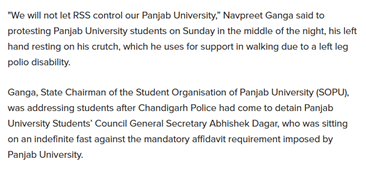
In response to the forced overnight changes, various actions were immediately undertaken by Panjab University (PU) activists, including a general student strike, staff walk outs, sit in campus protests and an indefinite hunger strike from Abhishek Dagar, the student campus general secretary. Dozens of interviews on social media saw students and staff speak against the government’s overhauling of the structure of PU, through converting an elected leadership syndicate into a completely nominated body, and reducing the numbers of the PU senate, whilst stopping elections for the senate altogether. Within the conflict, several senior PU staff members have been accused of being complicit in the government takeover of the institution, causing a complex back-and-forth regarding the PU position in the early days of the protest. Suggestions the protest should be confined to a petition or awaiting talks have largely been dismissed by lead protesters, who insist on taking more direct action.
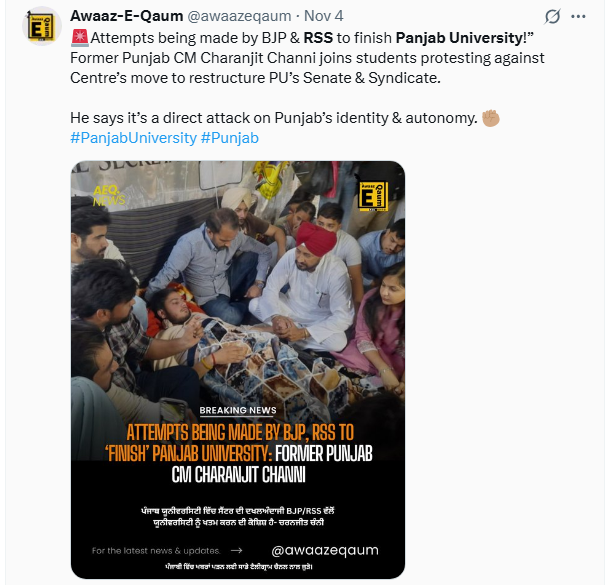
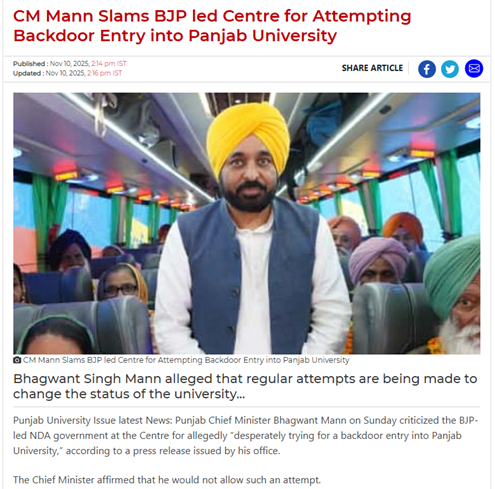
As the issue became bigger in early November, every major Panjab political party issued a statement against the in-power BJP Party which was attempting to oversee the coup of Panjab University leadership, including Panjab Chief Minister Bhagwant Mann, underlining the vast Panjab opposition to the move.
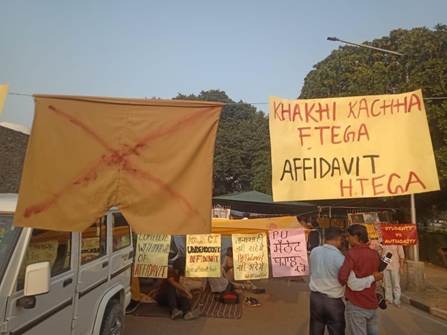
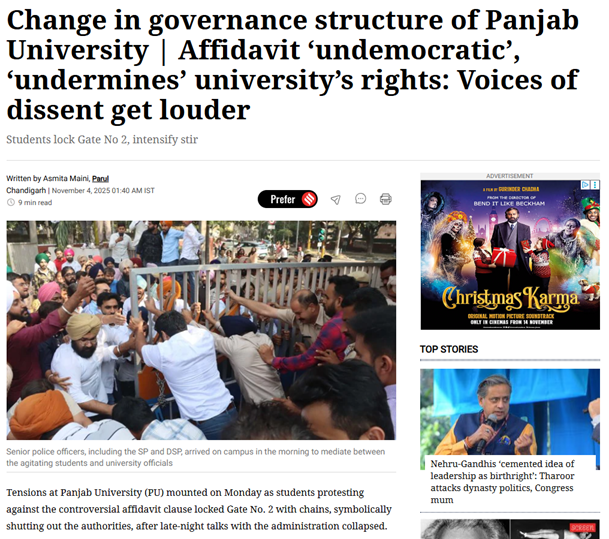
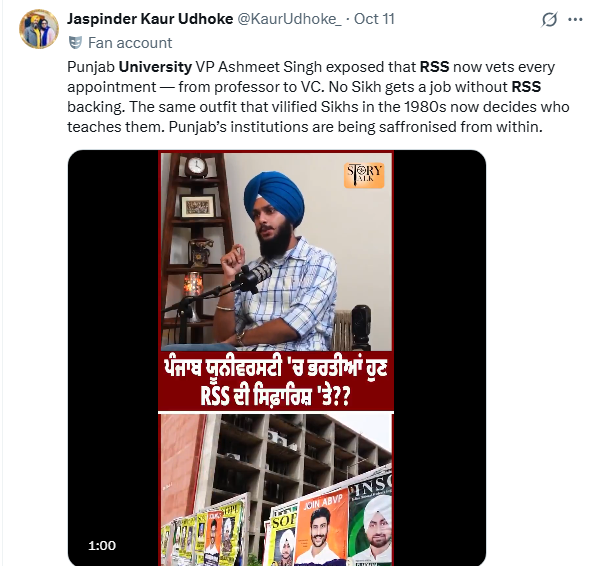
As is standard in such situations, Indian authorities met the peaceful protest with a violent response, which only strengthened the resolve of demonstrators. Many openly claimed the RSS (Hindu extremist faction which works as a goon agency for the nationalist government) were behind the attack on Panjab high education and were also present within the heavy-handed police response teams. In defiance of this RSS attack on Panjab, protesters held up khaki shorts (which is part of the militant marching wear of the RSS) with a big red cross drawn on it. Police were also accused of being visibly intoxicated, as they were seen drinking alcohol on the job over days of protest.
PU Student Council Vice-President Ashmeet (also spelled Ashmit in English language media) Singh was particularly praised for his role in speaking against the takeover of PU and the agenda behind it. Singh was vocal about government talks about the changes being used as “delay tactics” to stifle a growing protest. A popular figure, upon his election in September’s student election at the university, Ashmeet Singh’s team unveiled a celebratory image of Bhai Jaswant Singh Khalra, as a sign of connection to the revered defiant philosophy advocated by the famous Shaheed (martyr), which also attempted to resist central state subjugation.
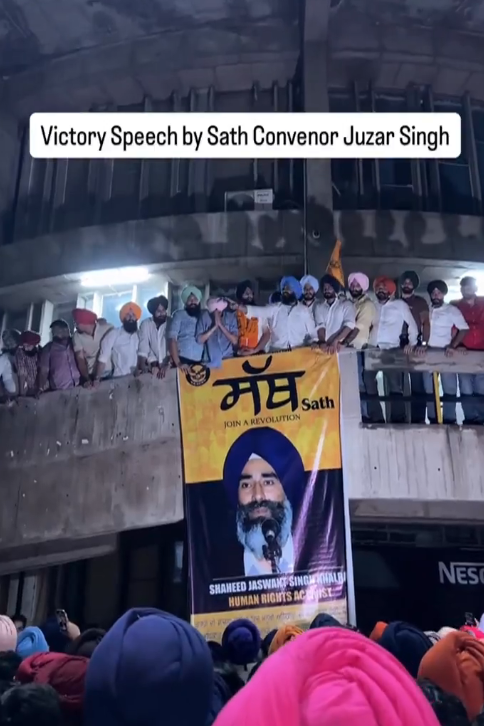
After days of protest and police clashes, a government withdrawal notice regarding the changes was issued on 4th November, presented as a victory to the protesters. However, when Panjab Uni leads came to sign off to accept the withdrawal notice, it was recognised that the wording of the latest withdrawal notice was changed from an earlier circulated statement, now less concrete, leaving space for continued government influence. Thus, PU leads and protesters refused to accept the withdrawal notice and continued protesting. However, Abishek Dagar did end his hunger strike.
It was after this second rejection of the government’s then amended PU changes that the protest took to a new level, as farmer groups and other Panjabi activists and political figures became directly involved to challenge this latest attempt by Prime Minister Narendra Modi’s regime to deconstruct Panjab’s cultural infrastructure. CM Bhagwant Mann did not hold back when he said, “The BJP is suffering from anti-Panjab syndrome, due to which they are hell-bent on destroying the state”. However, Mann is viewed by many as someone who has also inflicted untold damage on Panjab during his current reign as CM, in consideration of situations like the #PanjabUnderSiege period, the treatment of political prisoners and more.
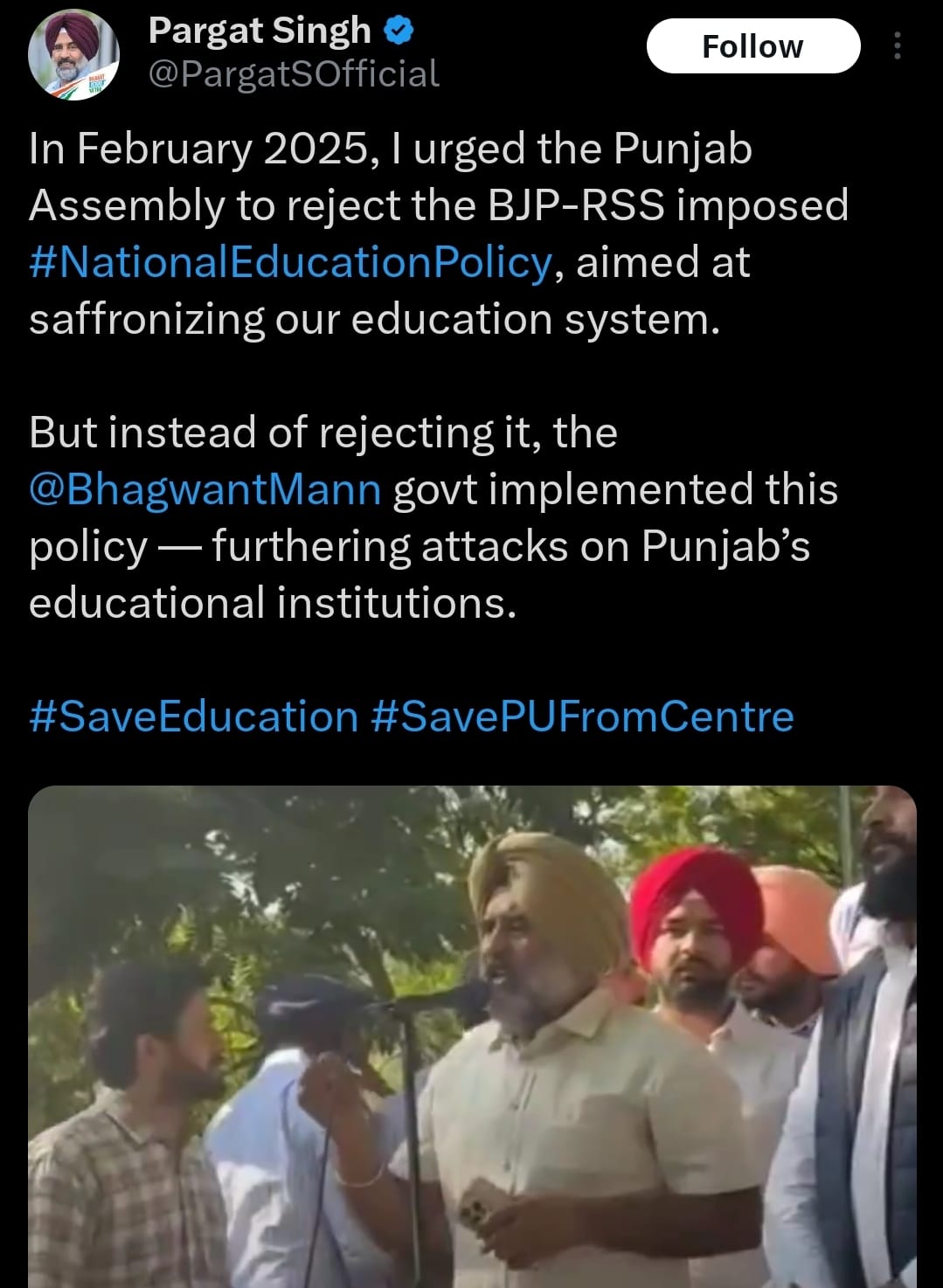
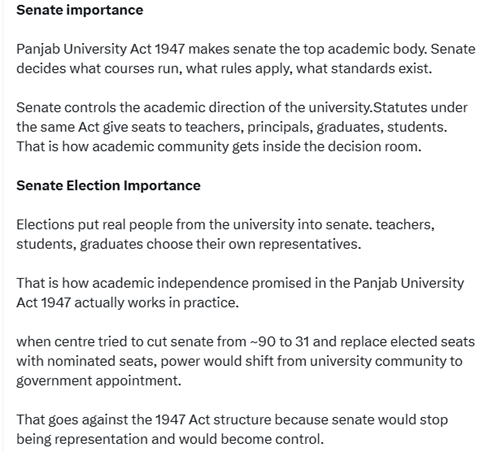
On 7th November the government finally relented and entirely withdrew the changes being forced on PU altogether. Yet, protesters were concerned that there was no pending date for a senate election, indicating a potential absence of control which could later be exploited by the government. The reduction of the senate was one of the original changes by government contested by the Panjabi University protesters, a change which would also eliminate future elections. The last PU senate election was over one year ago.
As such, 10th November was set as a date for a mass protest to force a date for the PU senate elections and continue to show defiance against India’s centre (central government- viewed as a tool for the Hindu upper-caste elite to control India). Students under the banner ‘Panjab University Bachao Morcha’ called for an indefinite shutdown to the university and refused to end the agitation until at least a senate election date is set.
Over this entire period of protest, whilst videos of police using violence went viral online via attendees, such footage is noticeably absent from nearly the entirety of India’s mainstream press and news teams up until 9th November, when scenes peaked through to the 10th. Authorities claimed they were trying to prevent non-students from entering the campus. However, various videos embarrassed the police for heavy handed violence. A professor decried the police for acting against “empty handed” protesters and police were directly exposed on camera after their violence had subsided, in two viral clips. By this stage the agitation was so big it was impacting local traffic, as groups overcame barricades and police to get on to the PU site. Camps for overnight sit-ins were set-up. However, dozens (possibly hundreds) were arrested, including leading #FarmersProtest figures, as they attempted to attend.
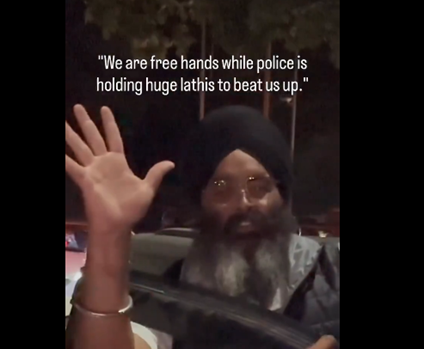
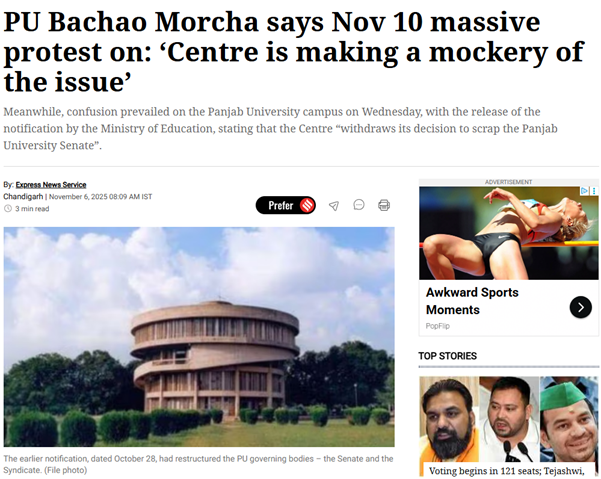
The 10th November protest was a historic day of resistance for Panjab. Groups overcame locks, barricades and police lathi (stick- police weapon in India) charges to demonstrate on campus. Estimates suggest anything from 5000-15,000 protesters of all ages and backgrounds joined the stand, in a show of Panjabi solidarity against ongoing attempts to “centralize” the state’s institutions, bringing them under further control of the non-Sikh upper-caste Hindu establishment of India.
After the day of protest, questions have been put to the in-power party AAP, as to why Punjab Police -deployed at AAP demand- were acting violently to a protest AAP claimed to support. Although largely Sikh led, it was evident that countless Hindu Punjabis also stood against the BJP overreach, only to themselves become targeted by the Hindutva (Hindu extremist) hate campaign which is so prominent on social media, particularly X/Twitter.
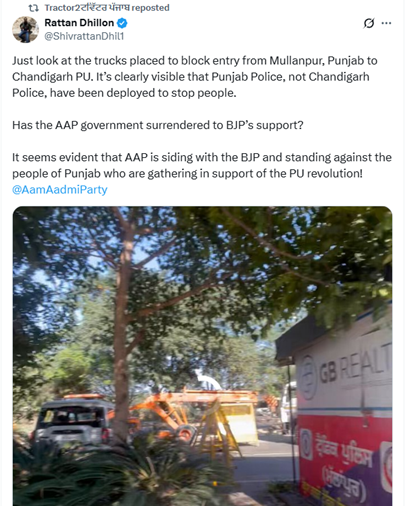
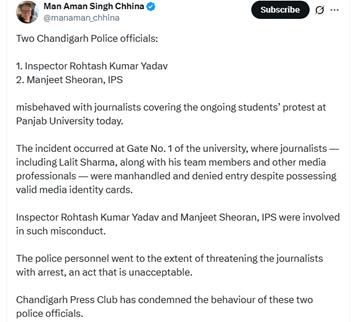
Journalists of the Chandigarh Press Club were also vocal about being victims of police violence on the day. It became evident three different forces – Punjab, Chandigarh and Haryana Police – were all deployed at various areas around PU campuses to stop protesters attending, using violence to disperse groups.
As of 11th November, the protest is still ongoing, and will remain so until a senate election date is approved by central government. Prime Minister Narendra Modi is yet to comment on the situation.


Leave a Reply
Want to join the discussion?Feel free to contribute!