
Sikh farmers imprisoned and assaulted, as 300million make anti-US trade stand
Sikh farming communities were once again subject to extreme police violence, as plans for a protest were met with assault and imprisonment, just before 300million people took part in a nationwide strike this week.
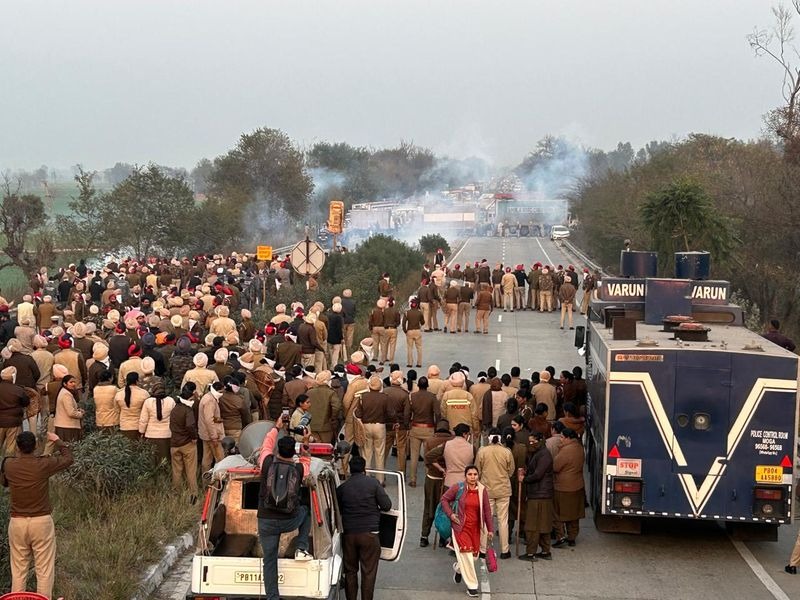
On 6th February the predominantly Sikh-led farmer union group BKU (Bharti Kisan Union) organised a protest march into Bhatinda (Punjab), which was met with a violent blockade of 1500 police officer, by Rampura Phul on the Bathinda-Chandigarh National Highway.
Officers randomly fired teargas cannisters and water-cannons at the gathered protesters, which included Jagdeep Singh Jagga, Deputy Mayor of Patiala and State Secretary of the Aam Aadmi Party. A viral video of Jagga shows him receiving a “burst eye” from taking a brutal water-cannon beam directly to the face from short-range. Various other protesters were injured from police strikes, teargas and water-cannons.
The march was originally organised to demand the release of farmer protesters who had been imprisoned since 2025 without conviction for any crime, and also demanding the reinstatement of teachers at an Adarsh School in neighbouring Chauke village, in a protest collaboration with teacher unions.
When plans of the protest broke, various farmer activist figures found themselves with police at their front door that morning, with reports of dozens of arrests, which included incarcerating female family members of some of the activists. Sukhdev Singh of BKU said “many of our leaders have been detained in different parts of the state”.
An overall rise in authoritarian-style police operations against Punjab’s government critics has been reported in 2026, as well as concern of a rise in “fake encounter” police murders also being alleged by some Sikh groups.
The particularly brutal and heavy-handed attack on the Punjab farmers last week was partly believed to be driven by the government’s desire to quell Sikh activist influence on the rest of India, attempting to avoid scenes similar to what was seen in the 2020 #FarmersProtest movement. This would be of particular concern to Prime Minister Narendra Modi’s BJP administration currently, due to the follow-through of a mass nationwide protest which occurred on 12th February this week.
An estimated 300million took part in the nationwide strike driven by labourers regarding both “BJP policies” and recent trade agreements with the USA. Many of Punjab’s Sikh-led union and worker rights activist groups supported the strike and played prominent roles in encouraging the demonstration.
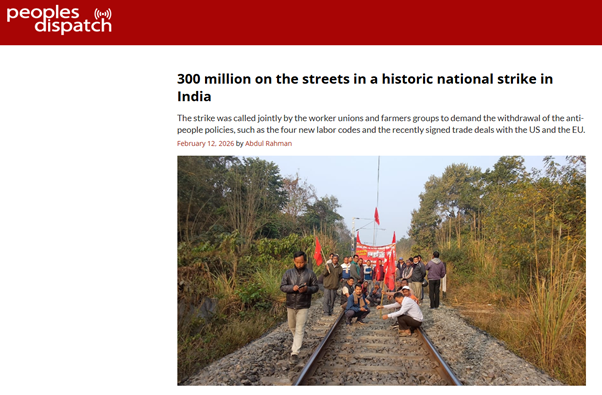
Along with criticism of BJP’s general day-to-day governance, farmer groups also complained that India’s recent free trade agreements with New Zealand, Europe and now the U.S. were poised to ruin India’s farm sector, as the local markets would be inundated by cheaper products.
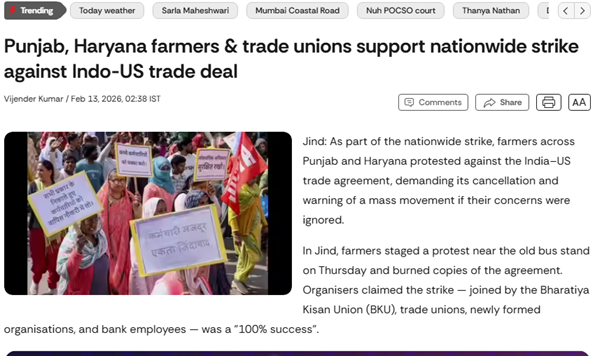
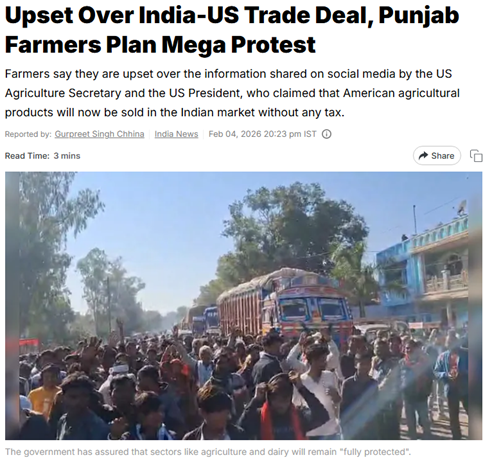
Amarjeet Kaur, general-secretary of All India Trade Union Congress, a prominent union that took part in the strike, said “Cheap American farm produce will be dumped in India, making it difficult for our farmers and small businesses to compete”. In response to the concerns from union groups, Narendra Modi’s BJP government says the deal will “expand exports, attract investments and strengthening strategic ties with the US”.
Further strikes are being planned, with groups like the BKU and its Sikh leaders at the forefront of not just a Punjab pushback against government, but a nationwide resistance involving hundreds of millions.
Speaking on the protests, Sikh Press Association Chief Press Officer relayed concerning beliefs:
“The news of this violence against Punjab’s Sikh farmers and the information about hundreds of millions going on strike in India is being throttled on social media. None of this goes as viral as it once did, even when it replicates the same imagery and narrative which made these issues so important to the Sikh diaspora in 2020. In 2026, we are in a different world, and within that there are many reasons as to why these issues are not as visible to the Sikh diaspora as they may have been five-years-ago. I have no doubt that one of these reasons is an increase in India’s control on social media and searchable news content.”


Leave a Reply
Want to join the discussion?Feel free to contribute!