
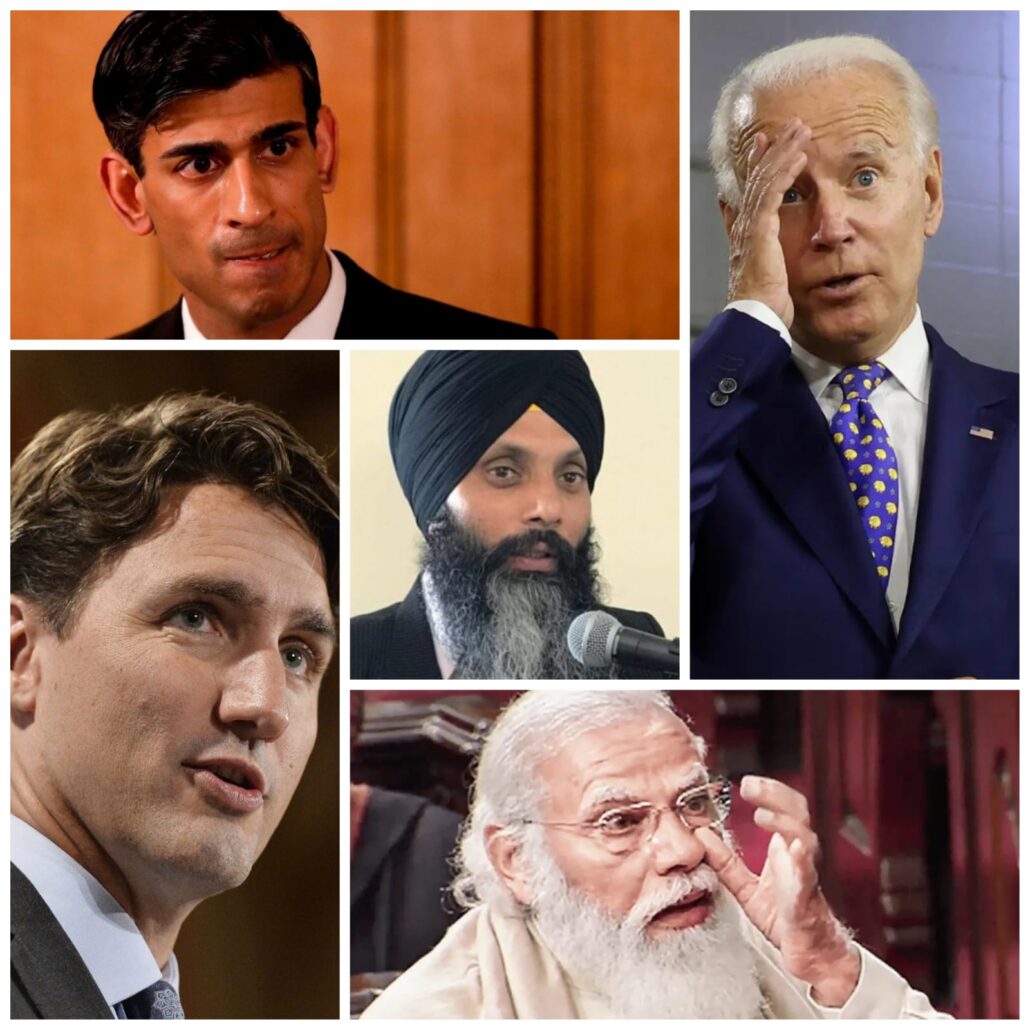
The ongoing fallout of the Sikh assassination: Indo-Canada conflict story
Canadian Prime Minister Justin Trudeau’s statement last Monday exposing Indian authorities in the assassination of Shaheed (martyr) Bhai Hardeep Singh Nijjar sent shockwaves through global political circles and within Sikh communities too.
Here we share our latest update on the ongoing mass fallout around this situation.
According to the New York Times, it is confirmed that US intelligence agencies were the Five Eyes partner that gave Canada context which allowed them to conclude that India had been involved in Nijjar’s murder, implying their support of the accusations. The Canadian authorities received intelligence from multiple countries in total but the USA has been singled out for their involvement.
The “smoking gun”, gathered by Canadian officials, was the intercepted communications of Indian diplomats in Canada indicating their involvement in the plot. These diplomats have since been exposed and expelled. You can read more about this here: https://www.sikhpa.com/indian-diplomat-involvement-confirmed-in-canadian-sikh-leaders-assassination/.
In late June 2023, after Nijjar was murdered but before Trudeau’s statement, several Khalistani activists in the US were warned by the FBI that their lives were also at risk. In a statement earlier this week, US national security adviser Jake Sullivan said that India does not have “special exemption” to carry out actions like extrajudicial killings, for which the US criticises rival countries like Russia and China.
The US is India’s largest trading partner, yet it is evident that they are behind Canada’s accusations, prompting questions about where things will go from here. For decades a belief within Sikh circles that the Canadian government put their trade relationship with India over Sikhs, it is becoming increasingly possible that alliances between the countries will soon break. This is specifically being pushed for regarding an intelligence sharing agreement between Canada and India signed in 2018, a move supported by various Canadian Sikh groups.
The UK government is still quiet on the matter, disappointing various Sikh communities that there is no further comments than those made immediately after Trudeau’s statement, pertaining to their support of an investigation, and urging India to cooperate.
In the eyes of much of the British Sikh community, PM Rishi Sunak has shown that he stands with Modi’s government, with a prioritisation of trade over the release of Jagtar Singh (Jaggi) Johal. There was hope among some groups, however, that the Labour opposition would push for the UK government to support Canada’s accusations, but this is yet to be seen.
As part of an ongoing response to the situation, Indian authorities have reportedly adopted a “two-pronged plan”, where they identify the properties of those who are wanted in India but living abroad, and also revoke the Overseas Citizenship of India (OCI) cards of anyone viewed as a supporter of Khalistan (free Sikh homeland movement).
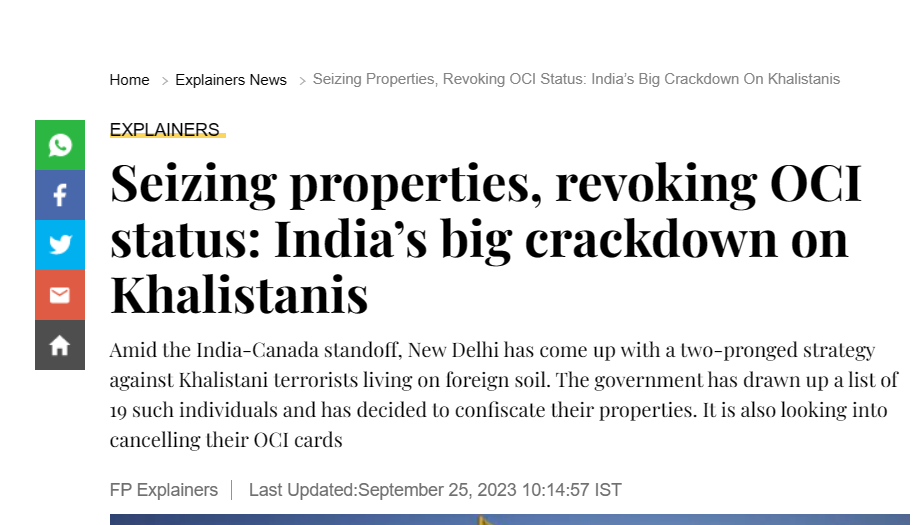
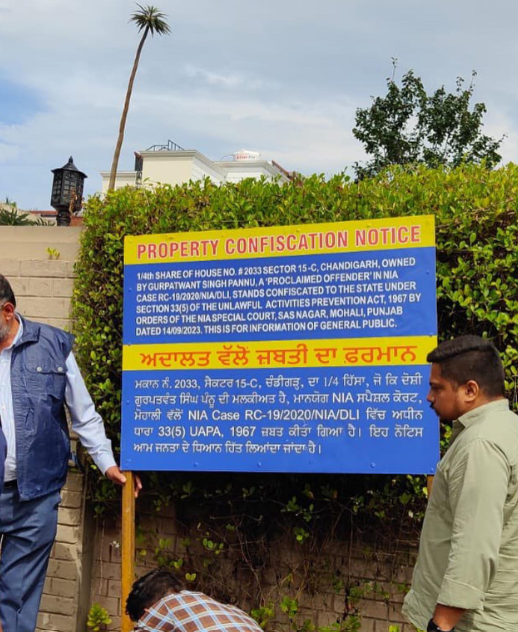
Acting upon this, India’s National Investigation Agency (NIA) has seized the properties of Gurpatwant Singh
Pannu, a lawyer living in New York (USA), who is also the head of Sikhs For Justice, the advocacy group behind the Khalistan Referendum campaign. The shocking act to punish the family of Pannu (also spelled Pannun) has highlighted India’s draconian measures to counter criticism.
Overall, India’s response to the allegations, both from the government and media, has been
called out for being dismissive, comical, and insensitive. There are several examples of Indian media making up stories unfit for their own purpose.
In a statement, the Shiromani Gurdwara Parbandhak Committee (SGPC), a governing body which manages Gurdwaras in India, called out and condemned the hate propaganda against Sikhs and Punjab that is being propagated by Indian media as a response to Trudeau’s statement.
Since Trudeau’s statement a spotlight has been shone on issues that the Sikh community
has had to deal with for decades on their own. A BBC article acknowledged the “undue pressure” that the British Sikh community has faced from the Indian and UK authorities, specifically referencing the treatment of Jaggi as well as the excessive and unwarranted focus on “Khalistani extremism” in the Bloom report.
There is also attention on individual cases such as that of Kulwant Singh Mothanda who told The Times about how he found his name in the main Indian news and on an intelligence hit list after he attended a protest.

In this newfound Western acknowledgement of Sikh issues, calls for the cases of other suspicious deaths abroad, such as those of Avtar Singh Khanda and Satwinder Singh Bhola, are being amplified.
The case of the WestMidlands3 which the UK authorities allowed to be tried, even though there was no evidence and the case had to eventually thrown out of court. In hindsight, many feel shocked that Sikhs were being treated this way by their governments.
Meanwhile, there have been statements globally from different Sikh organisations in support of Trudeau’s statement and calling for more to be done.
The Canadian Sikh community urged all Canadian political parties to present a united front
against India through a statement from BC Gurdwaras Council and Ontario Gurdwaras Committee.
There are plans globally for protests outside Indian embassies. Protests on Monday the 25th September outside the Indian General Consulate inn Vancouver and San Francisco take place today, and outside India House in
London (UK) on Monday the 2nd of October.


Leave a Reply
Want to join the discussion?Feel free to contribute!