Media campaign related posts

When is Vaisakhi and what does it celebrate? – Birmingham Mail

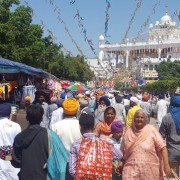
Vaisakhi is an annual celebration of the founding of the Sikh religion as a collective faith.

It’s held on April 13 each year.

The date is the anniversary of the founding of the Khalsa in 1699.

The Khalsa is the name for the Sikh order or community into which all followers of the religion are baptised or initiated.

CLICK LINK TO SEE VIDEO – http://www.birminghammail.co.uk/whats-on/whats-on-news/vaisakhi-what-celebrate-11143133

Watch as thousands join Sikh Vaisaki procession through Hounslow – Get West London

Organisers estimate around 3,000 people took part in the annual parade on Sunday, with even more lining the streets to watch.

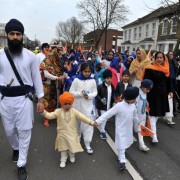
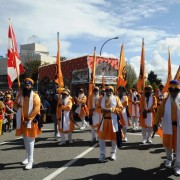
Around 3,000 people joined a colourful Sikh procession as it wended its way throughHounslow on Sunday (April 3), organisers have estimated.

Crowds gathered at the side of the street to watch the annual Vaisakhi parade, with the event thought to have attracted a combined total of around 7,000 participants and spectators.

CLICK HERE FOR FULL ARTICLE – http://www.getwestlondon.co.uk/news/west-london-news/watch-thousands-join-sikh-vaisaki-11135605

Vaisakhi Day celebration of Vancouver’s Khalsa Diwan Society on April 16 – Voice Online

VANCOUVER’S Khalsa Diwan Society is holding its annual Vaisakhi Parade this year on Saturday, April 16 and is asking everyone to be a part of the celebration.

The program schedule:

7-9 a.m.: Kirtan (hymn singing)

9-9:30 a.m.: Reception of dignitaries

9:30-10:30 a.m.: Speeches

10:45 a.m.: Ardas

11 a.m.: Departure of Parade from Gurdwara Sahib

4 p.m.: Return to Gurdwara Sahib

The Society said that Vaisakhi it is a very important day for Sikhs and one of the most colourful events in the Sikh calendar. It occurs during mid-April every year and traditionally concurs in Punjab with the first harvesting of the crops for the year. So, historically, it has been a very joyous occasion and a time for celebration. Since 1699, it has marked the very significant religious event of the creation of the Khalsa.

It noted: “The Khalsa Diwan Society is a pioneer Sikh society which took root on July 22, 1902, and was formally established in 1906. In 1908, the Society purchased and built the first Sikh

Gurdwara at 1866 West 2nd Avenue, Vancouver. This Gurdwara served the community until 1970 when the new Ross Street location was opened. The Khalsa Diwan Society has played a major role in social and economic development of the Indo-Canadian community in BC and in raising Sikhi related issues and getting recognition for Sikhs in Canada.”

Telephone: 604-324-2010, Fax: 604-322-0504, E-mail: kdsross@live.com

Via – http://www.voiceonline.com/vaisakhi-day-celebration-of-vancouvers-khalsa-diwan-society-on-april-16/

10 FACTS You must know about Khalsayee Festival Hola Mohalla – Singh Station

By Gurinder Kaur


1. Hola Mohalla is a Sikh festival celebrated in the Bikrami month of Phalgun. It has nothing to do with Holi except that Hola falls on the day next to Holi.

2. The word ‘Hola’ has been derived from halla meaning attack and hence Mohalla for the place of attack – Holgarh in Anandpur Sahib.

3. Hola Mohalla was started by the tenth Sikh Guru, Guru Gobind Singh ji as a gathering of Sikhs for military exercises and mock battles to train the army.

4. It is an occasion for the Sikhs to re-affirm their commitment to Khalsa Panth.

5. The first Hola Mohalla was celebrated in AD 1670 a year after the birth of the Khalsa Panth.

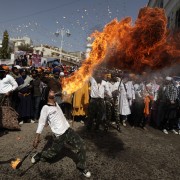
6. The celebrations of Hola Mohalla are still centred at Anandpur Sahib and have a considerable element of the mock battles in the form of Gatka, mock fighting on horseback, dagger play and more demonstrated by the Nihang Singhs who flock to Anandpur Sahib in large numbers.

7. Holla Mohalla is celebrated for three-days that implies an organised procession (Nagar Kirtan) in the form of an army column accompanied by war drums and standard-bearers, and proceeding to a given location or moving in state from one Gurdwara to another.

8. Today Hola Mohalla has grown into a huge fair and attracts people from all over the country and the world to participate or watch this Khalsayee festival.

9. At the Hola Mohalla, one can observe Langar at close quarters from different Sikh congregations welcoming pilgrims and visitors irrespective of their caste, creed or religion.

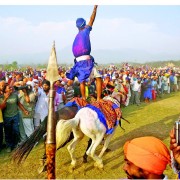
10. Last but not the least, Holla Mohalla is a sense of liberated living that can be felt in the energetic expressions of Nihangs riding their horses at high speeds, while performing acrobatics on the horse backs.

VIA – http://singhstation.net/2015/03/10-facts-you-must-know-about-khalsayee-festival-hola-mohalla/

Hola Mohalla Described by Kulbir Kaur

By Kulbir Kaur


In addition to the traditional Holi, Sikhs celebrate Hola Mohalla, which was given a new form, new significance and a new name by Guru Gobind Singh. The word Hola means halla (attack) and “a military charge”. Mohalla implies an organised procession in the form of an army column. The Guru, in true spirit of “saint-soldier”, made Hola Mohalla an occasion for Sikhs to demonstrate their martial skills and at the same time to be imbued with the spiritual word in the form of shabad. The event was reinvented to revive the spirit of brotherhood and martial ethics in the Sikh community.

The sacred Guru Granth advises Sikhs to play a pure Holi by immersing themselves in Naam-simran (meditation involving chanting of the divine name). “I am imbued with the deep crimson colour of the Lord’s divine love; My mind and body have blossomed forth, in utter incomparable beauty,” says the Guru. Sikhs celebrate Hola Mohalla at Anandpur Sahib in a celebration marked by shabad-kirtan, langar, processions and poetry-recitals. The main attraction of the event are the feats shown by Nihangs like gatka, horse-riding, standing on speeding horses, etc. The festival of Hola Mohalla showcases the true colours of bravery.


VIA – http://www.deccanchronicle.com/opinion/op-ed/230316/mystic-mantra-holi-dahan-of-hatred.html

Thousands throng Anandpur Sahib for Hola Mohalla

Thousands of devotees converged on the Sikh holy town of Anandpur Sahib on Wednesday to take part in the Hola Mohalla festival of Sikhs.

It was a virtual sea of humanity of men, women and children near the main shrine, Takht Keshgarh Sahib, which holds significance in Sikhism. The three-day Hola Mohalla celebrations coincide with the Hindu festival of Holi.

All roads to the holy town, which is home to the second most important Sikh shrine after the ‘Harmandar Sahib’ (popularly known as the Golden Temple) in Amritsar, had heavy vehicle movement with people coming in hordes on buses, trucks, tractor-trolleys and other vehicles.

Anandpur Sahib is located about 85 km from Chandigarh.

It was at this shrine that the 10th Sikh master Guru Gobind Singh had in 1699 baptized five men and founded the Khalsa Panth, which is the modern-day Sikh religion.

The Hola Mohalla celebrations made its beginning around 1701 as Guru Gobind Singh wanted his troops to have mock battles to keep them battle-ready.

“Hundreds of Nihang Sikhs assemble in this religious town for the Hola Mohalla celebrations and show their prowess through the Gatka martial art,” Avtar Singh, a local resident, told IANS.

Leading political parties like the ruling Shiromani Akali Dal, opposition Congress and new entrant Aam Aadmi Party (AAP) organised their respective political conferences on the occasion.

VIA – http://www.hindustantimes.com/punjab/thousands-throng-anandpur-sahib-for-hola-mohalla-sikhism-takht-keshgarh/story-xmoUkjWvFd0QSFDVoRiTCN.html

Sikhs welcome their New Year with Sikh Environment Day – Hindustan Times

The Sikh community welcomed their New Year by offering prayers at the Golden Temple and by taking part in religious functions that were organised in various shrines of the city as well as at homes.

March 14 or the first day of the month of Chet marks the beginning of the Sikh New Year, which is Nanakshahi Samat 548. The main function was held at Dewan Manji Sahib Hall in the Golden Temple complex where a well-attended ‘Gurmat Samagam’ (religious function) was held. Harmandir Sahib Head Granthi Giani Jagtar Singh wished the community a happy and prosperous new year.

Environment Day

Later in the day, the ‘gurta gaddi diwas’ (enthronement) of seventh guru, Guru Har Rai was celebrated as ‘Sikh Environment Day’. The guru was a great lover of nature and ordained his followers to plant trees and keep their surroundings neat and clean.

To mark the occasion, the Shiromani Gurdwara Parbandhak Committee (SGPC) distributed saplings of various varieties as ‘parsad’ at the Golden Temple and other shrines in the city. On the directions of SGPC chief Avtar Singh Makkar, plants and saplings of trees were planted outside the offices of the gurdwara body here and also in the lawns around the shrine complex.

SGPC additional secretary Daljit Singh Bedi said saplings were also planted in all SGPC-run educational and professional institutions and at its ‘sarais’ (resting place for pilgrims). A special cleanliness drive was launched in SGPC residential colonies.

The SGPC began celebrating the ‘gurtta gaddi diwas’ as ‘Environment Day’ on the suggestions of EcoSikh, US-based environmental group.

This year, EcoSikh gave a call for the introduction of organically grown ingredients in meals served in the ‘langars’ (community kitchens) of gurdwaras. The SGPC has already made a beginning in this direction by starting organic farming of food items particularly wheat and vegetables, on a portion of the agricultural land owned by the religious body.


VIA – http://www.hindustantimes.com/punjab/sikhs-welcome-their-new-year-with-prayers-at-golden-temple/story-OIoawTURTixbG9nCFTvOCN.html

Hindu Taliban Rule India – Guardian

By Anish Kapoor

The Hindu god Vishnu has several incarnations, many of them human. The latest of these appears to be Narendra Modi. All over India there are images of the man, right arm raised in the benevolent gesture of good fortune. But this strong-but-enlightened-man image hides the frightening and shrill reality of an increasingly Modi-led Hindu dominance of India.

The country’s openness to social and religious minorities (more than 500 million people) and regional differences is at serious risk. Of late, Modi’s regime has effectively tolerated – if not encouraged – a saffron-clad army of Hindu activists who monitor and violently discipline those suspected of eating beef, disobeying caste rules or betraying the “Hindu nation”.

In the UK, people might perhaps be familiar with India’s cricket prowess, atrocities in Kashmir or the recent horrific rape cases. But beyond that, many of us choose not to know. India’s global image now mimics China’s – a rising global economic power with attractive trade and investment opportunities. As a result, business trumps human rights, with little concern, especially on the part of David Cameron’s government, for the rising wave of Hindu tyranny.

All this is good news for Prime Minister Modi, who flew into London today. He won’t be seriously called to account for human rights abuses or systematic thuggery. If there is one thing that has marked the man’s first year and a half in power it is this: he is not a man who takes kindly to scrutiny or criticism. In fact, he has used the very economic agenda that causes Britain to turn a blind eye to his regime’s human rights abuses to muzzle dissent within India.

Modi’s latest move has been the strangulation of Greenpeace India, culminating last Friday with the organisation’s licence to operate being removed. Respect for human rights and environmental organisations is so often a litmus test for the democratic state of a country. Worryingly, the Indian government has been cracking down on all “foreign-funded” charities for the past year, claiming that the national economy is threatened by environmental restrictions and other “un-Indian” activities. Nine thousand NGOs have been “de-registered” in a concerted effort to force out these “nuisance” groups and cast them as foreign enemies.

Of late, many Indian journalists and human rights activists have been harassed and threatened with “sedition” charges: for example, Teesta Setalvad, who still seeks justice for the victims of communal violence in the state of Gujarat in 2002, when Modi was the state’s chief minister; and Santosh Yadav, arrested in September in the state of Chhattisgarh on what Amnesty International believes are fabricated charges resulting from his investigatory journalism exposing police brutality against Adivasis (indigenous people). A few weeks ago, even a musician who sang a satirical song criticising the state governor of Tamil Nadu over alcohol sales was charged with “anti-Indian activity”.

This alarming erosion of democracy is a slippery slope that may end up targeting not just minorities and “outsiders” but any dissenting “insiders”. What I’ve seen happening is a spirit of fear taking hold, which threatens to silence activists, artists and intellectuals alike. We’ve never known that before.

A Hindu version of the Taliban is asserting itself, in which Indians are being told: “It’s either this view – or else.” A friend told me: “There is huge oppression of anyone who’s different.” Last month, dozens of Indian writers handed back their literary awards in protest, following communal violence against Muslims and attacks on intellectuals.

India is a country of 1.25 billion people, including 965 million Hindus and 170 million Muslims. We have a long tradition of tolerance and, despite differences, have managed to pull our huge country together. But the government’s militant Hinduism risks marginalising other faiths and tearing apart these bonds. Many of us dread what might then happen.

We in Britain cannot bite our tongues any more; we have a responsibility to speak out. And we need to work on at least two fronts: demand that Cameron not make business deals at the cost of human rights, and press Modi to answer for the Indian government’s abysmal rights record; and recognise and support the many Indian citizens, journalists and organisations that are resisting growing Hindu fanaticism and state authoritarianism.

I’ll be joining protesters outside Downing Street today. Following the lead of India’s opposition groups, we have a duty to speak out for the people Modi is trying to silence, precisely because we are free to do so.

http://www.theguardian.com/commentisfree/2015/nov/12/india-hindu-taliban-narendra-modi

Indian Writers Return Awards due to Modi’s Intolerant India – Guardian

Dozens of Indian writers have returned top national awards in a protest against what they call a “climate of intolerance” in the emerging economic power.

The campaign, described as an “unprecedented rebellion by the cream of India’s literary talent” in the local Indian Express newspaper, follows a series of incidents of communal violence and attacks on intellectuals since the Hindu nationalist Bharatiya Janata Party (BJP) won power in a landslide election victory in India last year.

More than 40 novelists, essayists, playwrights and poets have now given back awards from the country’s most prestigious literary institution, the Sahitya Akademi.

One of the most prominent is the niece of Nehru, journalist and author Nayantara Sahgal, who claimed that “India’s culture of diversity and debate is now under vicious assault”.

The row took on an international dimension earlier this week when Salman Rushdie weighed in, telling a local television network that the failure of prime minister Narendra Modi and others to act was allowing a new “degree of thuggish violence” in India.

On Tuesday, 80-year-old novelist Dalip Kaur Tiwana said she was returning her Padma Shri, one of the most important national decorations, which she won in 2004.
Sign up to our Bookmarks newsletter
Read more
Tiwana, from the northwestern state of Punjab, said she was acting out of solidarity with those “protesting against the increasing communalisation of our society”.

The two incidents that have most angered the writers are the lynching of a Muslim labourer last month, and the murder of a rationalist thinker in August.

In the first, a mob in the village of Bisara on the outskirts of Delhi, the capital, believed their victim had eaten beef and beat him to death outside his home. Cows are sacred in Hinduism.

In the second incident, Malleshappa Kalburgi, an award-winning scholar whose frequent criticism of what he saw as superstition and false beliefs had angered Hindu extremists, was gunned down in the southern state of Karnataka.

Advertisement

“To kill those who stand for truth and justice puts us to shame in the eyes of the world and God,” Tiwana said.

The authors, who write in English as well as regional languages, have called on the Sahitya Akademi, which was established nearly 60 years ago by India’s independence leader and prime minister Jawaharlal Nehru, to publicly condemn the murder of Kalburgi.

The upsurges of sectarian tension in recent years have often coincided with elections. Currently, voting is underway in a key state-level election in the east of India.

Some analysts say rightwing groups allied to the BJP are pushing to see how far they can go under the Modi government.

Samir Saran, of the Observer Research Foundation, said that “louder and more rabid rightwing groups” in India felt emboldened by the mandate won by Narendra Modi, leader of the BJP, in last year’s poll and believed they now had more freedom of action.

Rushdie said: “What has crept into Indian life now is a degree of thuggish violence which is new. And it seems to be given permission by the silence of official bodies, the silence of the Sahitya Akademi … by the silence of the prime minister’s office.”

However, Saran said said the greater scrutiny and reporting of such incidents following Modi’s victory obscured how such incidents had happened under previous governments led by the centre-left Congress party too.

“It is definitely getting greater prominence now,” he said.

On Wednesday Modi spoke about the lynching last month, as well as the cancellation of a Pakistani Muslim musician’s concert in the commercial capital of Mumbai following threats from a rightwing group. The prime minister called the incidents “unfortunate” but said his government was not to blame.

Advertisement

Senior BJP officials have dismissed the writers’ protests, accusing them of being politically motivated.

“If they say they are unable to write, let them stop writing,” Mahesh Sharma, India’s minister for culture, told reporters.

However, he also condemned the murders of Kalburgi and Mohammed Akhlaq, the labourer lynched by the mob last month.

The sectarian violence has had a significant impact on India’s image overseas and could undermine Modi’s drive to attract investors.

In one case earlier this year, a critically acclaimed Indian novelist announced his “death” as a creative artist following threats and protests by rightwing Hindu and caste groups prompted by his book about a woman’s efforts to get pregnant with a stranger through a religious ritual.

Perumal Murugan said he planned to stop writing and asked his publishers to withdraw all his works of fiction from sale.

In February last year, religious conservatives forced the removal from sale of a book on Hinduism by the US academic Wendy Doniger, claiming it was insulting to the faith.

An editorial in the Times of India newspaper at the time condemned “the growing power of bullying self-appointed censors” displaying “a Victorian hangover with a Taliban temperament”.

There is a long history of clashes over culture and effective censorship by parties and leaders from across the political spectrum in India.

The sale of Rushdie’s 1988 novel The Satanic Verses remains proscribed in India and its author was unable to appear at the Jaipur literary festival in 2012 after Muslim organisations protested.

Politicians have repeatedly sought to ban or restrict the sale or production of specific books. In 2010, MPs loyal to Sonia Gandhi threatened legal action to stop the sale of a “fictionalised biography” of the Congress party leader.

“It’s become a question of an individual’s right to speak, to think, to write, to eat, to dress, to debate,” said Maya Krishna Rao, a playwright and actor, who returned her award to the academy this week.


http://www.theguardian.com/books/2015/oct/14/indian-writers-return-awards-in-protest-against-climate-of-intolerance

Persecution of Minorities in Modi’s India – GMA Blog

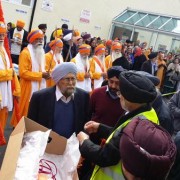
The worldwide Sikh community is in anger and unrest ever since the recent desecration of Sikhs’ Holy Book Sri Guru Granth Sahib was discovered in the village of Bargari, near Kot Kapura in Faridkot district in Punjab, India. Subsequently, the Sikh community aired their concern and worry about their everyday persecution in protests, but the situation even worsened as police rather than guarding the protests opened fire and killed two protesters and left dozens of other left injured.

This tragic most recent incident is yet another episode of endless catalogue of Sikh persecution who feel alienated, disillusioned and abandoned in their own country. The police brutality, which included the use of water canons and even fire arms against the protesters, resurrected the memories of the 1984 Sikh genocide in the Golden Temple. Some members of the Sikh community believe state behavior has not changed in more than three decades. India, being one of the largest democracy in the world has failed to honour its international obligations to which it is the signatory countries where its own citizens are targeted by its own police.

Right to protest and peaceful assembly is the basic fundamental rights of every democratic country in the world. It is enshrined in the Article 20 of United Nations Declaration of Human Rights as well as in Article 21 in the United Nations International Covenant on Civil and Political Rights. The signatory state is obliged by the UN treaties to honour its obligations towards its own citizens. The Indian government instead of looking into the case of the desecration of Sikh’s holy book rather targeted the protestors and ordered its policeto disperse the crowds through water cannons and batons. The misdirected state action lead to the killing of two Sikh members and left many injured.

This rigid, cold and indifferent state behavior is not alien to Sikh community. The police brutality of Sikh massacre which killed more than 3,000 sikhs in the Gold Temple still fresh in the members of Sikhs around the world. Some resonated their fear and concerns to this day as evidenced in the most recent police brutality.

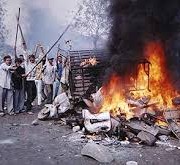
Since the leader of the right-wing Indian People’s Party (BJP), Nerandera Modi came to power, the plight of minorities has worsened and calls for ‘Hindu India’ begin to grip minorities who have suffered persecutory events in the past. The Gujarat 2002 Massacre of Muslims, when Modi was the Chief Minister in the Gujarat State, and the 2008 persecution of Christians in Orissa are few to mention. The most recent state led oppresions include a ban on beef for Muslims and state violence against the Sikh.

While the Indian government claims the recent desecration of Sri Guru Grath Sahib has ‘clear and concrete evidence’ of foreign funding does not justify the questions of the state violence, while multiple arrests have been made in connection with the alleged desecration will the attempts suffice the institutionalised persecution minorities suffer in India?

Bio Shahid Khan

http://gmablog.org/2015/11/01/persecution-of-religious-minorities-in-modis-india/