
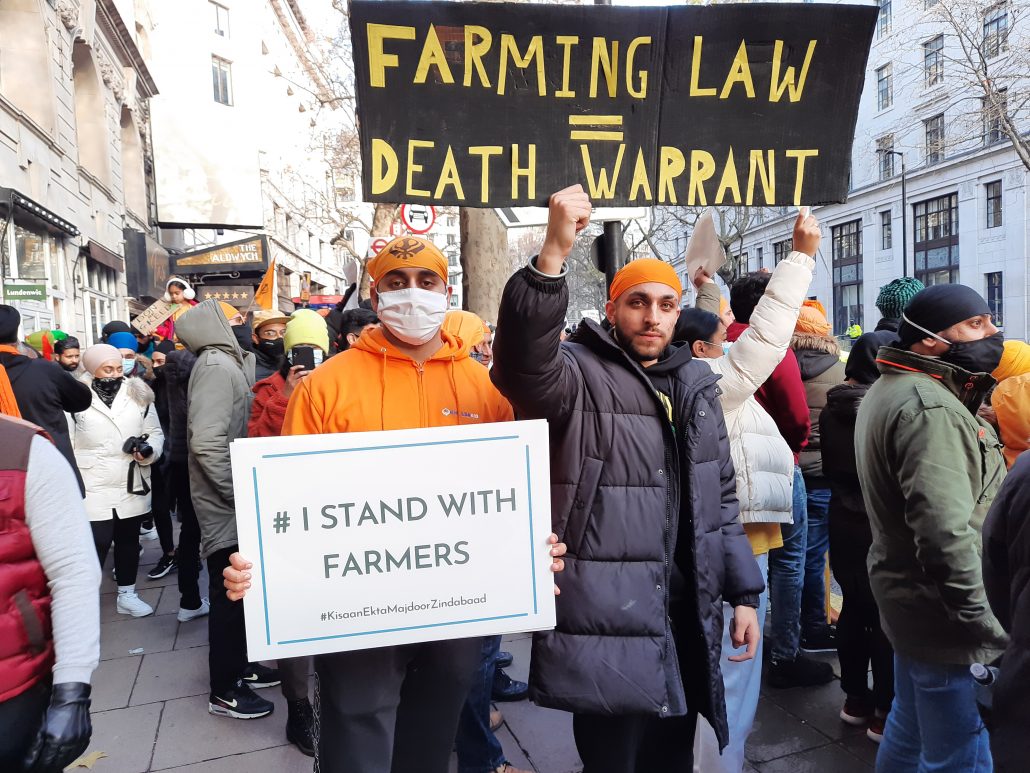
Farmers Protest: Updates
Earlier this year the Indian state implemented three new farming bills without dialogue with Farmers’ representative groups. These laws were ratified in September. India’s farmers feel they will lead to further corporate exploitation. After the Indian government dismissed appeals by farmers’ representative groups for the bills to be revoked, a protest march to Delhi was begun in late November.
Currently there is a stand-off as millions of farmers, farm labourers and their families occupy Delhi, stating they will not leave until the government revokes the bills.
Read below for the latest on this situation.
Note – this update is a small snippet of information since our last update (available here) on the situation. Links for more regular and detailed updates can be found below. We are also constantly sharing updates from Sikh orgs/individuals on our social media platforms.
Supreme Court temporarily suspends implementation of new bills but many do not trust the move
India’s Supreme Court put a hold on the implementation of the much disputed new farming bills today (12 Jan) and proposed plans to set-up a committee to provide a report to influence future decisions on the bills.
Many in support of the farmers’ position have responded to the Supreme Court’s decision with scepticism, believing it is an attempt to deescalate and even disperse the huge protests around Delhi. The fact that the four-man team making up the committee being put forward to lead a report on the bills by the Supreme Court is made up of known supporters of the bills has also led to suspicion around the move. Farmers leaders have said they have never requested the formation of any such committee and remain resolute in their demands for the bills to be overturned.

The Supreme Court stated the formation of the committee was a response to the various petitions asking for their intervention in the issue.
It is believed the Indian state is looking for ways to prevent a mass march of the protesters into Delhi on 26 January, India’s Republic Day, which may disrupt annual Republic Day celebrations. Even though Delhi Police have motioned to have this protest banned, Farmer leaders have said they will do this if the issue is not resolved by 26 Jan, which seems a likely prospect. Reports currently suggest plans to march on 26 Jan remain, and the protesters will also remain at their sites around Delhi.
Stand-off continues
Prior to the Supreme Court latest, despite various meetings between farmer representatives and government officials, the stand-off between farmers and the Indian state continues. Farmers remain strong in the consensus position that they will accept nothing other than a full revocation of the disputed bills.
Some of the meetings which have been conducted between farmers representatives and state officials have been said to be unofficial and in the view of some, attempts to create fractures in the farmers’ unity. Meanwhile, support for the farmers continues to grow across India, with many coming from all over to join in what is being described by some as “the siege of Delhi”.
Police violence against protesters attempting to join the farmers and labourers in Delhi has been reported in Haryana, Chandigarh, Bihar, Gujarat, Chennai and beyond in recent weeks.
At the site itself (or having been at the site), over 60 deaths of protesters have been reported, with many linked to the conditions the farmers are staying in. The winter cold and stress of being away from home at an indefinite protest have led to more and more medical supported being arranged at the protest sites.
Media issues remain
The media coverage of the Indian farmers’ protests continues to be a big point of contention, for many reasons.
On 8 December it was revealed the photographer – Ravi Choudhary – behind the infamous viral picture of police attacking an elderly Sikh protester (seen below) was attacked by Indian nationalists angry at his work capturing the reality of the treatment of the farmers.
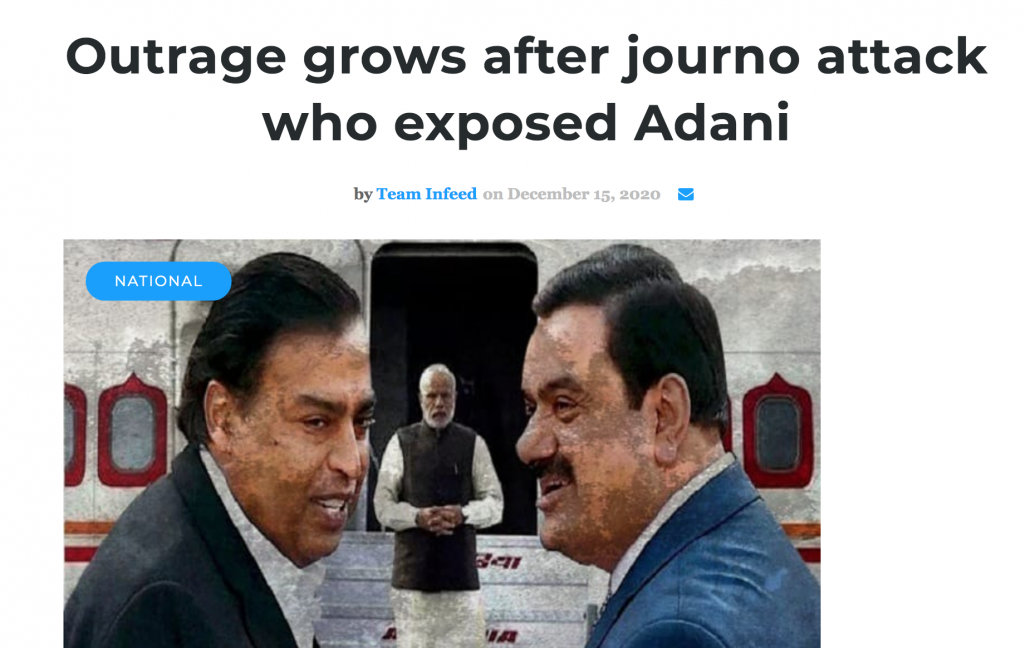
On 15 December a similar story run in smaller Indian media outlets revealed a journalist that had been uncovering the link between billionaires Mukesh Ambani and Gautam Adani, their corporations and the new farming bills was also attacked.
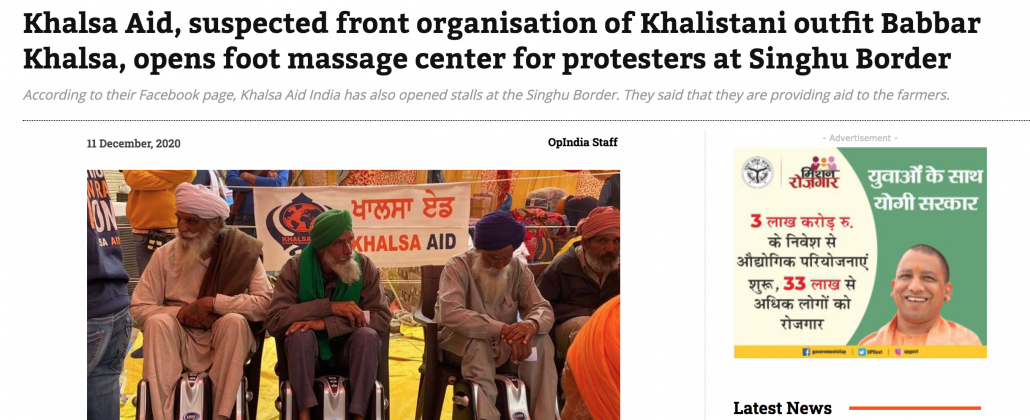
In regards to actual media coverage from the outlets dubbed #GodiMedia for their clearly biased support towards and reverence of India’s PM Narendra Modi, many became the butt of jokes across the world after making audacious leaps to make various libellous claims about the protesters and now the Sikh seva (selfless service) groups providing them with aid. The most laughable example (seen below) was triggered by word renowned humanitarian charity Khalsa Aid providing the farmers, many of whom are elderly and sleeping in their trucks or on the roads in the winter cold, with foot massagers.
You can hear more on the media coverage of the farmers’ rally and issues with it via the latest episode of The Sikh PA Show. However, in general the consensus from the farmers and those following the story independently view the input from the media as designed to tarnish the movement and direct support to the state.

Meanwhile, media in the West have begun covering the protest much more ever since diaspora rallies peaked interest. The likes of Al Jazeera English, Sky News, BBC News and more. A standout article came from best-selling poet and Sikh activist Rupi Kaur, who wrote a piece for Washington Post following masses of complaints about the US newspaper providing a platform for Barkha Dutt, an Indian media figure that is a self-proclaimed Indian nationalist and supporter of Hindutva extremist group the RSS.
Rupi Kaur is also supporting an initiative to galvanise more creative ways to further understanding of the issue. Content created can be shared with the #RotiKaMasla team (details below), which will be distributed at the protest grounds.

Finally regarding media, the biggest news was the launch of outlets created by the farmers’ groups, including The Trolley Times newspaper, a Twitter account and a Youtube channel. Note, The Sikh Press Association is aware of dispute about what are the “official” outlets for the farmers voice, as well as concern some of these outlets are overly influenced by factions of the protest movement which many Sikhs are concerned about.
Diaspora efforts
Rallies by the Sikh diaspora in support of #FarmersProtest have continued. In recent weeks, there have been held in London (UK), New York (USA) and beyond.
Sikh diaspora led protests are also planned for 26 January in the UK, Canada and the USA, although plans may change depending on the situation regarding the current pandemic.
Templates for emails to send to relevant politicians have also been released by many activists. You can find links to two different ones here and here.
A UK parliament early day motion has been put forward to express concern about India’s criminalisation of dissent against the state. It has currently been signed by 14 different MPs.
One of the most vocal diaspora politicians on the issue is the first dastaar (Sikh turban) wearing Sikhs in UK parliament, Tanmanjeet Singh Dhesi. The Labour MP of Slough has written an open letter, signed by over 100 MPs, which calls for UK Prime Minister Boris Johnson to “convey to the Indian Prime Minister the heart-felt anxieties” of UK citizens regarding the #FarmersProtest situation.

For more detailed and ongoing updates, we encourage following:
- Sandeep Singh, journalist and on-the-ground reporter at the protests
- Jagjit Singh, UK Sikh community figure liaising with protesters and Sikh activists working on the issue around the world
- Saving Punjab, Punjab focused social and political commentary informational and analytical social media page
- KisaanEkta.co, a Sikh community independent media outlet focusing on the protests


Leave a Reply
Want to join the discussion?Feel free to contribute!