The Sikh Coalition are supporting a civil suit against the Sutter County Sheriff’s Office (California, USA), filed by a Sikh man whose reports of hate crimes were ignored for six months.
Rouble Claire found himself targeted for anti-Sikh hate last year in two separate but related incidents, including one incident which saw “Sand N***er” written in chalk outside his home. Although Claire documented evidence and pointed out the culprit to police, the case remained ignored.
Civil rights and community legal aid advocates The Sikh Coalition pressed on the issue, which eventually prompted the SCSO (Sutter County Sheriff’s Office) to take the case forward to the Sutter County District Attorney’s Office (SCDAO). They were then told that a lack of evidence coupled with the amount of time that had passed meant the SCDAO prosecution could no longer take up the incident as a crime. This response came approximately six months after the incident occurred.
After the civil suit prompted a slew of media coverage on the incident this week, the SCDAO (Sutter County District Attorney’s Office) have since released a statement which claims they were not given “all of the reports and evidence” mentioned in the civil suit, and thus were now open to “a new review and legal analysis” on the incidents. The Sikh Coalition responded by rejecting the claim that there was “new evidence” in the civil suit which was missing from previous reports sent to the SCSO on the crime. However, The Sikh Coalition did still state they are “glad” SCDAO are “reconsidering the case”, adding about the situation Claire has faced, “they can make it right”. The Sikh Coalition remain trying to engage with the prosecution body directly.
Claire, who is 66-years-old and living with his 92-year-old mother for whom he acts as a carer, first found himself targeted whilst doing his groceries.
“Mr. Claire was accosted at a local grocery store,” said Amrith Kaur Aakre, legal director for the Sikh Coalition. “While he was there, a woman he did not recognize started shouting profanities at him and racist slurs. She called him the ‘F-word and then Hindu.’ She threatened to ‘ram’ him with her car, and then got in her car and sped towards him in a parking lot, only swerving away at the last moment.”
According to the Coalition, Claire immediately went inside the store and asked an employee to call 911. But, the Coalition says the police did not respond to the scene. After that, Claire went home.
“Later that same day, Mr. Claire observed another woman who was scrawling the words ‘Sand and then the N-word,’ in chalk in front of his house and in his driveway,” Aakre said. “He called the police, again, to report the second incident. One deputy who responded to the chalking incident used his own water bottle in an attempt to wash away the evidence before taking photos for the office and another advised him not to drive on his own street to avoid any confrontation.”
Both hate crime perpetrators are believed to be linked and local to the area where Claire lives. The Coalition is urging the Sutter County District Attorney’s Office to investigate the case and file criminal charges. That includes charges of criminal threats, assault, assault with a deadly weapon and all applicable charges, including those involving hate and bias.
“I have been subject to threats, harassment, and racial slurs–yet almost a full year later, no one has been held accountable,” Claire said in a statement released by the Sikh Coalition. “For months, after immediately reporting these hateful acts, I sat in silence waiting for action that never came. I did not want to have to take legal action against anyone, but I believe that this failure of justice is unacceptable: No one in our community should have to face this kind of hate and bigotry.”
The Sikh Coalition have opened up a webpage allowing others to join their calls for the SCDAO to act appropriately in response to the hate crimes against Rouble Claire. See that page here.
The Claire family have lived in the area, which has a significant Sikh population, since 1973. In the USA, Sikhs remain among the top five most frequently targeted religious groups in the country for hate crimes and bias incidents, according to the FBI.
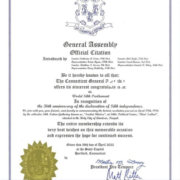
Indian nationalist groups have reacted furiously to Connecticut General Assembly (GA) officially recognising “Sikh independence” on Khalistan Declaration Day last week.
Many Sikhs mark April 29th as Khalistan (free Sikh homeland) Declaration Day, as it was on this day in 1986 that hundreds of thousands of Sikhs agreed to pursue an independent free homeland in India at a Sarbat Khalsa gathering. Connecticut General Assembly released an official congratulations for the occasion last week.
Connecticut sangat (Sikh congregation), led by members of the World Sikh Parliament, have previously worked closely with the state’s General Assembly for recognition of Sikh positions and issues. However, this use of American freedoms by US Sikhs has angered various Indian groups, with the likes of the Global Organization of People of Indian Origin (GOPIO) reacting furiously to the latest act of recognition by Connecticut.
India has a much criticised law against sedition in India which has led to many Indian nationalist groups believing any talk of support for independence movements in India is criminal, even when carried out overseas through the freedoms nations like America provide. Indian nationalist groups also often use denigrative language about the Khalistan movement specifically, upholding state propaganda used to justify the Sikh genocide which peaked in the 80s-90s.
This was seen in the response to the Connecticut GA’s actions, as the New York Consulate General of India claimed Khalistan was based on “bigotry” and an “agenda of violence”, whilst GOPIO called support for Khalistan a “divisive agenda”. There is no evidence of any type of violent or illegal support for Khalistan in the USA.
Sikh activists highlight that historic Khalistani violence in India actually stemmed from Sikh organisations defending themselves from the state perpetrated genocide, and specifically the “fake encounters” massacre campaigns which resulted in thousands dying at the hands of police. These massacres, which included the killing of children and women by Punjab Police, have been documented by American Sikh group Ensaaf. Many Sikhs also highlight how support is largely based on India’s endless human rights abuses and subjugation of minorities. Protests against India’s arbitrary imprisonment of Sikh political prisoners continues to this day, whilst an elderly Sikh man was shot just last week during a violent anti-Khalistan rally held by a Hindu extremist group.
These human rights abuses of Sikhs in India are completely overlooked by groups like GOPIO in context of Khalistan. Attacks against independence movements in India are usually led by those who wish to uphold the current regime of India which works best for Hindus of perceived high-caste background. The Sikh faith is inherently against caste discrimination.
Speaking on the issue, Sikh Press Association Senior Press Officer Jasveer Singh said, “American legislature and also media need to be aware of the very skewed view many Indian nationalist types have towardsAmerican notions of freedom. In America, anyone has the right to support an independence movement, whether that be for Scotland, Quebec, Texas or Catalonia. However, when it comes to Khalistan, any respect of American freedoms goes completely out-the-window for such Indians, including official government representatives, as seen in the reaction of the Indian Consulate of New York.
“The Connecticut sangat are immersed in the communities of the state. They do seva (selfless service) for the people of Connecticut and also use the state’s mechanisms to further learning about Sikhs and Sikh issues. The relationship between Sikhs in Connecticut and the state authorities should be celebrated.
“The fact is there are likely millions of Sikh supporters of Khalistan, and America allows its Sikhs the right to support Khalistan, which many do legally and democratically, which Sikhs in India unfortunately do not have the freedom to do.”
The World Sikh Parliament are expected to release a statement about the Indian anger towards their use of American freedoms shortly.
UPDATE: The management of the Mandir (Hindu place of worship) that some Hindutva goons sought shelter from the Sikh counter-demonstration have released a statement which confirms their building was not damaged or attacked in any way by Sikh protesters. Despite this, Indian media outlets that claimed Sikhs attacked the Mandir have no retracted or corrected any statements, showing a clear agenda to malign Sikhs.
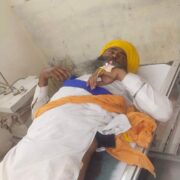
An anti-Khalistan (free Sikh homeland) rally by Hindu extremist nationalist group Shiv Sena led to mass violence, including the shooting of an elderly Sikh man in Patiala (Punjab, India) today (29.04.22).
The provocative rally was held on a day many Sikhs mark as Khalistan Declaration Day, due to the Sarbat Khalsa agreement to pursue Khalistan, made before hundreds of thousands of Sikhs on this day in 1986. Local Sikhs came out to counter the anti-Khalistan rally, which is when they were attacked by Shiv Sena goons.
A video of a Sikh man being shot during the Hindutva violence when he was clearly posing no threat to anyone has gone viral. In the video (available to watch via Sikh Youth UK here) a loud bang is heard before the man drops to the ground whilst surrounded by nearby police. It is unlikely if any clarity on the shooting will be given, as in previous similar incidents there has not been any investigation into the possibility of police or anti-Sikh goons carrying out the shooting, such as the infamous murder of a peaceful protester during the #FarmersProtest Republic Day rally in 2021. The man is reported to be in a serious but stable condition. Other minor injuries were reported by both sides.
Hindu Shiv Sena Goons occupied famous Temple of Patiala. From the Temple roof, they pelted stones at Sikhs who were peacefully protesting against Self-styled Hindu representatives who wanted to disturb peace in Panjab pic.twitter.com/YhHWChgI5z
The anti-Khalistan rally was held allegedly based on a Sikhs For Justice call for Khalistan supporters to mark 29th April in support of the free Sikh homeland movement, although no such gathering was evident before the Shiv Sena rally started. When Sikhs attended to counter the rally, Shiv Sena goons began throwing stones and charging at the Sikhs, some of whom retaliated. To hide from Sikh retaliation, some Hindutva goons retreated to a nearby Mandir (Hindu place of worship), before going to the roof of the building to continue throwing objects at the Sikhs. Reports have stated the Shiv Sena goons were being protected by the police whilst carrying out their violence, which is common for Hindu nationalist mobs. Police surrounded the Sikhs holding a counter demonstration and shot gunfire into the air to try and scare the Sikh crowd into leaving the site. In an act of defiance, some Sikhs started dancing to the sound of the gunfire, showing intention to stay and confront the anti-Sikh Hindu mob.
Many of the Sikhs that came out to oppose the act of Hindutva intimidation in the Sikh home state of Punjab also began shouting pro-Khalistan slogans (pictured below), underlining support for the movement despite the fact the Indian state has criminalised such support in many forms.
It has since been revealed the rally was held without police permission or allegedly even the blessing of the Shiv Sena leaders, resulting in the extremist outfit releasing a letter claiming the ringleader of the rally – Harish Singla – had been expelled from the group. After decades of carrying out extremist and terrorist actions in the name of Hindu nationalism of India, Shiv Sena have been trying to revamp their reputation in recent years, which is believed to be behind the expulsion of Singla. However, Singla rejected the claim he was expelled from the group, claiming as a senior figure of the outfit he could not be removed from Shiv Sena in such fashion.
The actions of the Shiv Sena group were not only contested by Sikhs, but also by local Muslims and even Hindus, who both opposed the clearly provocative and intimidatory actions of the mob. Local Hindus were so perturbed by the incident that ringleader Harish Singla found himself under attack from congregation at a Mandhir (Hindu place of worship) he went to seek sanctuary in. Singla was later arrested by police for inciting violence, under the request of new Punjab Chief Minister Bhagwant Mann.
”Along with sikh organisations/ Punjabi Muslim community members also reached in Patiala to stand against shiv Sena organisation for creating uncertain atmosphere in Punjab Patiala https://t.co/TFh0wIDl6z
Happy Ending? People of Kali Mata Mandir thrashed the Shiv Sena leader who had called for the anti khalistan rally. Said he distributed the peace and harmony between communities pic.twitter.com/mn2vJ5T18F
In typical fashion, the Indian media machine have focused much of the story on the Khalistan support of Sikhs, whilst also suggesting they were behind the violence. Such reporting has been criticised by Sikhs, many of whom followed events as they unfolded through social media.
Shiv Sena terror group brandishing swords yet the news leaves that out.
Why don't you mention that the Hindus attacked Sikhs and shot a Sikh man. When Sikhs retaliated cowards ran and hid in Mandir. Even then They continued pelting stones at Sikhs who were gathered outside. No damage to Mandir.
Meanwhile, a Sikh man has climbed a phone tower in the Moga area of Punjab, calling for the release of Sikh political prisoners, many of whom have been imprisoned for decades on spurious charges made under much criticised laws such as TADA and UAPA. The act once again underlines the importance of this issue for much of the Sikh community.
A baptized Sikh man climbed atop a mobile phone tower at Rode village in #Moga demanding release of all #Sikh prisoners who have completed their jail terms. He has written a letter to PM @narendramodi in this regard including demand of shifting Jagtar Singh Hawara to #Punjab jail pic.twitter.com/QObFBRryeV
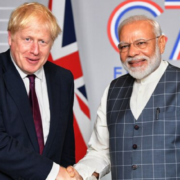
Sikh groups have criticised a claim by Boris Johnson that “UK Khalistanis” may be “threatening” India.
During his much vaunted trip to India this week, UK Conservative government Prime Minister Boris Johnson claimed the two nations had agreed to set up an “anti-extremist taskforce” to tackle “Khalistani extremists” that were “threatening India”.
Johnson made the statement at a press conference that was part of his India tour. Journalist Kamaljit Sandhu of India Today put a question to Johnson whilst it was live on Sky News, asking if “concerns” about “Khalistani extremists” had been raised during a meeting with India’s Minister of External Affairs Dr Subrahmanyam Jaishankar. The Sikh Federation UK predicted the statement would precede a soon to be announced long-term free trade deal.
Khalistan refers to the movement for a free Sikh homeland in India that has been widely supported among Sikhs for countless years. The movement reached a new peak in the 1980s, and particular after the 1984 state perpetrated Sikh genocide. In 1986, a resolution to support Khalistan was made at one of the few Sarbat Khalsa events in history, where the Sikh nation comes together to agree an agenda. Many Sikhs still support the movement today, with one of the more prominent ways currently coming through the Khalistan Referendum campaign by Sikhs For Justice. The campaign sees the Sikh advocacy group holding non-binding vote events to gauge Sikh diaspora support for Khalistan. The first series of voting events took place last year in the UK, whilst the next takes place in Italy in May. However, the campaign has been deemed illegal terrorism in India and even liking Facebook posts on the campaign has resulted in Indian citizens being arrested and detained by police.
Despite the “Khalistani extremist” accusations, which have also come from UK police, zero evidence has been produced to prove illegal let alone “threatening” behaviour of any Khalistani groups in the UK. in 2017 Leeds University research fellow Dr Jasjit Singh worked with CREST (Centre of Research and Evidence on Security Threats) which revealed Sikh activism posed no threat to the UK public. Priti Patel has also avoided expanding on her comments last year about the alleged threat of Khalistani extremism.
Many have pointed to the UK government’s ongoing mishandling of the case of Jagtar Singh Johal as an example of why the UK cannot be trusted to work with India on such issues. Scottish born and raised Sikh Jagtar Singh Johal was labelled guilty by Punjab Chief Minister of crimes relating to the murders of Indian nationalist figures in 2017 after travelling to the country to get married. Nearly five years later Jagtar Singh remains imprisoned in India without being convicted of a crime, whilst his brother openly highlights a lack of UK support for him.
The case of the #WestMidlands3 last year also highlighted India’s fascist approach to targeting Sikh activism, which the UK have enabled. The case saw three British born Sikh men put up for extradition in India where they would have faced the death sentence. The trio were accused of involvement in pro-Khalistan terror activities based on “no evidence” according to world renowned lawyer Gareth Peirce. Peirce oversaw the quick dismissal of the extradition attempt after the case went to appeal, and spoke of her shock about how the case even reached a UK hearing when no evidence was produced to support the accusations against the Sikh men.
Boris Johnson pleasing his masters in Delhi once more!!
On his visit to India Bojo has said they have agreed to set up an Anti Extremist task force which no doubt will be targeting more Sikh activists in an attempt to silence them from speaking out against atrocities committed pic.twitter.com/eC1DqpgWOP
Sikh groups will now be looking to move urgently to have the issue addressed by the government, with transparency on who the taskforce may target. Despite it being raised by UK activists, the UK government has failed to address how they plan to avoid doing the bidding of the notoriously fascist Indian government, who only last year were criticised for allowing police to oversee the sexual abuse of female prisoners and the arrest of journalists that were supporting the #FarmersProtest.
More information on this story is available for media on request, including direct comment from UK Sikh Khalistani groups.
Shameful from @BorisJohnson… Going from wishing Sikhs a "Happy Vaisakhi" to buying into India's and @PMOIndia Propaganda! Boris Johnson is prepared to say anything in return for a trade deal!
This week London Mayor Sadiq Khan had the London Eye lit up in blue and orange for Vaisakhi, a celebration of the creation of the Khalsa order of Sikhs. However, Khalsa Sikhs have always been BANNED from using the world famous tourist attraction in the nation’s capital.
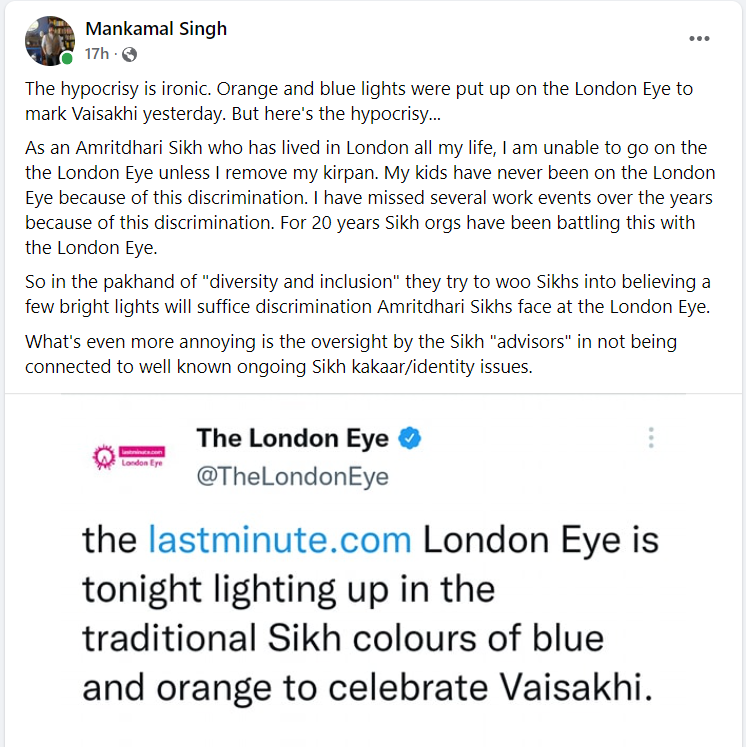
A gesture for this week’s Vaisakhi celebrations by the Mayor of London’s cultural team has been called “hypocrisy”, based on a historic ban against Amritdhari (initiated) Sikhs from using the London Eye.
The London Eye, which attracts over 3.5million visitors a year, has had a ban against Amritdharis from using the tourist attraction since it was opened in 1999, due to their wearing of the kirpan, a small sword that is mandatorily worn as part of the Punj Kakkar (Five Ks) uniform of initiated Sikhs.
Vaisakhi is celebrated by Sikhs as the time when Guru Gobind Singh Ji founded The Khalsa, the collective of initiated (Amritdhari) Sikhs, all of whom have to mandatorily wear the kirpan and all other Punj Kakkar. Yet, the irony of the London Eye being lit up to celebrate a community it has banned from its premises was missed by the London Mayor’s cultural team, as the iconic structure was changed to glow in colours associated with the Sikh faith, beaming with blue and orange lights on Vaisakhi day (14th April).
The irony was pointed by out by respected Sikh community figure Mankamal Singh of East London, who has himself “missed several work events because of the discrimination”. In a post that has gone viral in British Sikh circles, Singh highlighted how “I am unable to go on the London Eye unless I remove my kirpan. My kids have never been on the London Eye because of this. For 20 years Sikh orgs have been battling this with the London Eye.”
Hypocrisy is ironic. As a practicing Sikh from London, I'm unable to go on the @TheLondonEye unless I remove my kirpan. Stop trying to woo me into believing a few bright lights will suffice discrimination I see when I look at the London Eye #vaisakhiLDNhttps://t.co/yKfvNHFV8B
With hundreds of likes and shares, the post soon prompted a stream of comments on the issue, with Sikhs joining in to comment of their own experiences of visiting the attraction, one of which said an Amritdhari group were put in their own pod to be allowed on, whilst another said they were told to remove the kirpan to get on, which they refused to do. Asking an Amritdhari to remove their kakkar can be considered insulting, and many will refuse to do it in almost any circumstance.
Mankamal Singh, who has been involved in community seva (selfless service) for decades, pointed out how famously legendary athlete Fauja Singh was refused entry on the ride in 2004 when he was a guest of honour at an event at the attraction. This led to a parliamentary Early Day Motion (EDM) to push to have the ban removed. However, 18 years later it still remains in place. The ban, put in place by Merlin Entertainment who own the attraction, was again put into the spotlight in 2018 as Sikh groups pressed for change, but Merlin refused to change their policy. When pressed by the Sikh Council UK to review the decision, Merlin Entertainment said they would renew talks on the topic but never did.
Today (16th April) the London Mayor is expected to attend a Trafalgar Square Vaisakhi event which is also part of his cultural team’s diversity celebrations for Vaisakhi this week. Sikh Press Association Senior Press Officer Jasveer Singh said Labour Mayor Sadiq Khan is bound to be asked about the issue on the day.
“It is hilariously ironic and undeniably hypocritical that the London Eye could be used to celebrate Vaisakhi when it has a ban on Amritdhari Sikhs from using it. Vaisakhi is a Sikh celebration of the creation of the Khalsa, the collective of initiated Sikhs.
“The ban of the kirpan on the London eye is a ban on Amritdhari Sikhs from using the tourist attraction. And it is one we are well aware of as likely hundreds of Sikhs have experienced it. As an organisation, Sikh PA have been contacted many times about this issue and emailed Merlin Entertainment about it, without response. We have spoken to Sikhs that have been left feeling like criminals when pulled aside for wearing an article of faith. There are more recorded instances of high-heeled shoes being used as weapons than there are of the kirpan, so the ban makes no sense whatsoever.
“The Mayor’s team now surely have no option but to address this situation and the community will be hoping the Mayor himself will commit to working to end the ban. I am sure he will be asked to do so now the issue has been raised. Anyone that follows London sub-culture social media pages will have seen many videos of people doing drugs or all types of shocking things on the London Eye, so why there is such focus on not allowing Amritdhari Sikhs on whilst wearing a kirpan remains rooted in pure discrimination.”
For more information on Vaisakhi, often mistakenly called the Sikh New Year, check sikhpa.com/sikhvaisakhi.
UPDATE- Two men have been charged for all three hate crimes and the robberies carried out against three Sikh elderly men. 19-year-old Vernon Douglas and 20-year-old Hezekiah Coleman were arrested by NYPD and have now been formally charged for the attacks that sent shockwaves through Sikh communities across the world.One of those charged was the same man that was pictured and videoed after the attacks.
The attacks, which occurred in the same area of Richmond Hill, are being treated as potential hate crimes due to being seemingly random and violent, although the latest two victims were also robbed according to The Sikh Coalition. One arrest has been made following the latest attack.
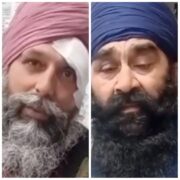
The first attack occurred on 3rd April and saw 70-year-old Nirmal Singh, who was in the USA visiting from India where he has now returned, attacked around 7am whilst walking to a local Gurdwara. An image of a suspect wanted for questioning by police was released (see below).
The latest attack on 12th April saw two Sikh men on their way to work at approximately 7am set upon by one man, described as young and black, in separate attacks within minutes of each other. In a video released by political candidate for State Senate Japneet Singh, the men described being attacked from behind without reason. The attacks continued when one of the Singhs (Sikh men) held his hands up to show no threat. The attacker also left the scene and then returned topless to continue the attack. The second victim was attacked with a stick, whilst another man with the attacker shouted “shoot him”. See the video here (spoken in Punjabi). It is unclear what was stolen from the men. In his post on the attack, Japneet Singh stated“it’s clear the Sikh community is being deliberately targeted”. On his Instagram Japneet also stated the issue seemed to emanating from an abandoned house where people and possibly a “gang” hangout.
Police have arrested one suspect, who was believed to have been recorded by an eye-witness in a video shared on Sikh Expo instagram page. It is unclear if this arrest is also related to the attack on 3rd April.
Speaking on the topic, Sikh Press Association Senior Press Officer Jasveer Singh said, “There has long been an issue of kesdhari (Sikhs that keep hair; practicing Sikhs) Sikhs being attacked in the USA for simply how they look.
“As we see a rise in Asian hate crimes in the USA, the issue of Sikh hate clearly has penetrated people of colour too, with now at least four attacks of this kind against Sikhs in the New York area reported in the last 11 months. This should not be interpreted as a black community issue, but there is little doubt now that black individuals have committed hate crimes against Sikhs.
“Work is being done by Sikh community groups to not only build relations between different communities to address such issues, but also to work towards the protecting those that could be targeted in this way.”
Several Sikh orgs have spoken about community shock after UK based Sikh television channel KTV Global was removed from broadcast for promoting a “pro-Khalistan cause” which has been viewed as supporting “terrorism”.
KTV released a statement claiming the allegations and decision to remove the channel were “scrutinised without context or cultural understanding”, whilst also emphasising their intention to appeal the decision. KTV, which is considered popular among British Sikhs aged 50+, have also highlighted how their elderly viewership will be left without support for their “spiritual needs” due to the removal. KTV broadcast the Sikh nitnem (daily prayers) which many viewers will play and follow at home as part of their spiritual meditation/prayer routine.
The 33 page Ofcom report (with a further 50 pages of transcript) on the decision stated they received just three complaints about the Prime Time live discussion show which led to the decision to remove the entire channel. However, the regulatory body have been open about their view that the support for and discussion around Khalistan (a movement for a free Sikh homeland in India) on the show was equivalent to supporting “violent action” terrorism. The content objected to was largely speech from popular presenter Jagjit Singh Jeeta on Khalistan over the course of the 95minute broadcast.
In an obscure attempt to explain their position, Ofcom included a list on their report which “took account of…context with regard to the Khalistan secessionist movement and the involvement of some of the activists referenced by the presenter…” and thus influenced their decision to claim the support for Khalistan was support for violent terrorism. The list included general anti-Sikh takes which are known to be pushed by the Indian state such as:
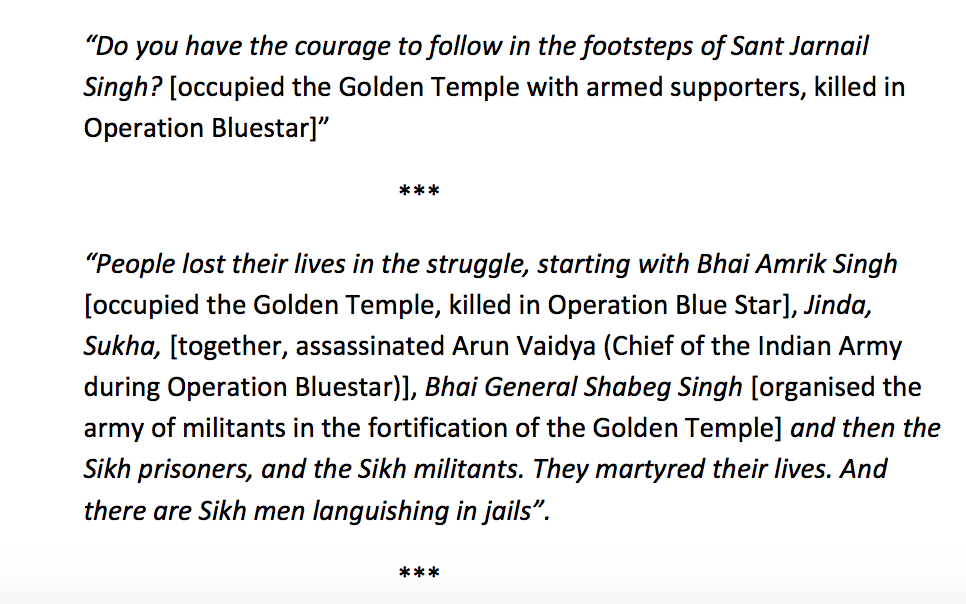
Claiming inaccurately that revered Sikh leader Sant Jarnail Singh Khalsa Bhindranwale and “hundreds of armed supporters” had “occupied” Sri Harmandir Sahib prior to the 1984 Indian Army attack on the holy Sikh site
Calling the Sikh genocide of 1984 “anti-Sikh riots” and claiming “approximately 5000” were killed, when Sikh sources estimate the number of deaths during a three day period to be closer to 30,000
Mentioning Indian politician Jagdish Tytler, who was witnessed leading mobs to kill Sikhs in 1984, had findings about his involvement in the genocide “overturned” without mentioning the fact another politician (Sajjan Kumar) was convicted for his involvement in the same way
Listing the Sikhs For Justice democratic Khalistan Referendum campaign among alleged Khalistan terror related activities, despite it being run completely within international UN law
Referencing the #FarmersProtest and its significant incidents in relation to Khalistan, including the subsequent arrests of Sikh activists such as 50-year-old Jasveer Kaur based on as of yet unproven distribution of pro-Khalistan material
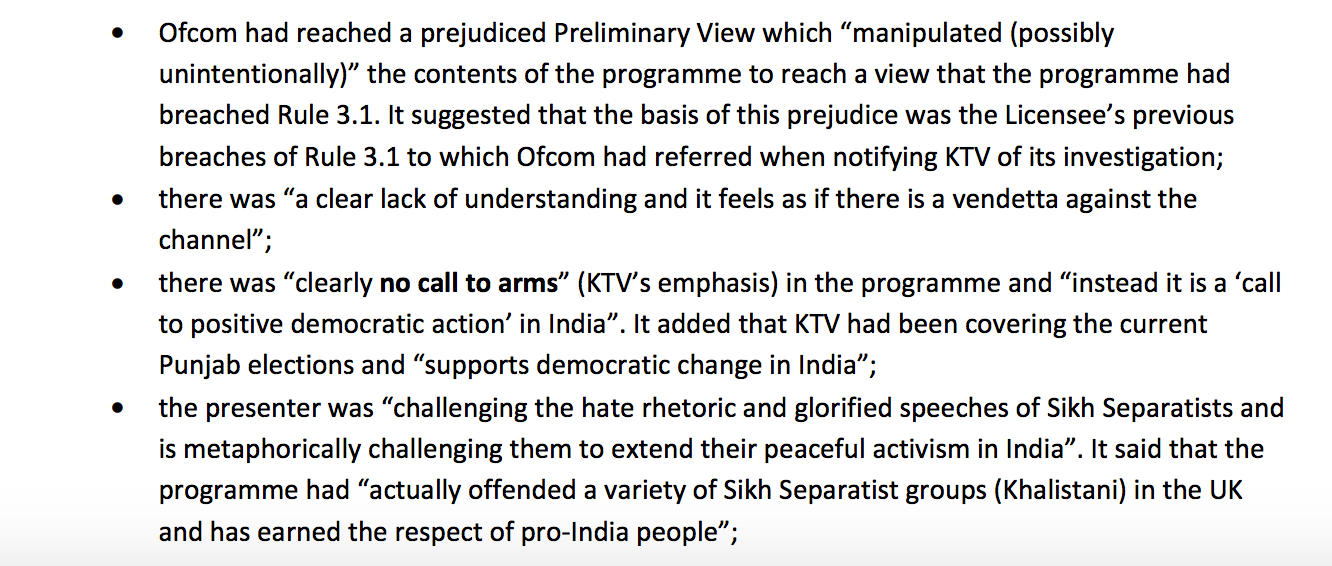
KTV responded to the initial accusations against the content of the show by stating “there was clearly no call to arms”, a claim which Ofcom rejected based on their own interpretation of the conversations which took place on the live call-in show. See full details of KTV’s response to the allegations in the image below. Ofcom claim they “invited KTV to explain in what respects it considered our analysis of the programme in our Preliminary View to be flawed. However, the Licensee did not provide any evidence or reasoning to substantiate this objection, despite repeated requests from Ofcom.”
Ofcom’s report also stated they “took into account several further, more neutral references in the programme to other individuals known for violent pro-Khalistan action”. Absurdly, this list included Shaheed Udham Singh, the famous Sikh martyr hung by the British in 1940 for assassinating General Michael O’Dwyer, who was partly responsible for the Jallianwala Bagh massacre during British colonial rule. A highly revered figure by Sikhs, Indians and anti-imperialists across the world, Shaheed Udham Singh’s story was recently depicted in an Amazon film.
The Ofcom report claimed “there were multiple and far more positive references to the conduct of people who were jailed for decades for violent actions including murder” and cited references to individuals such as Manjit Singh and Rajinder Singh, two Sikhs who spent over 20 years each in prison for the assassination of notorious fake-Guru Darshan Das in Southall (West London, UK) in 1983. KTV presenter Jeeta had called on the two to take up leadership positions for the Sikh community, which Ofcom have linked to supporting violence. This is despite the fact both men fully served their terms to become free men and neither has any link to supporting or carrying out any other kind of violent acts. KTV highlighted how figures like Nelson Mandela have also been brandished violent terrorists before turning into great community leaders after time in prison. Why Ofcom refuse to allow Manjit Singh and Rajinder Singh the ability to become leaders after serving their prison time fairly is unclear. However, it is not the first time their mentions have been picked up by Ofcom, with the TV channel being fined for similar allegations last year. Since that fine, Ofcom have made no steps to engage with the Sikh community to understand rhetoric around Khalistan better.
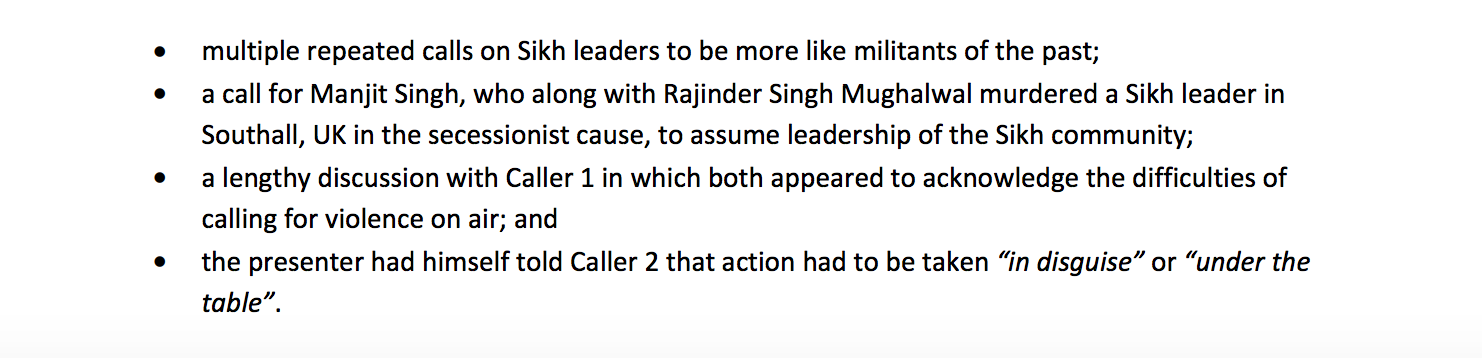
In summary of the regulator’s view of the current rhetoric as seen on KTV, the report reads “Ofcom’s view they would have recognised the implicit, cumulative narrative of the programme to be a call to all Sikhs in the diaspora, including but not limited to those in leadership, to emulate Sikh militants of the past and travel to Punjab to engage in acts of crime and violence, up to and including murder, to further the pro-Khalistan cause.” See a further summary from the report pictured below.
Many Sikhs have pointed out how such accusations demonise the very nature of Sikh activism, given the way the Sikh Guru’s could be called “militants” for the way they challenged state authority constantly. Regarding Ofcom’s concern at dialogue which said “action had to be taken ‘in disguise’ or ‘under the table'”, Ofcom made no reference of the fact the Sikh community has evidence of its activist circles being spied on and disrupted by the Indian state. Instead, Ofcom chose to view such statements as sinister. Other statements Ofcom have chosen to view as inciting violence are generally the kind of passionate dialogue around Khalistan familiar in Sikh spaces but clearly unfamiliar and for some reason threatening to Ofcom (see below). Calls by Jeeta to “follow in the footsteps of Sant Jarnail Singh”, who countless Sikhs view as a role model, are interpreted as standing against tyranny through the strength of commitment to the faith in Sikh spaces, as opposed to the claim it is a push to support of terrorism as Ofcom have chosen to believe.
Speaking on the Ofcom decision, Sikh Press Association Senior Press Officer Jasveer Singh said “At a time when the British media is regularly centring individuals that are taking up arms for Ukraine and countless more calling for violent action against Russia, Ofcom have decided Sikhs support terrorism for advocating support for Khalistan.
“This decision is both completely detached from Sikh rhetoric on and context of the Khalistan movement, and the Sikh philosophy of revering our Shaheeds and activists. Ofcom have chosen to interpret casual dialogue around Khalistan as a call for violence. Considering the type of dialogue we see on Ukraine in the media, this decision borders on racist. It is clear Punjabi Sikhs cannot speak about defending ourselves from tyranny in the same way Ukraine and its supporters can.
“Tens of thousands of Sikhs – men, women and children – have been proven to have been killed by Indian authorities not just in 1984, but yearly ever since, only slowing down into the millennium but never completely stopping to date. Many Sikhs view this as a war against our community and that is why in Gurdwaras and Sikh spaces across the world those that gave their lives to fight back against this tyranny are revered. This is just a fact of the Sikh community. Expressing this has been criminalised by the Indian state and it seems that Ofcom is taking lead from them.
“There is no doubt Ofcom requires a serious re-education of what they view as normal Sikh dialogue when it comes to Khalistan and the Sikh relationship with India. We are now calling for an open public dialogue with Ofcom representatives in which they can answer Sikh community questions on how we are allowed to speak about Khalistan and the tyranny we face from India.”
Various UK government figures and authoritative organisations in the UK have come in for criticism about the framing of Sikh dialogue around Khalistan and activism in the face of violent fascism from the Indian government. Many Sikhs believe the Indian state is behind actions to demonise pro-Khalistan dialogue, based on India’s relentless subjugation of alleged Khalistan supporters in India and Indian pro-government nationalist bot attacks on the topic on social media.
Updates on this story will be provided as they come in. Media requests for interviews or more can be made to media@sikhpa.com.
A Gurdwara (Sikh place of worship and communal support) in the city of Odessa has had to be evacuated due to the ongoing Ukraine-Russia war.
The move came after neighbouring city Mariupol was held in siege by Russian forces during the week. The evacuation (25th March) saw the Sikh scriptural Guru – Guru Granth Sahib Ji – removed with as much respectful protocol in place as was possible.
A combined effort from United Sikhs, a humanitarian aid group doing seva (selfless service) in-and-around Ukraine, European Sikh faith group Sikh Dharma International and the British military’s Defence Sikh Network UK saw a transfer of Guru Granth Sahib Ji and all Gutke Sahib’s (smaller separate selections of Sikh scripture) from the Gurdwara to Moldova, where They were received by sangat (Sikh congregation) and taken to be housed in a Gurdwara in Derby (Midlands, UK).
The evacuation saw standout viral images of Guru Granth Sahib Ji being carried on the head of a Sikh – Simran Singh of Sikh Dharma Int – crossing the border from Ukraine. Carrying Guru Granth Sahib Ji in such fashion is custom protocol for treatment of the current living Guru of the Sikhs, a status given to Guru Granth Sahib Ji by Guru Gobind Singh Ji, the last Sikh Guru of human form.
GurBani (Guru’s Words, referring to Sikh scripture) is always mandated to be treated with the utmost respect wherever it is written. For this reason, any Sikh scripture – especially Guru Granth Sahib Ji – are always maintained and treated with regal level care and reverence.
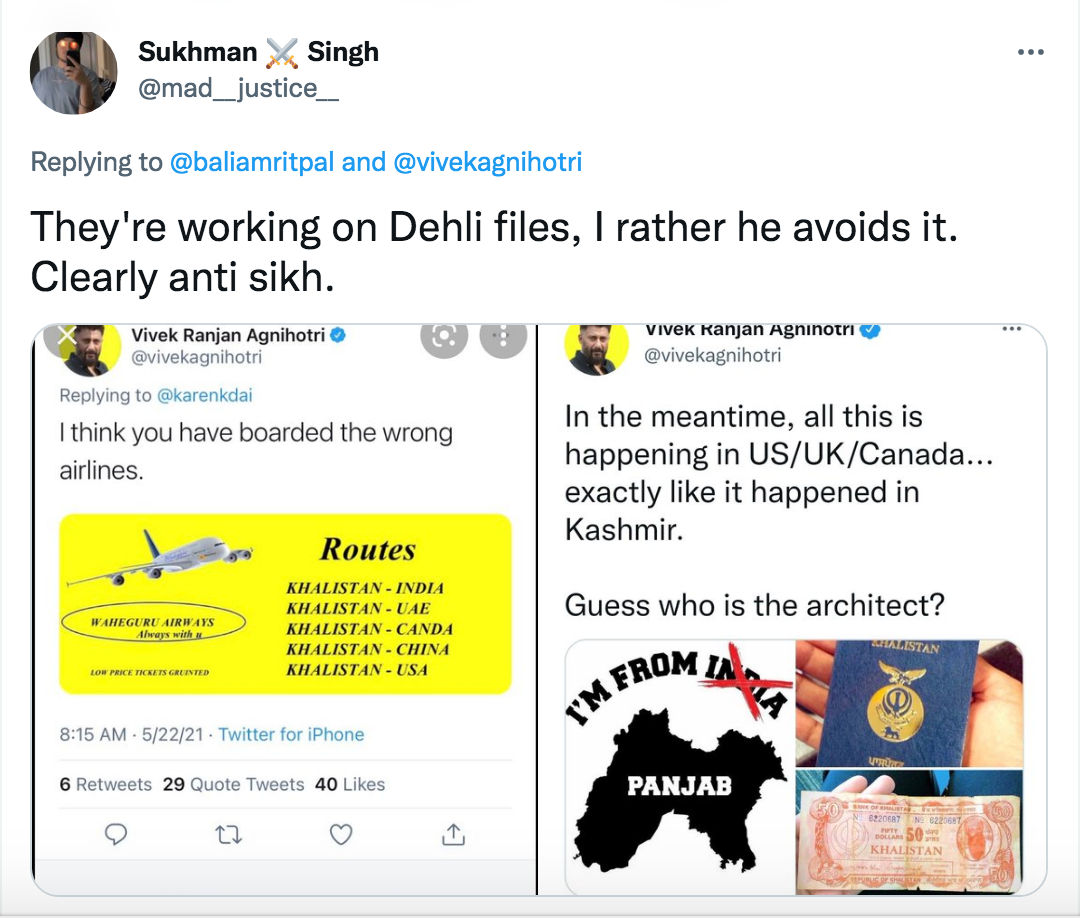
Criticism of “The Kashmir Files” film released this month has prompted concerns about an upcoming release by the same director called “The Delhi Files”, which will be based on one chapter of India’s Sikh genocide.
“The Kashmir Files” is a release by Vivek Agnihotri, a filmmaker who has been called anti-Sikh for comments around Khalistan (movement for a free Sikh homeland), his support of Hindu extremist group the RSS and his anti-#FarmersProtest stances. The Kashmir Files, based on a fictional tale, centres on the alleged genocide of Kashmiri Pandits (Hindus) by Islamic extremists in the disputed region of Kashmir.
Sikh organisations register Complaint against Vivek Agnihotri the director of Kashmir files movie,by sikh community members,he used Abusive words against Sikh political&spiritual leader Sant jernail Singh khalsa Bindrawalla,Sant jernail Singh is declared nation warrior&martyr pic.twitter.com/FiDOHsvii7
“The Kashmir Files” has been supported by the in-power nationalist BJP Party of India, with it being given tax-free showings (making tickets cheaper for the public) and even free showings across India too. The RSS also officially endorsed the film. The film has now begun getting showings outside of India too, with Vue Cinema showing it in the UK, Hoyts showing it in Australia and other international cinema groups set to follow.
“The Delhi Files” will be released in October of this year and Sikh organisations across the world are already planning how to counteract potential anti-Sikh propaganda within the film.
The Indian nationalist narrative around what happened in 1984 usually revolves around claiming Sikh separatists, led by Sant Jarnail Singh Khalsa Bhindranwale, were terrorising Punjab, forcing the Indian state into an attack on revered Sikh site Sri Harmandir Sahib in June 1984. However, in reality Sikhs across the world revere Sant Jarnail Singh Khalsa Bhindranwale to this day, with his image prominent in Sikh spaces across the world. Nationalist propaganda also downplays what occurred in November 1984, when mobs across India raped and massacred Sikhs wherever they could be found. Official government statistics often place figures of the deaths within this period at approximately 3000, depending on the source. However, Sikh estimates made based on groundwork of connecting directly with families that suffered losses estimate approximately 30,000 Sikhs were killed in just a few days, before the genocide continued with “fake encounter” massacres led by Punjab Police.
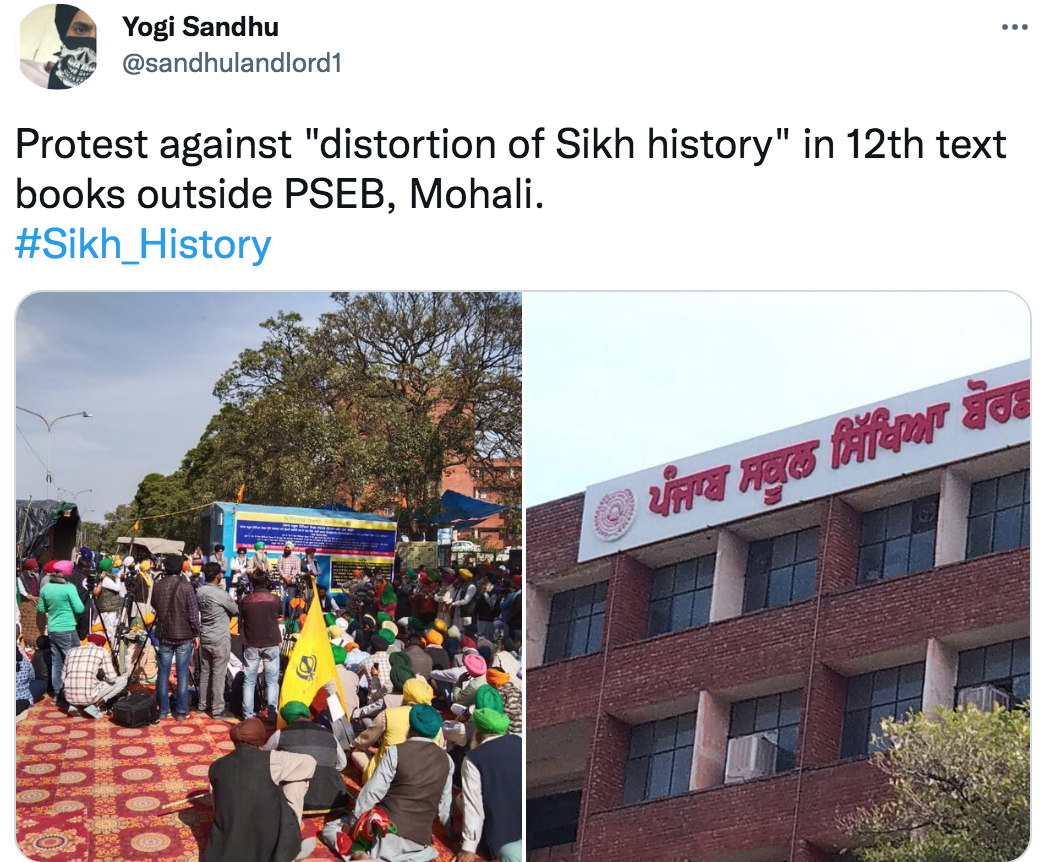
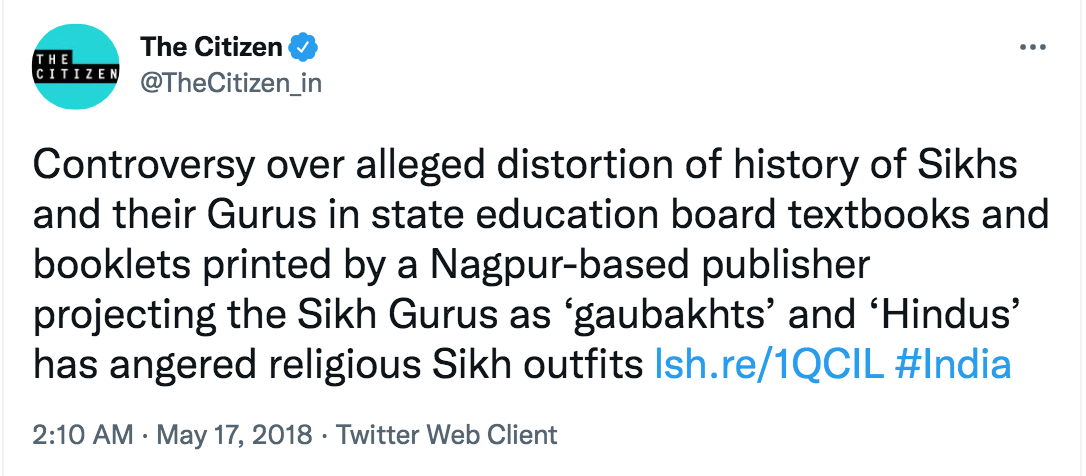
The discovery of school textbooks in Punjab which distort Sikh history has resulted in an outcry against a “conspiracy” against the faith in India.
Whilst misinformation about the Sikh faith has long been found in India based educational information, recent discoveries in Punjab over the last two weeks has seen various figures speak out and act, including through the submittal of a 51-page report on the issue to the Punjab Education Secretary.
The report was written by IPS Malhotra, who works with the Director General School Education. Respected activist Lakha Sidhana and BJP MP Manjinder Singh Sirsa also spoke out about the issue, whilst Aam Aadmi Party representative Kultar Singh Sandhwan called the misinformation a “conspiracy” against Sikhi and the history of the state of Punjab.
The misinformation pushed usually revolves around the activist aspect of the Sikh faith, and specifically stories of challenging tyrants, the reverence of Shaheedi (martyrdom) and the separation of Sikhi from Hinduism and Indian nationalism.
Punjab education minister Pargat Singh on Sunday said the Punjab School Education Board (PSEB) is carrying out a probe into the distortions in the history of the state in a textbook.
An historic example of distortion of Sikhi in Indian education