Her Majesty’s Court to be challenged on discriminatory Kirpan policy

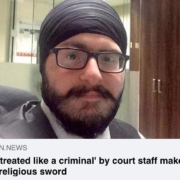
A Sikh lawyer is leading a litigation against “a discriminatory policy” regarding the wearing of the kirpan (small sword) in court, with a hearing set for 10th March 2022 at the Royal Courts of Justice (London, UK).

The hearing comes after lawyer Jaskeerat Singh Gulshan was prevented from entering Ealing Magistrates’ Court as a witness in April 2021 because of the type of kirpan he was wearing. The kirpan is an article of faith mandatorily worn by Amritdhari (initiated) Sikhs without any specific style or size, although there are more common types. Jaskeerat Singh, with support from various Sikhs in the legal professional particularly Parminder Saini of No5 Chambers, including the group Sikh Lawyers Association, is fundraising £15,000 to litigate HCMTS.

Speaking about the case, Jaskeerat Singh said, “It is disheartening that Sikhs are facing immense discrimination on religious grounds in this modern era, yet, we talk about equality and diversity. Therefore, I intend to have the current discriminatory policy abolished as it only accommodates very small Kirpans and it is impractical. We need a policy which is in line with primary legislation and allows Sikhs to carry their normal sized kirpan without having to face any insulting behaviour as I had to at Ealing Magistrates’ Court, similar to the Scottish Courts‘ policy which accommodates all sized Kirpans.”

For more info on the case or to donate, go to – https://www.justgiving.com/crowdfunding/jaskeeratsingh-gulshan-2. 

Many policies on the kirpan held by certain institutions (schools, courts and other) are viewed as outdated by modern Sikh organisations. Some institutions have a set model of what constitutes a kirpan which is not based on any faith based understanding, whilst others even have policies which advocate the kirpan to be taken off and replaced with something else (often a plastic replica or necklace version of a kirpan). These policies are often the result of institutions taking guidance from Sikhs unversed in practices of the faith.The hearing at the Royal Courts of Justice aims to change the policy for all HMCTS buildings.

Sikhs not just in the UK but across the world will be keenly awaiting the outcome of the hearing. 

After pressure to ban the hijab, Hindutva efforts made in India to ban the dastaar (Sikh turban)

A ruling based on the actions of Indian nationalist Hindutva (Hindu extremist) mobs stopped two Sikh students from entering places of education whilst wearing dastaars (the Sikh turban).

The anti-Sikh efforts came in mid February following an incident of an Indian nationalist mob aiming to prevent a Muslim student from entering her university unless she removed her hijab, which turned into a nationalist movement against non-Hindu religious wear.

The incidents occurred in the state of Karnataka and seemingly started with a random nationalist mob of men deciding to target Muslim girls on 8th February at PES College of Arts, Science and Commerce. This unravelled into a national issue which many Indian nationalists (and their apologists) claiming it was about advocating secularism in public spaces in the country, despite the fact Hindu prayers occur and garb is regularly worn in colleges and other public spaces across the nation. Nationalist Hindutva mobs were soon gathered outside various colleges and schools, with some violently attacking hijab wearing attendees. Pro-hijab counter-protests also took place across India.

The BJP (right-wing Indian party in power under Narendra Modi’s rule) govt in charge of the state decided to issue a three day closure of all places of education in the state after the incidents. This ended with a Karnataka High Court interim order restricting the use of religious symbols by students in educational institutions, although how this was to be implemented in regards to the dastaar and hijab remains disputed and unclear, reflective of India’s chaotic and often arbitrary judicial system.

The nationalist Hindutva movement soon targeted Sikhs in later February, with Sikh apex authoritative body the SGPC highlighting incidents involving a six-year-old Sikh boy and a 17-year-old Sikh woman being denied entry into places of education in Mangaluru and Bengaluru (the capital of Karnataka) respectively.

Image

The father of the Sikh woman said the college authorities first wrote to him in an email demanding that his daughter stop wearing the turban in accordance with the Karnataka High Court’s interim order. Since then reports have suggested the girl and others have been allowed to attend classes with religious wear intact, although it remains unclear how this is viewed in relation to the interim order. Sikh legal advocacy group United Sikhs are in touch with the family.

Following the incidents, the Hindutva movement has increased and led to outright public calls for genocide, which hundreds of Hindus have been seen to support.

The long-term outcome of the Karnataka ban on religious wear remains unclear after a “order reserved” (still pending) outcome to hearings was issued on 25th February.

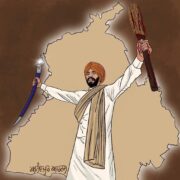
Many have highlighted how recently passed popular Sikh activist Deep Sidhu correctly stated the dastaar would next be targeted by Hindu nationalists, when asked about the hijab ban issue.

Information on the outcome of the high court religious wear ban will be shared as it comes in.

India’s rape epidemic continues to impact Sikhs

A girl of minor age (under 18) and an 87-year-old woman have become the latest Sikhs to suffer as a result of India’s ongoing rape epidemic.

Just weeks after the gang-rape and public torture of a Sikh woman in Delhi went viral, news of the two latest incidents surfaced and once again raised questions about the safety of the 2% Sikh population of India and all minorities in the increasingly feral India.

On February 15th a minor (official age yet to disclosed) Sikh girl’s body was found after being raped and thrown off a building in Hyderabad (Telangana). The girl was visiting an uncle in the area the previous morning and was later seen entering the building which her body was found by. According to media, initial medical reports show injuries consistent with an attack before the fall killed her. Her rape was confirmed in a statement by the Sikh body of authority the SGPC (see below), which also lamented a lack of support from authorities, which caused local Sikhs to hold a mass protest in response. Five days after the incident, an arrest warrant for a police officer in the same town was issued for his sexual assault of another rape victim. Police in India have been known to not only overlook but also propagate India’s rape culture, something even prominent politicians are now openly saying.

Image

On the same day a 30-year-old man was arrested for the rape of a bed-bound 87-year-old Sikh woman in the Tilak Nagar area of Delhi. The woman was also robbed during the ordeal. In an example of police apathy towards India’s rape epidemic, the family of the 87-year-old grandmother reported being told by police not to pursue the rape aspect of the crime.

Speaking on the latest news of Sikhs becoming victims of India’s rape epidemic, Sikh Press Association Senior Press Officer Jasveer Singh said, “What ends up in the media is guaranteed to be just a tiny fraction of those that are actually impacted by the rape epidemic of India.

“This epidemic is actually now a part of India’s culture. From the history of rampant rape during the partition to the modern day impunity of police officers and politicians accused of sexual abuse, rape has been normalised in India and feral men across the nation capitalise on this everyday.

“Minority communities seem most likely to be targeted and this includes Sikhs in many parts of India, as recent incidents in Delhi and now Hyderabad show. The lack of means for justice along with a clear lack of desire to tackle this issue are why so many Sikhs have a negative relationship with the Indian government.”

Due to the nature of India’s corrupt and inefficient judicial system, swift updates on the investigation into these crimes is unlikely.

Discrepancies emerge regarding Deep Sidhu’s death

After the death of respected activist Deep Sidhu, much of the global Sikh community openly declared they believe he was murdered by the Indian state because of his advocation for Sikh sovereignty. Since then, details around his death are furthering concerns about how Sidhu died. Here we share some of those discrepancies.


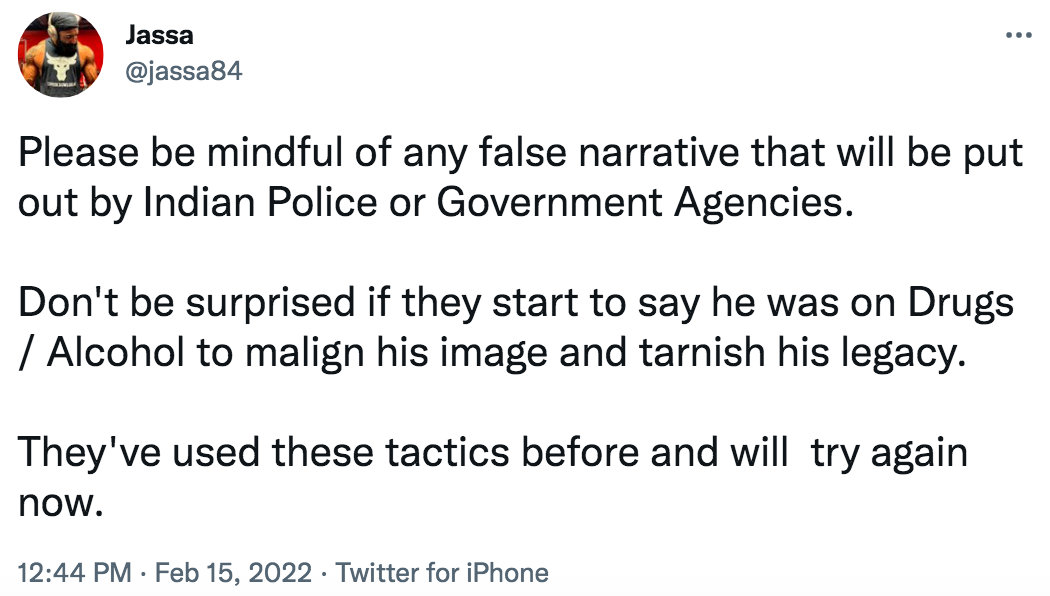
After the wreckage from the collision which caused Deep Sidhu’s death was found, one of the first thing sangat (Sikh congregation) did was to video the inside of the vehicle and examine its contents. This was done in belief that authorities would plant something which would suggest Deep had been intoxicated whilst driving, specifically stated during the filming of the video.

Even after these videos were circulated and the predication that it would happen, a Zee News journalist soon released a video claiming a bottle of wine had been found in Deep’s vehicle. Zee News are viewed as an example of the “Godi Media” state propaganda outlets of India, which sees the country ranked 142nd in press freedom rankings.

The video was quickly fact-checked by Sikh diaspora focused news outlet Baaz.

Further discrepancies emerged within the same press address by Delhi police the next day, who contradicted their own statements about how the crash occurred.

Along with the inconsistent statements from police, there were also very visible tire marks which point towards a hard break of a vehicle which led to the crash, immediately visible behind the wreckage. This was pointed out by Dr Prabhjot Singh through his Free5ab activism account on Instagram. Sidhu’s girlfriend who was in the vehicle has also been quoted as saying the truck their jeep crashed into braked suddenly on the highway. No more information on the truck or its driver have yet been revealed.

The same thread pointing out evidence which suggests Deep Sidhu may have been murdered also highlighted a change of wearing trousers to jeans within a short period of his body being transferred from the wreckage to the morgue. Sikh PA will not be sharing these pictures as they also show Deep’s body after the accident.

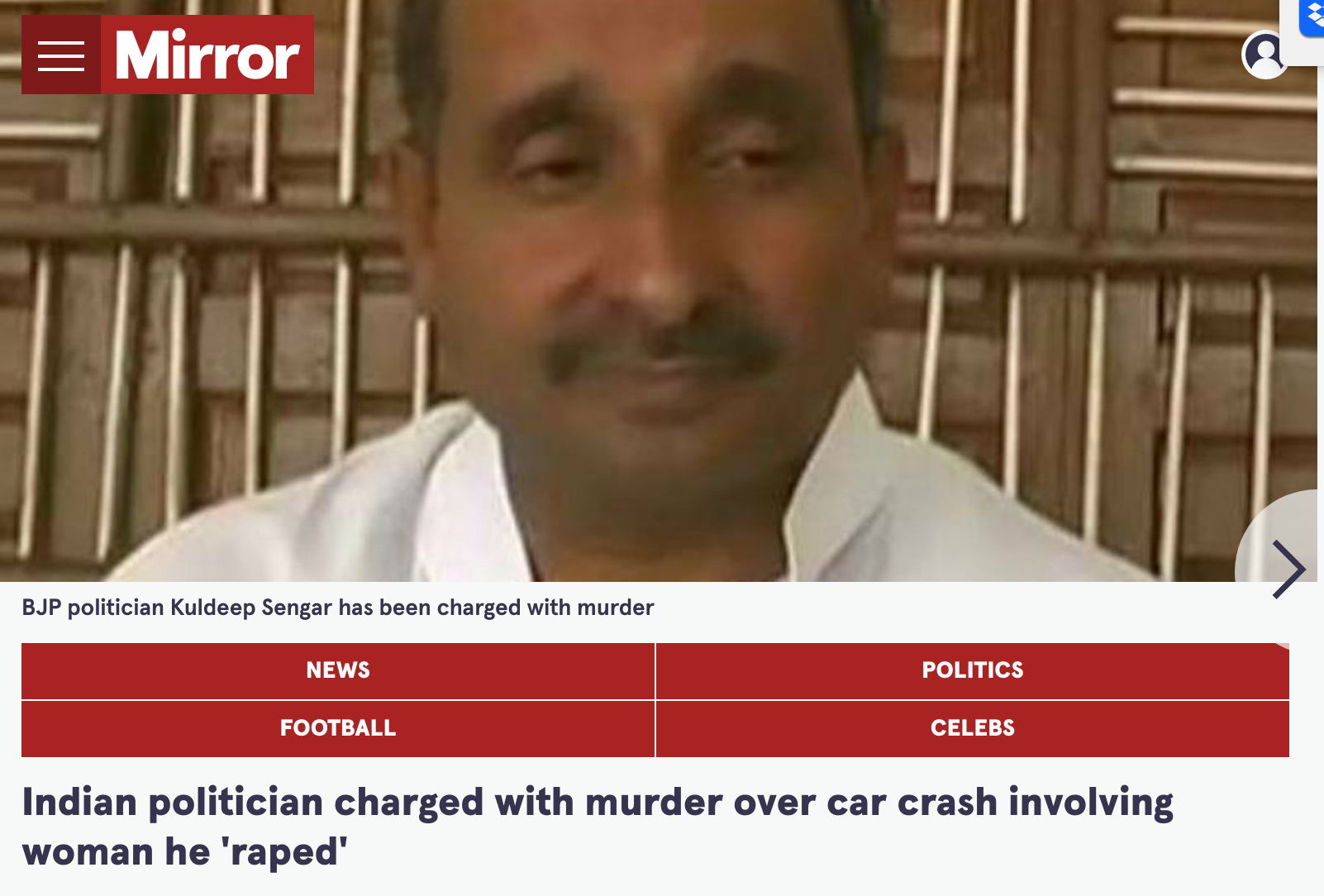
Beyond these discrepancies, India’s history of targeting Sikh activists and even the country’s politicians using car crashes to murder those that threaten their power have fuelled a belief that Deep Sidhu was murdered. Read about the example pictured below here.


Deep Sidhu’s charismatic manner of articulating Sikh causes saw him become a leading voice during the year long #FarmersProtest. He was one of very few public figures that placed Sikhi (the Sikh faith) at the centre of the movement. Specifically though, it was his advocation of Khalistan (free Sikh homeland movement) and Sikh sovereignty in general which saw him labelled a threat to the current Indian power structure. These stances are the same reason many Sikhs have been imprisoned or murdered by state authorities since at least the 1980s in India.

With Deep Sidhu now being cremated, any further insight into how he died is unlikely. However, India’s history and previous targeting of Deep Sidhu, among various #FarmersProtest supporters, support the idea it is reasonable to believe he was murdered.

Reactions- Outcry on Sikh woman’s public torture and rape in Delhi

Sikhs across the world have been speaking out this weekend after news of the targeted abuse and rape of a Sikh woman at the hands of a Hindu family.

Many feel this incident is an example of how Sikhs are targeted by other groups whilst also facing a lack of support through the law in India. See below for more on the incident and reactions from Sikh individuals and organisations from across the world.

Note- Sikh PA will NOT be sharing any of the disturbing footage of the assaults carried out against the Sikh woman (as of yet, unnamed).


On 28.01.22 media reports began to circulate regarding the arrest of a 11 members of a family in Kasturba Nagar (Delhi, India) for the gang-rape and torture of a 20-year-old Sikh woman, now named as Parvinder Kaur.

The reports followed viral videos being circulated online of the woman being beaten, having her hair forcibly cut and being paraded through a village with a blackened face. Those carrying out the heinous atrocities and being arrested for it include three juveniles (under 16) who are both said to have participated in the gang-rape and eight women said to have facilitated and encouraged the gang-rape, which includes the mother of at least one of the juveniles. Information regarding the attack details horrific accounts of the mutilation and torture of the woman during the rape.

The targeting of the married woman who is a mother of one is believed to have started due to her spurning aggressive sexual advances of a local Hindu juvenile, related to those arrested for the gang-rape. The same man killed himself in November last year, which is when the communal targeting of the woman began, led by the deceased man’s mother and peaking with the planned gang-rape, public torture and humiliation of Parvinder Kaur on 27.01.22.

Note- Reports that Parvinder Kaur had committed suicide have been found to be untrue.


Reactions

A video being shared widely to provide clarity on the situation featured Parvinder Kaur’s uncle, who provides more detail on the situation, including how other family members have also been threatened by the mob (translations available for media upon request). Accounts from the woman’s sister, who not only witnessed the vile attack but warned police about the possibility of it six days prior to it happening, have also been shared widely to provide more insight into what occurred and why.

Another common reaction seen on social media revolved around ensuring the woman’s Sikh identity was not erased. This is based on media discrepancy regarding how they report identities of those involved. Others emphasised the meaning of the attack on her kes (unshorn hair). It is common in India for Sikh woman to never cut their hair, even if they are not Amritdhari (initiated Sikhs mandated to keep kes).

#SikhGenocideContinues was a hashtag that many Sikhs began using after the attack went viral. Given the death of hundreds of Sikhs through the #FarmersProtest through last year, along with the ongoing campaigns to #FreeSikhPoliticalPrisoners, many feel India is at the heart of consistent oppression of Sikhs in various forms.

Some Sikh groups have highlighted the lack of faith in the ability of local police to deal with the situation, reflected by the on-the-ground support being provided by local Sikh figures.

Sikh UK based community group Shere Panjab posted a picture show casing revered Sikh leader Sant Jarnail Singh Khalsa Bhindranwale’s efforts to protect “low caste” (according to Indian non-Sikh beliefs) women, who are often targeted for sexual abuse due to the lack of police protection they face.

Respected Sikh activist and internationally renowned humanitarian Ravi Singh highlighted the hypocrisy of politicians calling out the rape attack, when they lead parties which have utilised the horrific rape culture of India to attempt to crush Sikh activism against the state.

Many Sikhs have highlighted how support for Khalistan (a free Sikh homeland within India) only increases with examples of how Sikhs can be treated in current India.

Overall, the reaction was a disturbing further reality check as to the state of modern India and the place of Sikhs in the nation.

Tens of thousands demonstrate in #FreeSikhPrisoners march

Tens of thousands of protesters took part in a “Bandi (imprisoned) Singh release” march today in Punjab (India), calling for the release of countless Sikh prisoners detained across India.

The march started in Fatehgarh Sahib today (11.01.22) and saw thousands of vehicles form a convoy to descend upon the residence of the Governor of Punjab in Chandigarh. Attendees demanded the release of Sikh prisoners detained for political reasons, which includes some detained for over a decade more than necessary.

This fascistic treatment of Sikhs by the Indian state has been a prominent point of focus for activists in recent years, arguably most notably through the actions of Bapu Surat Singh, the 88-year-old Sikh activist that began a hunger strike in 2015 until a specific list of Sikh prisoners were finally released. For this stand, Bapu Surat Singh has been arrested and detained to be force-fed in hospital ever since.

Respected panthic (Sikh path/community focused) lawyer Jaspal Singh Manjhpur highlighted the different treatment Sikh prisoners get in comparison to others, especially in regards to cases of police officers that are convicted of “fake encounter” murders. A tweet also highlighted figures from 20 years ago which suggest over 50,000 Sikh prisoners are held as political prisoners, a figure which is likely higher now, especially after the #farmersprotest, which saw countless activists imprisoned on spurious charges, many of whom still remain imprisoned. Many of these Sikhs were imprisoned under the controversial TADA law, which human rights groups have criticised. Although TADA was repealed in 1995, the application of the UAPA law still allows the targeting of Sikh activists by the Indian state.

In response to the protest, a delegate of protesters that got to speak to the governor Banwarilal Purohit have stated he has promised the release of a select group of prisoners that have already spent 25 years imprisoned.

The protest follows recent demands for the release of revered Sikh activist Professor Davinderpal Singh Bhullar, along with the disputed arrests of Jagmeet Singh and his mother.

The march has as of yet not been reported by any of India’s mainstream media, nor Western news outlets, despite the magnitude of the protest. Protests about this issue are set to continue, including regarding the #FarmersProtest activists imprisoned, whose release was included in agreed upon demands which led to the end of the Delhi encampment.

A review of government actions on the #FarmersProtest demands will take place on January 15th, which could lead to the Delhi encampment starting once again.

Sikh groups criticise Punjab police arrest of #FarmersProtest figure, and his mother

Sikh organisations and individuals from across the world have criticised the actions of Punjab police, after they arrested #FarmersProtest figure Jagmeet Singh and his mother.

Last week 28-year-old Jagmeet Singh and his 50-year-old mother Jasvir Kaur of Patiala (Punjab), along with a family friend (23-year-old Ravinder Singh) were arrested for sedition based on police claims they were supporting the Sikhs For Justice (SFJ) democratic referendum campaign on Khalistan (free Sikh homeland in India).

India has categorised the SFJ referendum as an illegal terror campaign and has arrested countless people for even posting about it on Facebook, despite the fact it is entirely peaceful and within accepted democratic practice, verified by a group of world renowned democratic experts that oversee the campaign as the Punjab Referendum Commission. It is unclear if Jagmeet Singh, who became a respected figure of the #FarmersProtest when a video of him standing against a water cannon attack went viral, has any connection to the campaign, with many suspecting the arrest of him and his mother is more connected to his status as a respected Sikh activist and Indian state attempts to continue to associate the movement with Khalistan.

Sikh Press Association Senior Press Officer Jasveer Singh said of the arrests, “Arresting the family of Sikh activists to scare them is a long-used tactic by Indian authorities. What has happened to Jagmeet Singh exactly matches the standard treatment countless other Sikhs have faced, simply for standing up for their rights. Indian police cells and prisons are notoriously dangerous places, especially for women, where torture and rape are used to make activists desist from opposing the state.

“The links of Jagmeet Singh to the Sikhs For Justice Khalistan referendum seem to be an attempt to associate #FarmersProtest figures with the movement, as this justifies the media hate campaigns and state violence aimed at the protesters. This is because Khalistan has become a demonised term among much of the Indian public, due to decades of anti-Khalistan propaganda in India.

“Jagmeet Singh’s situation also once again highlights India’s opposition to democracy, through the fact the Sikhs For Justice referendum campaign has been labelled a terror campaign, simply for trying to gauge support for an independent free Sikh homeland.”

Sikh PA will provide updates on Jagmeet Singh’s situation as they come in.

“Educated upper-caste Hindus” arrested for fake Sikh anti-Muslim paedophilic abuse

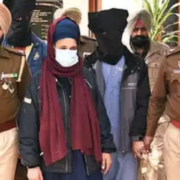
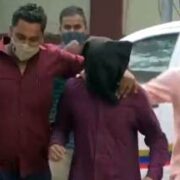
Three people were arrested in India this week for running social media accounts acting Sikh whilst advocating the abuse – including paedophilia – of Muslim women.

Shweta Singh (18) and Mayank Rawal (21) of Uttarakhand and Vishal Kumar Jha (21) of Bengaluru were arrested for using accounts with names such as “Khalsa Supremacist”, “Khalsa Warrior” and more whilst placing Muslim women up for “auction” on an app called “Bulli Bai”, which is viewed as a dark-web tool used for criminal or degenerate purposes. Dozens of real Muslim women, including respected figures such as activist Malala Yousafazi, had their pictures placed on the app listing them “for sale”. Khalsa is the term for the collective army of Amritdhari (initiated) Sikhs.


Along with the names of the accounts, hashtags such as #FreeJaggiNow were used to feign a genuine Sikh appearance, in reference to the British Sikh political prisoner Sikhs across the world are campaigning for. Posts about sexually abusing children caused a huge outcry, leading to big pushes for an investigation into the accounts, ending with Mumbai police making the arrests this week. Some journalists are describing the culprits caught behind the accounts as “Educated upper-caste Hindus” who used their IT skills to try to create conflict between Sikhs and Muslims, for Hindutva (Hindu extremist) Indian nationalist purposes. The accounts even used Punjabi and GurMukhi (Guru’s script- the language of Sikh scripture). Despite the fact even the police mentioned that the fake Sikh identity was part of the guise of the culprits behind the accounts, this has not been mentioned in articles about the issue by Al Jazeera and BBC.

The posts have also been seen on social media accounts like Twitter, prompting questions of the American company and their policing of Hindutva terrorism on the site. Previously, the Sikh Press Association were completely ignored by Twitter when raising the issue of pro-Indian nationalist accounts sexualising images of real Sikh dastaar (Sikh turban) wearing women, including children. Similar accounts were removed quicker on Instagram.

Many have pointed out such hateful campaigns – including those specifically trying to “sell” Muslim women – have been running for years. The news follows a recent report by the Centre of Information Resilience which uncovered networks of fake Sikh pro-India accounts, often used to demonise the Khalistan (free Sikh homeland) movement.

The ongoing discoveries of such fake Sikh profiles tarnishing the community’s image and working for the benefit of an Indian nationalist agenda will not surprise many Sikhs, who have been speaking about this issue for decades.

Delhi Chief Minister called to release Sikh imprisoned for 27 years on “judicial error”

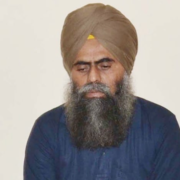
Sikhs across the world are calling for Delhi’s Chief Minister to free Professor Davinderpal (also spelled as Devinder Pal) Singh Bhullar, after the revered Sikh political prisoner of 27 years was put up for release.

The professor of engineering was extradited from Germany to India in 1995 after attempting to reach Canada to seek asylum from India’s state facilitated Sikh genocide. After being given the death sentence based on a “judicial error” according to his prosecutor, his situation created an international Sikh community campaign for intervention, leading to his plight being raised by MPs in Canada, Australia and the UK.

According to panthic (Sikh community/path focused) legal advocate Jaspal Singh Manjhpur (via respected Punjab based Sikh news outlet Sikh Siyasat), “all legal barriers in his release are removed” and Professor Bhullar can be freed immediately with a “formal release order” from Delhi’s Chief Minister Arvind Kejriwal of the Aam Aadmi party. The change in Professor Bhullar’s situation comes from an order from the government of India as he approaches 30 years imprisoned.

The former lecturer was imprisoned under the much criticised TADA law, which Amnesty international said was “grossly misused” to target dissenters of India’s countless human rights breaches. Professor Bhullar, who like all Sikh political prisoners was labelled as a Khalistan (free Sikh homeland movement) supporter to justify his targeting, was convicted of involvement in a bomb blast based on claims he had signed a confession, which only had his thumb-print on it. Sikh activists state Professor Bhullar was targeted after becoming vocal about the disappearances (fake encounter murders) of his students and the subsequent targeting of his own family in an attempt to silence him.

Protests in support of him continued throughout his sentence due to news of his torture and subsequent mental deterioration whilst imprisoned. Click here to read more on all the circumstances around his much contested detainment via the National Sikh Youth Federation.

Worldwide protests against Professor Bhullar’s planned execution in 2013 saw India change his sentence to life in prison. Six years later on Guru Nanak Dev Ji’s 550th GurPurab (Guru’s day, referring to birth celebrations), India’s Prime Minister Narendra Modi released a list of Sikh political prisoners that were to be released which included Professor Bhullar. However, all remain incarcerated. The hashtag #KejriwalReleaseBhullarNow is now being used to pressure the Delhi CM, who himself wrote a letter to Modi calling for clemency for Professor Bhullar in 2014.

More information on this story will be released as the campaign for Professor Bhullar’s freedom continues.

Seven WMP officers given “misconduct notice” for Sikh hate crime

UPDATE:

Today (01.08.23) the police misconduct inquiry begins. The case is being investigated by the Independent Office of Police Conduct (IOPC) in a hearing at Birmingham’s Lloyd House which is expected to last four days.


A statement from the Independent Office for Police Conduct (IOPC) confirmed that a West Midlands police officer behind a hate crime against a Sikh man has been issued with a “gross misconduct” notice, whilst six more have been given a “misconduct notice”.

The statement comes months after the original incident took place in October, which saw a Sikh man issue a complaint about having his patka (religious head covering) removed and stamped on by officer Kashif Shafiq. The news of the misconduct notices was originally revealed by Sikh Youth UK (SYUK), a community activist group supporting the Sikh man at the centre of the incident.

Despite the findings, IOPC Regional Director, Derrick Campbell said the misconduct notice given to seven WMP officers “does not necessarily mean that misconduct proceedings will follow. It is only once our investigation is complete that we will make decisions about whether or not the officers have a case to answer and should face disciplinary proceedings.”

Whilst the outcome of the IOPC investigation continues, questions are arising as to why the video and audio footage of the incident has not been shared publicly, to provide clarity on what exactly happened. Sikh Press Association Senior Press Officer Jasveer Singh said of the latest update, “To end questions about what occurred, WMP could simply share footage from the cameras worn by the officers involved in the incident. At some point, especially in consideration of the outcome of the investigation, the footage will need to be revealed.”

With this update, many are wondering why the Metropolitan Police are yet to give any update on complaints about one of their officers punching a Sikh man in the face in an unprovoked attack during last year’s #FarmersProtest #KisaanRally in London, which legal group Kaurs Legal have pushed for.

Read more about Sikh community reaction to the IOPC statement via Unsaid Digital, who spoke to the Sikh Federation UK, Sikh Council UK and Sikh Youth UK. Click here to read.