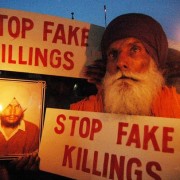
Latest example of Indian police’s anti-Sikh torture globally condemned

Reports of a practicing Sikh man having his kes (unshorn hair) cut and having the word “criminal” branded with hot iron into his skin after being arrested have been globally condemned.

News of the torture first surfaced around 27.06.22, with reports stating Bathinda (Punjab) police had arrested Rajveer Singh, who fed back that he had been severely tortured and had his kes cut. The Sikh faith mandates keeping unshorn hair which is never to be cut in any circumstances. Note- some reports name the man as Rajpreet/Rajbir/Rajdeep.

Police of Punjab, many of whom self-identify as Sikh, would no doubt be aware of the value of kes but have historically carried out such actions to humiliate and torture Sikh detainees. Rajveer Singh is said to be Amritdhari (initiated Sikh), meaning he has committed to keeping his kes.

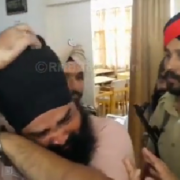
The mother of the detainee took forward his complaints of torture to local Sikh bodies after his arrest on 26.06.22, which is when reports started circulating about the incident. In one video taken by reporters that visited him in Bathinda central jail, attempts by bystanders to pull-up his shirt to show the branding he suffered on his back were stopped by officers in attendance. Rajveer Singh also attempted to show through his dastaar (Sikh turban) where his hair had been cut. However, various other signs of his torture, including deep bruising across his body, were evident.

In an extended interview with respected Punjabi Sikh journalist Jasveer Singh Mukstar, Rajveer Singh’s mother explains how her son was falsely imprisoned in the same way many Sikhs have been, with a random FIR (First Incident Report, police report which anyone can make, including officers themselves) being justification to imprison him for days, where he suffered the torture. It is unclear what the original FIR was about which led to Rajveer Singh’s arrest.

The incident follows a similar case of torture where a Sikh man had the word “terrorist” engraved in his back by jail staff in Barnala (Punjab). What is inciting the brutal levels of humiliation with the branding of prisoners is unclear, but seems to paint a picture of increased inhumane savagery of India’s authorities.

Punjab’s new Minister of Jails of the newly in-power Aam Aadmi Party Harjot Bains tweeted saying there would be an investigation into the incident. Faith in such investigations remain low, as incidents of anti-Sikh abuse in India and by Punjab authorities remain rife. Leading Sikh body the SGPC also released a statement (below) which said they will be pushing for “culprits” to be “punished” for the incident.

Image

In a sign of India’s lack of press freedom (leading to the country being ranked 150 out of 180 countries for press freedom) the story is yet to be covered by any mainstream media, despite several Punjab based journalists covering the story.

Australian MP supports “urgent” action against Sikh beard “discrimination”

A move by award winning charity group Sikh Volunteers Australia (SVA) to change anti-Sikh health care policies has been supported by MP Julian Hill.

SVA were approached by Sikh healthcare professionals and students from across the country that were being pressured to cut facial hair as part of a flawed mandatory mask “Fit Test”. Practicing Sikhs keep kes (unshorn hair) and some results of such tests claim beards can prevent healthcare staff from wearing a mask properly.

Suggestions a beard prevents masks from being worn properly have been proven to be flawed, with many Sikhs passing the “Fit Test” with beards, whilst also people without facial hair have failed the tests based due to their facial features. There are also many alternative face-coverings aside from standard masks which are readily available for healthcare staff to use instead. However, due to a lack of awareness and general ignorance amongst healthcare legislatures, there was pressure on Sikh healthcare workers to cut kes, an issue exacerbated by the pandemic. 

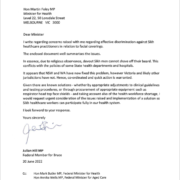
SVA challenged this discriminatory pressure against Sikh healthcare staff by drafting a report titled “Discrimination against Sikh Healthcare Practitioners and Students in Australia”. Headed by Jaswinder Singh of SVA with support from Sikh healthcare staff including doctors, the report explained why asking Sikhs to cut hair is discrimination and offered proven alternatives. The report also pointed to alternatives considerate of Sikhs being implemented by healthcare authorities of New South Wales and Western Australia. The report was sent out to relevant authorities and political figures, leading to Julian Hill writing to Minister for Health Martin Foley, requesting “urgent consideration of the…implementation of a solution, so Sikh healthcare workers can participate fully in our healthcare system.”

The issue of healthcare discrimination regarding masks became a prominent issue for Sikhs, vastly covered by The Sikh Press Association. Read previous articles on this issue-

SVA will be continuing to push for wider healthcare change to prevent further discrimination against Sikh staff, and will provide updates accordingly.

See their report in full below.

Any healthcare professionals wanting to get in touch with SVA about this can message them on Facebook.

ISIS attack Gurdwara, kill Afghan Sikhs again: Reaction and Breakdown

A Kabul (Afghanistan) Gurdwara was attacked by ISIS (Islamic State) affiliates again, for the third time in three years on Friday morning (17th June).

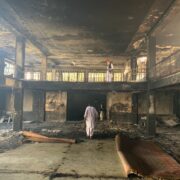
In an attack which the Taliban government of Afghanistan claim they were aware was set to happen, ISKP (Islamic State Khorasan Province) fired at the Karte Parwan Gurdwara complex which houses dozens of Sikh families in the city, storming the building and letting off explosives inside, whilst a nearby vehicle filled with explosives was also detonated.

The attacks led to the killings of at least three men, including the Muslim Gurdwara security guard, Sikh man Savinder Singh Gaznechi who lived in the complex, and a Taliban soldier at an outpost where one explosion happened. All the ISKP attackers were also killed, although how many remains unclear.

The attack follows a 2021 attack at the same Gurdwara and the infamous 2020 massacre of 25 (including a three-year-old) at Kabul’s Guru Har Rai Gurdwara by ISIS militants. These Gurdwara attacks are separate from other attacks on Sikhs in Afghanistan, which includes the 2018 targeted bombing of Sikh political activists in the country (believed to have been carried out by the Taliban) and the kidnapping of a 13-year-old Sikh girl.

Latest media reports suggest ISKP have said the attack was retaliation to anti-Muslim comments about the Prophet Muhammad by BJP’s Nupur Sharma and Naveen Jindal. The comments, which ISKP said they would respond to with force, have been extra antagonism for Muslims worldwide, who have been witnessing India under the BJP led by Narendra Modi be brazenly violent and bigoted towards Muslims and other minority communities, including Sikhs. The comments by Sharma led to Muslim nations across the world calling out the issue and pressuring Indian ambassadors in their nations.

The fact the actions of the BJP would lead to an attack on Sikhs is cruel irony, given the at best fractured relationship Sikh communities have with the party, especially based on BJP’s callous treatment of Sikhs during the #FarmersProtest, which included the son of a BJP politician carrying out a terror attack on Sikh protesters, leading to several deaths.

One of the main reactions regarding the attack were calls from Canadian Sikhs to have the government expedite refugees from Afghanistan similarly to how Ukrainians have been, calls which were largely unechoed by other Canadians. Despite the fact Canadian Prime Minister Justin Trudeau pledged to allow Afghan refugees to settle in Canada, some reports allege more pets have been brought in from Afghanistan than actual people in the last year. The World Sikh Organization, a Canadian Sikh legal and political advocacy body, led the demand for more action from Canada’s government. The group have even stated Sikhs would be willing to sponsor the whole project themselves.

Efforts to help Afghan Sikhs settle in the UK continue too, where many have already settled. Appeals to the Indian government have also been made, although previously Afghan Sikh refugees into India have found themselves pushed into poverty, with some even deciding it is better to return to Afghanistan than live in India.

In a frightening indictment of the state of India, countless Hindu nationalists posted mockingly and sneeringly about Sikhs being targeted by extremist Muslims, showing little empathy and often outright celebrating the attack. The shockingly depraved statements are usually based on the nationalist belief that Sikhs sometimes side with Muslims on issues in India, which they believe is based on some foolish kinship Sikhs have been tricked into by Muslims. However, both Sikh and Muslim communities in India often suffer from the same nationalist Hindu extremism which plagues the country, leading to both often calling out issues of a similar nature, such as the targeting of their religious wear by Hindu nationalist extremists.

Afghanistan is currently still going through a particularly dangerous period, due to clashes between the Taliban and other extremist groups, as well as food shortage issues in the country. Despite having a history of oppressing Sikhs in the country, currently the Taliban have been noted as trying to support the Sikh community in the current climate. However, whether they will support the mass exodus of the remaining hundreds in the country remains to be seen, as originally the Taliban did not want minorities like the Sikhs to leave the country when they took over, something believed to be fueled by a desire to be seen as a serious government and not just Islamic extremists.

Problems for Sikhs in Muslim majority nations do not stop in Afghanistan, with issues in Kashmir and Pakistan – from forced marriage conversions to assassinations – rife too. However, for now efforts to help Sikhs seek refugee status remain focused on Afghanistan.

Indian State officials destroy Sikh homes and langar hall

A demolition squad acting under orders from Uttar Pradesh state officials destroyed a langar hall (Sikh communal kitchen) and the homes of approximately 50 Sikh families without their consent.

The reasons behind the destruction of the homes – carried out on 6th June in Gagan Manoharpur village near Moradabad where generations of Sikhs had lived for nearly 50 years – currently remain unclear but are believed to be linked to hostility around the Sikh claim to the land.

The Sikhs whose homes were destroyed have documents which prove a panchayat (village meeting) agreed to give the land to a local Sikh man called Gagan Singh in 1973. Subsequently, a Gurdwara, langar hall and homes for dozens of families were built there, housing generations and also helping to feed countless locals too through seva (selfless service) from the Sikh community.

As of yet there has been no official statement from Uttar Pradesh (UP) authorities on the destruction, but locals reported the demolition squad said they were acting under orders from the state, as would be necessary for such an act. UP is under governance of notorious fanatical Hindu nationalist Yogi Adityanath of the BJP, Narendra Modi’s in-power party. Experts on Indian communal politics have suggested to Sikh PA the demolition is likely to be anti-Sikh Hindu nationalists using Adityanath’s callous treatment of minorities to takeover the Sikh land. Adityanath’s reign has also overseen recent demolition of the homes of Muslims that have been linked with speaking out against India’s current regime of bigotry.

Some original posts on this issue reported the Gurdwara connected to the langar hall was also destroyed. It is now believed this is inaccurate. However, the Shiromani Gurdwara Parbandhak Committee (SGPC- national Gurdwara body of India) have still intervened, releasing a statement saying “action” needs to be taken against those that destroyed the homes and “compensation” must be given to the family by the UP government.

Due to the nature of India’s corrupt legal structures, clarification on why the homes were destroyed and an appropriate compensation package for the families is unlikely any time soon. Meanwhile it is believed the Sikh families, which includes children, have been forced to seek shelter in local Sikh spaces.

Two wrongly arrested for bomb hoax made to disrupt Sikh Genocide event

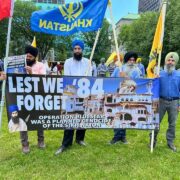
A hoax bomb scare made about a Sikh Genocide rally in Parliament Hill (Ottawa, Canada) resulted in Ottawa police incorrectly arresting two Sikh men on Saturday (11th June).

According to Canadian media, police received a “credible” tip about “Sikh extremism” being behind explosives placed in vehicles in the parliament area. The event was an annual gathering organised by United Front of Sikhs Canada to mark the Sikh Genocide and celebrate Sikh resistance. It is unclear why police believed Sikhs would bomb a Sikh event.

Organisers of the event Manveer Singh and Parminder Singh found themselves arrested and interrogated about anonymous allegations they planned to bomb their own event, something which would have likely killed members of their own community, including family and friends. Latest Canadian media reports claim the tip was that the men were doing this as members of Babbar Khalsa. Babbar Khalsa are a Sikh resistance and freedom fighter group that countered India’s anti-Sikh state terror in the 80s and 90s. Through following Indian government positions, Canada has designated the group a terror outfit.

Speaking to Canadian media about his arrest, Parminder Singh said “I was shocked. I’m gathering my community here to bomb them? It doesn’t make sense because I know I am not involved in anything. I’m proud as a Canadian Sikh. I love this country, I will do everything to protect this country. Why am I arrested? Because I’m wearing a turban and my skin is not white?”

Both men revealed they had their dastaars (Sikh turbans) removed for search, as well as some of their Punj Kakkar (Five Ks of the Amritdhari [initiated Sikh] uniform). The two were later released with no charge, with sources telling media Canadian authorities do not consider the men a threat. However, on Saturday night Manveer Singh said authorities only treated him as a “terrorist“. Parminder Singh said he felt he had to comply with the degrading dastaar search as “If I don’t obey their instructions they could have done anything to me”. Parminder Singh said police eventually apologized for their mistake and let him go.

Ottawa police have not yet commented on their treatment of the Sikh men during the incident, which saw the parliament area cordoned off for the majority of the afternoon.

Where the tip on “Sikh extremism” came from is currently unclear, although Canadian media sources have stated the tip was very detailed, providing pictures of organisers and license plate numbers.

In 2020 Canadian former National Security Analyst for the Federal Government of Canada Stephanie Carvin said Canada’s Sikhs were facing “harassment” from Indian authorities, when questioned about espionage in the country. Only weeks ago a similar event organized by Sikh group Misl Winnipeg in Manitoba saw the Hindu Society of Manitoba contact them to “strongly” urge the group not to show any public support to Sikh Shaheeds and Khalistan (free Sikh homeland support). Notorious Canadian Hindu nationalist Ron Banerjee, someone known as a hate-preacher spreading intolerance against Sikhs and Muslims in Canada, was arrested at April’s Toronto Nagar Kirtan (Sikh religious procession) for threats against Sikhs. In December 2021 a spate of hateful anti-Sikh graffiti was daubed on property of Brampton (Ontario) Khalsa School and vehicles with #FarmersProtest signs. The graffiti, which included Hindu versions of the Swastika, were found to be done by Kartik Tugnait, a man with a name of Hindu origin. Another #FarmersProtest rally in Surrey (BC) also saw Ashish Manral, a local some described as a Hindu nationalist, drive his car aggressively towards a group of demonstrators before getting out and verbally assaulting them, an incident which was reported to local police. Such incidents have led many Sikhs suggest Indian nationalists could be behind the bomb hoax.

A statement on the incident by World Sikh Org also highlighted how the false threat tactic has been used against Sikhs in Canada before.

“This is not the first time the Canadian Sikh community has been targeted by false bomb threats. Such threats targeting the Sikh community were frequently made in the 1980s. In June 1985, a call was made to police to report that “Sikh extremists” were planning to bomb a concert at Maple Leaf Gardens featuring Indian singer Lata Mangeshkar. The tip was investigated and found to be a hoax.

“The false narrative of “Sikh extremism” has repeatedly been used in the past by the Government of India and Indian media to target legitimate Sikh expression and the Canadian Sikh community generally.  Unfortunately, this narrative has also been uncritically perpetuated by Canadian media, law enforcement and politics in the past….This is yet another example of false allegations of ‘Sikh extremism’ being used to thwart and suppress legitimate Sikh expression.”

Read the WSO statement in full here.

Questions are now being asked as to why Canadian media and wider authorities have allowed unfounded allegations of “Sikh extremism” to be perpetuated by Hindu nationalist affiliates such as CBC News representative Terry Milewski and journalist Terry Glavin, who once wrote revered Sikh saint Sant Jarnail Singh Khalsa Bhindranwale had a “genocidal hate for Hindus”, despite the fact it is well known Sant Jarnail Singh helped Hindu families suffering under India’s regime and was also friendly with many Hindu figures, including current BJP MP Subramaniam Swamy.

Speaking on the incident, BC based Sikh PA Senior Press Officer Jasveer Singh said, “For police to believe that Sikhs would organise a Sikh gathering only to bomb it, there has to be some seriously warped views of Sikhs floating in the spheres of Canadian authorities.

“Of course, it is understandable police would need to react to such a claim, but one would hope they would do so with cooperation from the Sikhs who would have been the ones killed had such a threat been real. Instead, the organizers faced humiliation and interrogation, making them the victims of not just a hoax designed to derail their community event, but also the victims of police treatment that was overly harsh and lacked common sense.

“For decades there has not been a single incident of anything that can be called Sikh extremism in Canada, but that has not stopped Canadian media figures from proclaiming the country suffers with such an issue, often using India’s notoriously biased anti-Sikh media to prop up such claims. Demonizing Sikhs in this way is leading to law-abiding Canadian citizens being treated like criminals and that needs to stop.”

WSO led Canadian Sikh calls for a thorough investigation into the source of the tip-off and ensure those behind it are prosecuted to the full extent of the law.

Sikh PA will be providing ongoing updates on this story.

Bail denied to 34 Indian police officers as trial for “inhuman killing of innocent” Sikhs continues

The denial of bail to 34 Indian police officers on trial for the murder of 10 Sikh men and one Sikh child has been welcomed, as the 31-year-old case continues.

In 1991 a bus full of Sikhs heading towards a Gurdwara were stopped by Pradeshik Armed Constabulary officers in Pilibhit, Uttar Pradesh (India). 10 Sikh men and one Sikh child were removed from the bus and put onto a police bus. All 11 Sikhs subsequently “disappeared”, with confirmation later coming they were killed by the police.

On 26th May Indian media outlets revealed an application for bail by 34 of those being prosecuted for the murders was denied by a judge, as the case against them continues. A quote about the officers from the Allahabad High Court (Delhi) hearing stated they were denied bail for “indulging in such a barbaric and inhuman killing of the innocent persons.”

Whilst witnesses that would never go public confirmed the killings, an admission of guilt came years later when parents of the child were given “compensation” for the so-called disappearance. Such compensation is usually a meagre amount designed to tie families into silence about their murdered loved ones. However, a steadfast approach from the Sikh families seeking justice saw the case eventually conclude in trial in 2016, 25 years after the massacre.

The original filing of the case implicated 47 different people in the massacre. It is unclear if all are police officers. 12 of the 47 were not imprisoned at any point, and instead given immediate bail in 2016 due to their elderly age and/or physical ailments. It is believed 35 of the murderers have since been imprisoned, although it is well known within the Indian judicial system that government affiliated detainees are often given shocking levels of freedom when they are meant to be locked up.

Speaking on the case, Sikh Press Association Senior Press Officer Jasveer Singh said “The denial of bail to these murderers is welcome, but has only made news in India because it is a rare occurrence. 10 men and a child were murdered by police in India for simply being Sikh, which innately is a threat to India’s fascist and casteist anti-minority regime. Such killings were a regular occurrence in the 80s and 90s and still happens to this day in a less conspicuous fashion.

“Sikh orgs like Ensaaf and Punjab Disappeared, made up of small teams doing immense ground work whilst navigating around state obstacles, have documented thousands of these murders by police and it is well known there are thousands more. Evidence of these types of killings of Sikhs – known as ‘fake encounters’ – is so strong that even the flimsy structure of Indian justice is able to uphold the claims against the police, although the fact it takes decades to make this happens is still indicative of the appalling unjust state of Indian law, and also underlines why there are not more convictions of this nature. It also explains why less provable issues such as rape and extortion by police are nearly never taken up in courts.

“The saying ‘justice delayed is justice denied’ summarises why many Sikhs across the world are so unhappy with India’s treatment of Sikhs. Countless Sikh families have suffered under the Indian regime and remain unable to get justice.”

Many specific details of the case remain unclear. However, is is understood the trial of the 34 police officers continues, although a swift outcome is very unlikely.

Assassination attempt made on witness to anti-#FarmersProtest terror attack

A witness to a terrorist attack aimed at attendees of a #FarmersProtest demonstration in Lakhimpur Kheri (Uttar Pradesh- UP, India) had an attempt made on his life this week.

On the evening of 31st May, President of the UP District of the Bharatiya Kisan Union (BKU- a farmers union group) Dilbagh Singh was returning home in the Gola Kotwali area of Lakhimpur Kheri (UP) when his vehicle was approached by two masked gunmen on a motorbike. After failing to open the doors of the vehicle, they fired two shots at Singh through the window, both of which missed.

Dilbagh is a key witness in the Lakhimpur Kheri terror attack in October 2021, which saw Ashish “Monu” Mishra – son of BJP Home Affairs Minister Ajay Mishra – drive a jeep directly through a crowd of peaceful protesters attending a #FarmersProtest demonstration, resulting in nine deaths. Four of those deaths were of Sikh men, leading to many claims that the attack was carried out with the belief that Mishra could get away with it considering it was minorities that suffered most. Witnesses also claim they saw Mishra firing a gun at others after his driving rampage.

Image result for ashish mishra arrested
Terrorist Ashish Mishra

Video footage of the incident went viral. Yet despite dozens of witnesses attesting to Ashish Mishra’s terror attack, police action against him has been slowly enacted. Ashish was arrested one month after the attack and has since been imprisoned pending trial. A Supreme Court investigation team has since stated they found the attack by Mishra was “pre-planned”. The process of convicting Ashish Mishra for the terrorist massacre dozens of witnesses saw him carry out is ongoing. It is important to note, it is well known that government and other Indian elite types are often given incredibly cushy rides through prison, which allow them inconceivable levels of freedom whilst apparently incarcerated.

The assassination attempt occurred when Dilbagh Singh’s attackers somehow punctured a tire on Singh’s car, forcing him to stop. The attack was made on a day Singh had allowed his State provided security some time off, suggesting the attackers had inside knowledge about his movements. Singh said he ducked and hid under his seat when he saw one of the attackers produce a gun, whilst also saying he believes the vehicle’s darkened windows helped him survive the assassination attempt.

UP Police Chief Akhilesh Yadav questioned the state government over the incident, saying “A shameful example of the anti-farmer attitude of the Chief Minister (controversial Hindu extremist Yogi Adityanath) has just been seen in Lakhimpur Kheri where two bikers opened fire on the vehicle of Dilbag Singh, district president of the Bharatiya Kisan Union”

“Dilbag Singh is also a witness to the incident that took place on October 3, 2021, when the farmers were crushed under a Jeep by the son of a Union minister. He had a narrow escape. The attackers wanted to kill him. Is this the BJP government’s zero-tolerance (towards crime)?”.

The actions of the UP Police Chief and the Supreme Court investigation, both of which have helped highlight the terrorist nature of the BJP (Narendra Modi’s in-power right-wing nationalist political party) affiliated attack, are believed to be inspired by the large support for farmer union groups among the people of India, much of whom recognise that largely they are trying to work against food exploitation by India’s elite.

However, in an incredulous move of propaganda after the initial reaction from a Police Chief, Indian media outlets have run a story with the latest statement from local police saying individuals picked out by Dilbagh Singh as the attackers said the union representative asked them to attack him so he could get a firearms licence. The fact that Singh already has state funded armed security due to his union role casts doubt on this claim, along with the fact that if Dilbagh Singh did ask them to attack him, then getting them arrested too would be against his own interests.

Read more on the Lakhimpur Kheri anti-#FarmersProtest terror attack, including references to everything mentioned above:
Nine dead after Indian Minister’s son carries out #FarmersProtest terror attack | SikhPA

Terror attack on #FarmersProtest “pre-planned” | SikhPA

Battle of Amritsar: Film Review

Here we share a film review of #BattleOfAmritsar by respected Sikh educator Harjinder Singh of Akaal Publishers. The film is a documentary newly release by Jung Hind Punjab through a collaboration between the National Sikh Youth Federation, Sikh Liberation Front, Wootz Films and the British Columbia (Canada) based Khalistan Centre. Screenings are currently set across the UK, in East and West coast Canada and in California. More are set to be announced. Find more info including screening info and tickets at BattleOfAmritsar.com.


The Indian government’s attack on the Sikhs’ heartbeat, Sri Harmandir Sahib, Amritsar (Punjab), will forever be etched in the minds of the Sikhs.

The attack remains a pivotal moment in Sikh history, still influencing the modern march to sovereignty and an oppression free life. This documentary is thought provoking and inspiring. It will further fuel the rise of consciousness of chardi-kala (rising spirits), whilst giving new insights into this seismic episode of the modern era.

Should you watch it? Yes. Should you take your family? Yes.

It is all in Punjabi with English subtitles. This documentary will be most useful to those who understand native Punjabi, as they will truly capture the essence of the dialogues. English speakers will still benefit from watching it but the meanings and emotions can never truly be captured by translated subtitles.

The documentary starts slowly and old hands like me might find the first 30 minutes or so a bit slow. However, after 45 minutes you will not notice the time pass, apart from the times when you are shocked by the raw facts and realities of the battle.

You most likely will shed a tear or two. First hand eye witnesses of Bhai Mohan Singh, the nephew of Jathedar (Head) of Babbar Khalsa (Sikh resistance force) Sukhdev Singh Babbar and son of Bhai Mehal Singh Babbar, gives an in depth analysis of the battle. I have never heard such detailed and methodical accounting for the battle analysis of what the Singhs of Babbar Khalsa did in June 1984. Everyone reading this, needs to hear it. Bhai Mukhtiar Singh Mukhi of Damdami Taksal (Sikh seminary) gives an eye witness perspective from the Sri Akal Takhat Sahib (Sikh fort part of the Sri Harmandir Sahib complex), again, day-by-day accounting from June 1st–6th June. That too in a very real and raw way.

Sant Jarnail Singh’s voice, archive video footage and mission, reverberate throughout the documentary. Sant Ji shines in this documentary and is electrifying every time he appears on screen.

This film should be attended in droves. Screenings should be sold out. Then it must be shown at Gurdwaras to the Sikh masses. I am somebody who attended the first 1984 protest march, wrote two books on 1984 and this whole narrative has and still is an integral part of my life, so I deeply appreciate the true value of what this documentary represents.

Just watch it. Will not disappoint.

Indian media “spreads misinfo” regarding alleged Sikh “harmonium ban”

Major Indian news outlet India Today were accused of spreading “misinfo” regarding a declaration on kirtan (Sikh devotional music) by leading Sikh authority Shiromani Gurdwara Parbandhak Committee (SGPC).

Giani (meaning knowledgeable one, referring to a Sikh faith leader) Harpreet Singh, the Jathedar (Head) of leading Sikh authoritative body the Akal Takht, issued a statement on 3rd May saying there would be a phasing out of use of the harmonium over three years from kirtan in Sri Harmandir Sahib, the holy Sikh site in Amritsar, Punjab.

Image

The move is designed to encourage kirtanis (kirtan musicians) to revert back to use of traditional stringed instruments such as the taus, rubab and sarangi, as used for kirtan in the time of the Gurus. This is a move that has largely been long supported by Sikh groups across the world, based on a revival of understanding about Sikh traditions.

However, when news of the motion reached Indian media, the reaction was negative. An article released on 24th May written by Harmeet Singh, Senior Editor of India Today, called the move “instrumental nationalism” and claimed it embroiled Sikhs into “native-versus-foreign debates”. The narrative that the move was designed to rid Sikh spaces of an “impure…foreign invention” (as the harmonium is a 19th century French invention) was run by several mainstream Indian news outlets, which forced the SGPC, the committee behind the Akal Takht, to comment on the misinformation.

In a Tweet tagging India Today, the SGPC said “5 high priests (of the Sikh punj pyareh leadership system) passed Gurmata (Guru minded decision) after due discussions with Sikh music scholars & it is to revive Gurbani Kirtan singing at Sikh shrines, as per old traditional style with string instruments.“

The harmonium came into use in India during the British Raj colonial period and has been used regularly in many – if not most – kirtan performances ever since. This long use of the harmonium in Sikh spaces has helped create an appreciation for its use in kirtan, which has led to some saying the harmonium should not be banned altogether. The SGPC have been quick to highlight there is no outright ban of the harmonium.

Jasvir Kaur Rabban, a respected kirtani and Chief Executive Officer of the Raj Academy Conservatoire said of the motion, “Many will ask why remove the harmonium? The answer is simple, because we abandoned our own heritage to adopt a practice that was never ours. Evolution is not advancement when it comes at the cost of your roots and heritage. The unfortunate truth is that most Sikhs across the world were not aware that the harmonium is a European instrument created in the 1840s. It was intentionally installed at Sri Darbar Sahib to change how we practice Shabd (Guru’s verse) kirtan.

“The joy in this moment is that we are taking a huge step towards reclaiming and decolonising our practice of kirtan and reconnecting with authentic Sikh Musical Heritage. This is a huge win for our kaum (nation).“

According to Sikh PA sources, it was also during the colonial period that women were stopped from performing kirtan in Sri Harmandir Sahib, although exact details on how this unfolded are unclear. Attempts to revert back to traditions which would include women once again being allowed to perform kirtan in Sri Harmandir Sahib, as they are in all other Gurdwaras, have been pushed for by various Sikh groups across the world. The move towards traditional stringed instruments for kirtan seems to be a push in this direction, and as such has been welcomed by many.

Indian media’s misinformation and negative spin put on this move issued by Giani Harpreet Singh seem to be part of ongoing attempts to demonise the Jathedar, who recently advocated for Sikhs to be armed with guns, another celebrated tradition which is an intrinsic part of the Sikh faith’s reverence of weapons. Under Narendra Modi’s right-wing nationalist government, Indian media are ranked 142nd in current press freedom rankings of 180 countries.

Summarising the importance of the move into stringed instruments for kirtan, Professor Surinder Singh of the Raj Academy Conservatoire explains, “The kaum was blessed with beautiful musical instruments from our Guru Sahibaan such as the Rabab, Saranda, Sarangi, Taus, Dilruba and Jori. Five of these instruments were created by the Sikh Guru’s, meaning they did not exist in that specific form previously. They were used for kirtan at the time of our Gurus and played by our Gurus. Kirtan was not used for entertainment. Kirtan was used as medicine for the soul and mind to transform and develop the innerbeing of the Sikhs of that time. This was and is the power of Gurbani (Guru’s words) being recited and sung in its prescribed Raag. It has the power to carve the human psyche with such precision to develop personalities of the greatest calibre. The tools our Gurus used and blessed us with were these majestic string instruments and Gurbani in Raag roop (form), and the combination of this being evident in our history. 

“It is evidenced that Gursikhs would carry their saaj (Sikh instruments) on their backs, even in the battlefield because they were an integral part of the lifestyle of each and every Sikh on and off the battlefield.

“The inner battle of conquering the mind is a daily fight, this is why our Gurus gave us the best spiritual weapons to fight our battle and come through victorious. It is these sacred Sikh instruments that will enable us to fight, but to win the inner and outer battle we must adhere to the hukam (command) of the Shabd and apply the Raag”.

Two Sikhs murdered in “act of terrorism” in Pakistan

Two Sikh shopkeepers were murdered in a drive-by shooting by Islamic extremists in Peshawar (Pakistan) on Sunday (15th May), in another example of ongoing violence against Sikhs in the country.

The men, who ran spice shops in the Battathal bazaar shopping area of Sarband, a town in Peshawar, were shot whilst at work by as of yet two unknown assailants travelling on a motorcycle. Whilst one has been named as 38-year-old Ranjeet (also spelled as Ranjit) Singh, reports differ on the *name of the other man, which has been reported as any of Kuljit, Guljeet, Kanwaljeet or Saljeet Singh, although all reports confirm he was 42-years-old. Both are said to have been local Sikh neighbourhood Jogan Shah Mohalla.

*Note- pronunciation between different regions and English translations can result in South Asian news reports giving different names in such circumstances. It is not believed there is an issue of misidentification of the individual murdered.

News reports from the ground in Pakistan quote Head Capital City Police Officer (CCPO) Ijaz Khan as stating “We are investigating from different angles and it is confirmed that it’s an act of terrorism”. However, the intention to “to disturb interfaith harmony” in the country has been confirmed by Foreign Minister Bilawal Bhutto-Zardari.

The Human Rights Commission of Pakistan condemned the murders and added, “This is not the first time that the Sikh community in Khyber Pakhtunkhwa (the province Peshawar is in)“. In October last year 45-year-old Satnam Singh, a medicinal practitioner, was also murdered in similar fashion whilst working at his pharmacy on the other side of Peshawar. Charanjeet Singh, a Sikh community activist, was murdered in 2018 and Sikh politician Soran Singh was also slain in 2016. Whilst some sources have suggested these killings were not related to Islamic terror against the Sikh community of the city, local Sikh community leader Gurpal Singh said in 2018 of these killings, “Unfortunately those working for interfaith harmony like Soran Singh and Charanjeet Singh don’t live for long.”, reflecting the ongoing issue of Islamic extremists attempting to crush any possible Sikh influence in Peshawar.

Some reports suggest IS-K, an Islamic extremist group, have claimed responsibility for the murders. Pakistan police reports claimed they killed three leads of the IS-K group in December last year, after the murder of Satnam Singh.

Although other areas of Pakistan are considered possibly safer for Sikhs, the community has faced various issues across the country for decades, an issue which has seemingly not been impacted by former Prime Minister Imran Khan’s public efforts of promoting Pakistani affection for its Sikh communities in recent years, efforts which were largely based around increasing Sikh-faith based tourism in the country. In 2020 of the most important Sikh sites in the world – Nankana Sahib Gurdwara, in the region where Sikh faith founder Guru Nanak Dev Ji Maharaj was born – was attacked by a mob angry at a pursuit for justice by local Sikhs in a case of forced marriage and conversion. Neighbouring Muslim nation Afghanistan has also seen relentless persecution of Sikhs, with the 2020 Kabul Gurdwara massacre of 25 (including a three-year-old) being the prime example of the issue.

In response to the murders on Sunday, various Sikh community groups held demonstrations across Pakistan demanding justice.

In response, new Pakistan Prime Minister Shehbaz Shariff called the culprits “Pakistan’s enemies” and vowed to “eradicate them from the face of the earth” according to news reports. The new PM was installed after a turbulent political period in Pakistan which saw previous PM Imran Khan removed after a vote of no-confidence. Whether or not this political turbulence is a factor in the timing of the Sikh murders remains unclear.

Both men, who locals described as “friendly” and “harmless” leave behind widows and children.

More info will be shared on this story when possible.