
Canadian Hindu org call Sikh MPs “opposing ideological persons” in leaked letter

A west coast based Hindu community organization sent a letter to Conservative Party Canada (CPC) this week to complain about Sikh MPs visiting a Mandir, calling them “opposing ideological persons”.

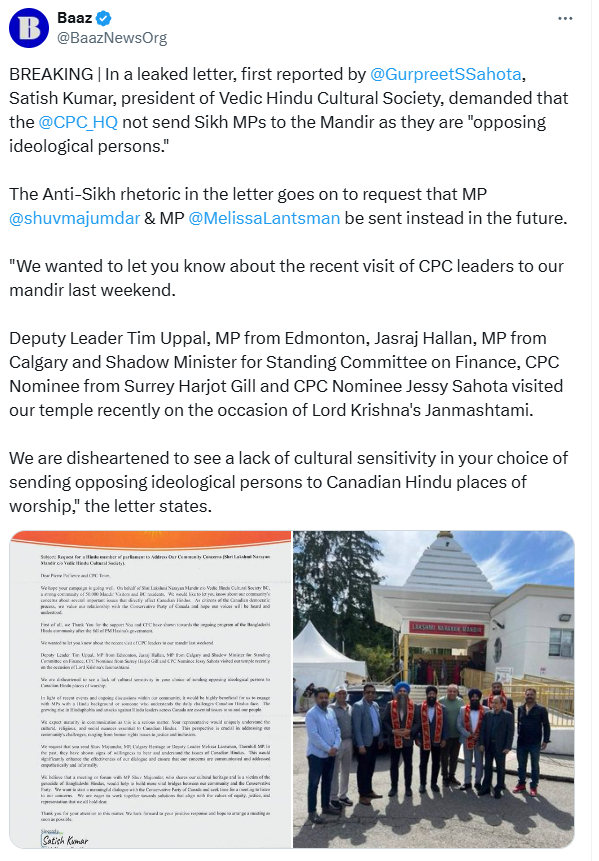
The letter from the popular Lakshmi Narayan Mandir (Hindu temple) based in Surrey (BC), signed by Mandir president and community figure Satish Kumar, was sent to Pierre Poilievre and leaked to Sikh journalist Gurpreet Singh Sahota. It stated the attendance of Sikh MPs to a community event “disheartened” the Mandir representatives.
Image

The letter referenced a visit by Jasraj Hallan, Edmonton MP and Shadow Minister for Standing Committee on Finance, Harjot Gill (MP candidate for Surrey), Jessy Sahota (MP candidate for Delta), and even CPC Deputy Leader Tim Uppal (MP for Edmonton Mill Woods). It claimed that the Sikh reps of the CPC would not be able to relate to issues of “Hinduphobia” and that their presence showed “a lack of cultural sensitivity” from CPC.

It went on to request the attendance of Jewish Thornhill MP Melissa Lantsman and Shuvaloy Majumdar, MP of Calgary Heritage, suggesting they would be better placed to address “daily challenges Canadian Hindus face”. Many Sikhs view Majumdar as a political figure who parrots Indian nationalist rhetoric around Sikhs and critics of India’s current regime under Narendra Modi’s BJP Party.

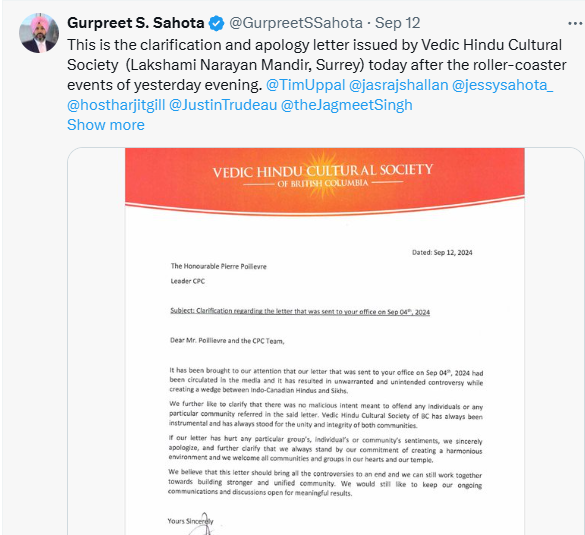
The letter underlines growing concerns of anti-Sikh hatred in Canada, which comes not just from white supremacist groups but also Hindutva (Hindu extremist) followers. However, the next day, in what Baaz News described as a “panic” due to the leak, the Mandir released another letter to “apologize” and claim there was no “malicious intent” behind it.
Speaking on the leaked letter, Sikh Press Association Senior Press Officer said:

“The suggestion by a Hindu leader that Sikh CPC reps are not welcome to discuss relevant issues with the Hindu community is an incredibly provocative and revealing statement. Within Indian nationalist and Hindutva philosophy, there is an idea that Sikhi is part of the Hindu faith, and the communities are one-and-the-same. Despite the fact the massive majority of Sikh groups reject this and view it as an attempt to coopt the Sikh faith, it is an idea which many Hindu groups continue to push. It is also used to attack the Khalistan (free Sikh homeland) movement, by suggesting those who support it are not separate from this imagined Sikh-Hindu unity.

“So for this Surrey Mandir led by Satish Kumar to seemingly attempt to pressure CPC into not sending its Sikh reps to their Mandir, this can really only be seen as means to attack and sideline the growing presence of CPC Sikhs.

“This will also prompt further concerns about a long-running connection between Indian nationalists and the CPC, which is currently being pushed by Hindu extremist figures like Major Gaurav Arya, who suggests the party must be supported to allow India to target Khalistanis and Sikh critics of India.”

The CPC’s link to Indian State interference is continually being raised by various Canadian political commentators, including through a recent report by Press Progress.

Calling Sikhs political reps in Canada (and the UK and beyond) “Khalistanis” as a pejorative to deter them from speaking out about India’s human rights abuses is a long used tactic of supporters of the Hindutva Indian nationalist agenda.

A national election is set to take place in Canada by the end of 2025, with campaigning for it heating up every week.
Tim Horton’s murder sees focus on “increase in violent attacks against Sikhs in Canada”

Liberal Party MP Sukh Dhaliwal amplified concerns of anti-Sikh hate crimes today, after the murder of a 22-year-old Sikh man in a randomly targeted murder in Edmonton (Alberta) as he worked at his job at a coffee shop.

Jashandeep Singh, an international student in Canada for just eight months, was working at a Tim Horton’s in a parkade in Edmonton downtown,101 Street and 102 Avenue, when delivery driver 40-year-old Edgar Wesker attacked him around midday (4th September) with what is believed to be boxcutters (stanley knife), resulting in the 22-year-old’s death.

Wesker has now been charged with second degree murder. Anyone with information about what happened can call Edmonton Police at 780-423-4567. As of yet, the police have not revealed any motive. The murder is also being investigated by Occupational Health and Safety officials.

However, MP of Surrey-Newton (BC) Sukh Dhaliwal addressed the attack with the statement on anti-Sikh hate crimes in Canada, amid growing beliefs of a serious rise in anti-Sikh hate across the country.

Despite these concerns about anti-Sikh hate crimes, Edmonton Police have stated there are “no additional concerns for public safety at this time”, in a comment which many Sikhs would disagree with. Just two months ago police confirmed a violent anti-Sikh hate crime took place in Peterborough (Ontario).

The arrest of a Chilliwack woman for a hate campaign was also partly focused on Sikhs. Both crimes were driven by white supremacist ideology. Online anti-Sikh hate in general has increased, and anecdotal reports of the sentiment reflecting in real life have also been reported.

In recent months, right-wing pseudo-media figures and news outlets have been accused of demonizing the Canadian Sikh community, capitalizing on an online Indian nationalist bot army which amplifies such rhetoric. Fanatical Hindu extremist Major Gaurav Arya is also leading Indian nationalist calls to influence Canada’s right-wing to become more anti-Sikh, an agenda which is entwined with pushing support for Conservative leader Pierre Poilievre.

Anti-Sikh hate can be reported to Canadian Sikh advocacy org the World Sikh Org.

Tim Horton’s – one of Canada’s biggest franchises which employs thousands of Sikhs – has yet to release a statement on the murder of one of its employees.

Western Australia Police confirm investigation into beadbi (sacrilege) incident

UPDATE:

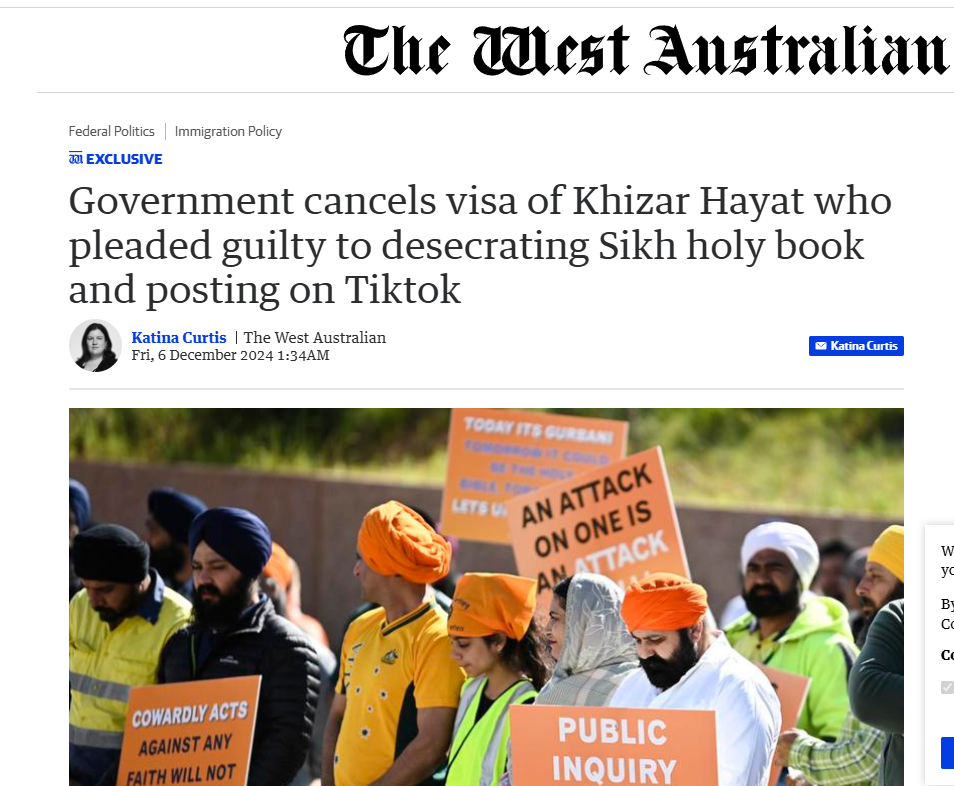
Perpetrator gets deported.

UPDATE:


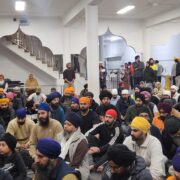
Western Australia police have confirmed they are looking into a shocking incident of beadbi (anti-Sikh religious sacrilege) in Perth (Western Australia) which has caused global outrage.

The incident was filmed by the perpetrator, with the video finding its way into Sikh circles via tik-tok and whatsapp last week. It depicted a man burning GurBani (Guru’s Word: Sikh scripture) and carrying out other incredibly disrespectful acts on a Gutka Sahib (small composition of GurBani) outside and inside a Gurdwara, which Sikh PA will not detail.


GurBani is sacred to Sikhs, with any written form of it expected to be treated with the utmost respect, whilst GurBani is also forbidden from being used decoratively (whether on decoratively material or as a tattoo or other), to preserve its sanctity. Guru Granth Sahib Ji, the full composition of GurBani, is considered the Sikh scriptural Guru and to be treated with very specific regal protocol.

The act of hatred clearly attempting to enflame and provoke Sikh communities has prompted global outrage and immediate reactions from both Australian Sikh groups and local authorities. According to on-the-ground sources speaking with Sikh PA, thus far, investigations coordinated between Australian sevadaars (selfless servants) and Western Australia Police have revealed:

  • The Gurdwara in the video is Gurudwara Sahib Canning Vale (Perth)
  • The video’s release came a long while after (at least weeks) it was recorded
  • The original video also included parts recorded in India
  • A name tagged in the video is believed to be a reference to an Australian Sikh activist, in an attempt to antagonise them
  • It is believed (but unconfirmed) the video was posted online in Germany

Australian Sikhs have been the target of an aggressive anti-Sikh Hindu extremist-Indian nationalist campaign in recent years, due to widespread Sikh criticism of India’s current far-right regime under Narendra Modi and previous anti-Sikh incidents, such as India’s 1984 #SikhGenocide. Hindu and Indian nationalist groups have reacted aggressively online and in real life towards Australian Sikhs raising these human rights abuses of India.

Last year Australian Sikh orgs released a joined statement about this issue, following propaganda attempting to malign Sikhs, even going so far as to begin a petition to have Sikhs “deported” and Sikh practices “banned” in Australia. In 2022, one volunteer of Turbans 4 Australia was brutally attacked by Hindu extremists for being involved with the org which is critical of India, where Sikhs are just 2% of the population

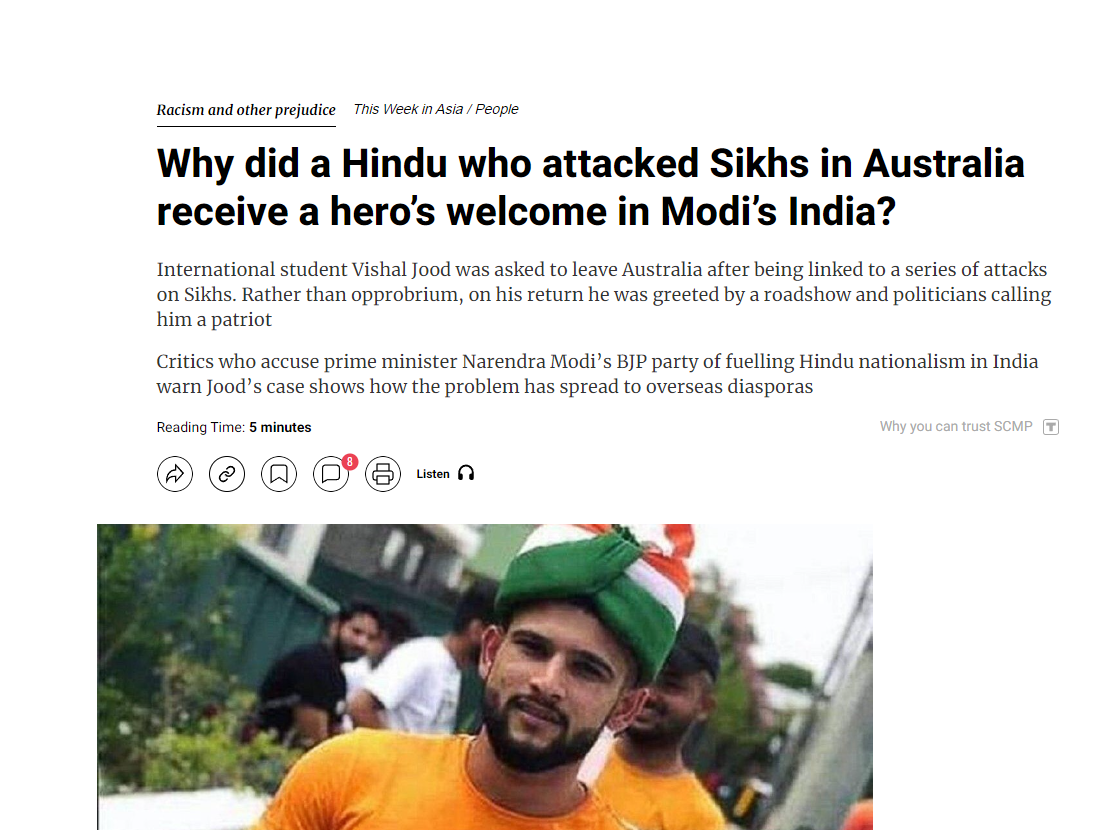
The incidents continue dating back, with the most infamous arguably being the case of Vishal Jood, who was deported from Australia in 2021 for leading a Hindu extremist gang targeting Sikhs. Jood received a heroes welcome back in India. Similar issues are apparent in Canada, the USA and Australia. Many other incidents underlining Australia’s anti-Sikh Hindu extremist issue have surfaced, including the arrest of two Hindu men found to be carrying knives near a Sikh space, with police citing they had ““intent to commit indictable offence”.

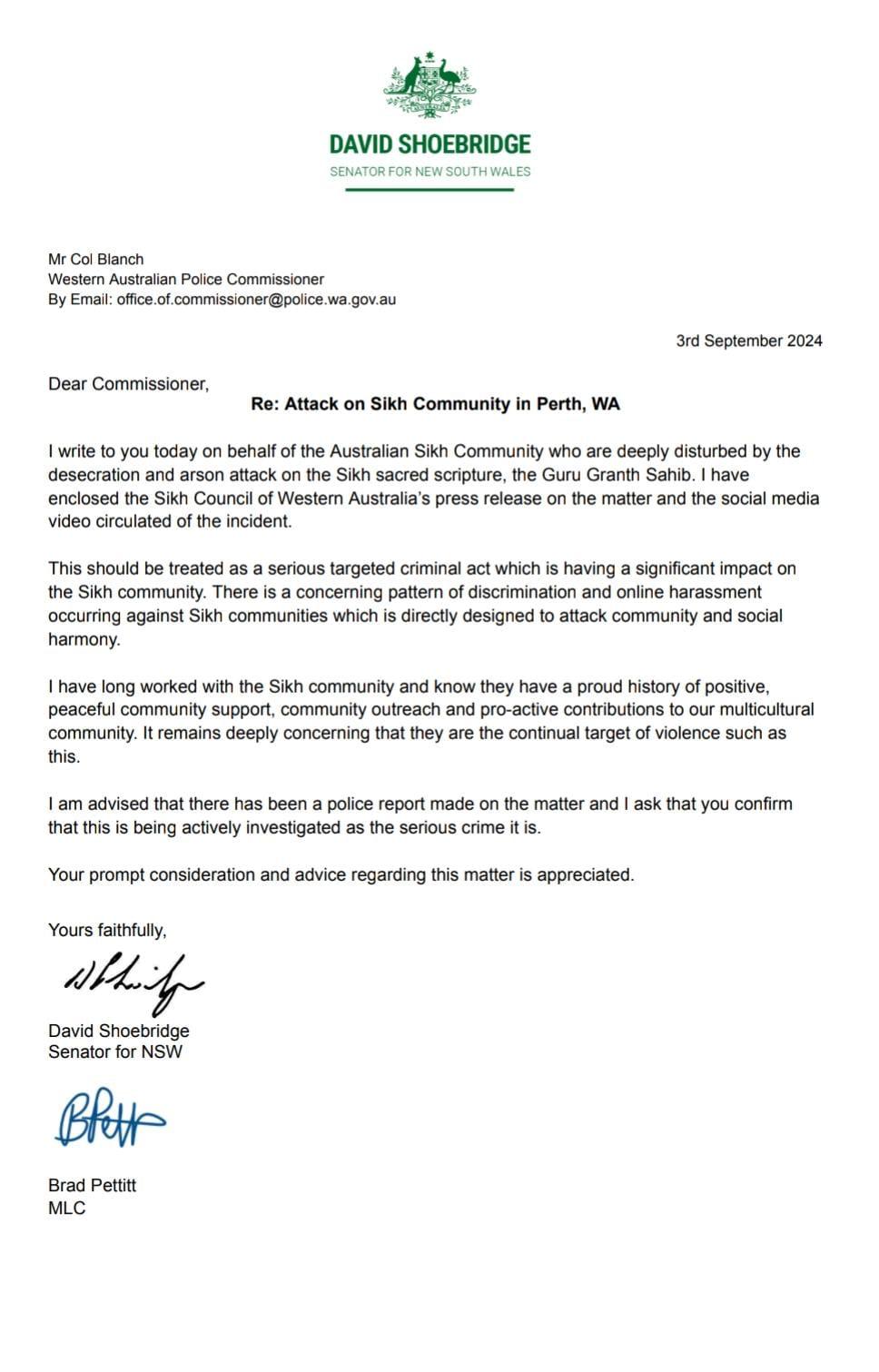
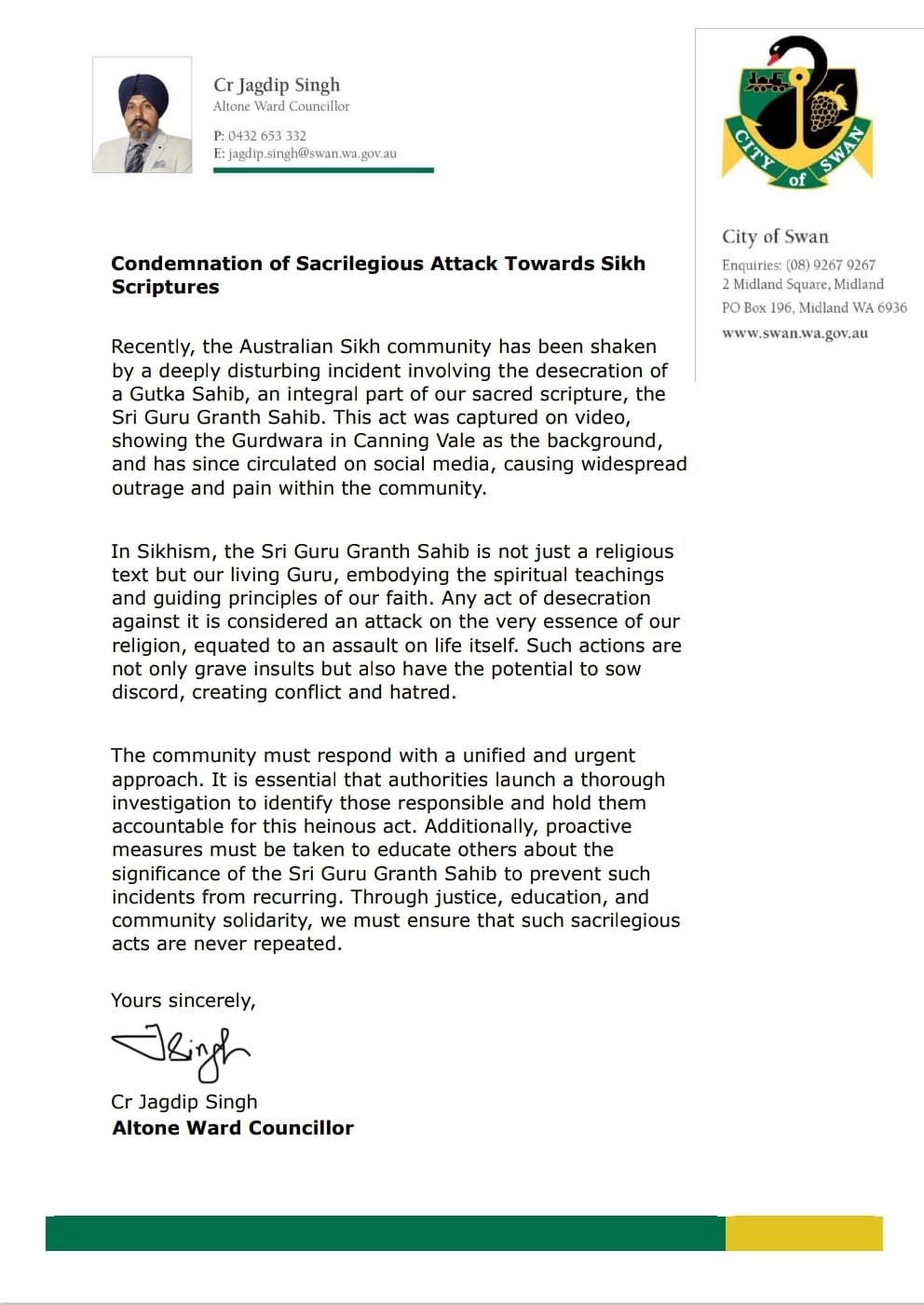
Ongoing meetings are happening across Australia as efforts to counter anti-Sikh hate in the country continue, seeking urgent action, with support from Australia’s Green Party, led by respected MP David Shoebridge who has long been engaged with the community. Shoebridge released a public letter sent to the Western Australia Police Commissioner to urge the incident “be treated as a serious targeted criminal act”. Local Sikh councillour Jagdip Singh also said “The community must respond with a unified and urgent approach” in a statement.

These statements came prior to a release from WA Police, which confirmed the matter is being investigated.

Image

Legal advocacy charity UNITED SIKHS have also spoken against the incident and confirmed legal support to ensure the case is adequately looked into.

Updates on this story will be provided as they surface.

Media inquiries- media@sikhpa.com.

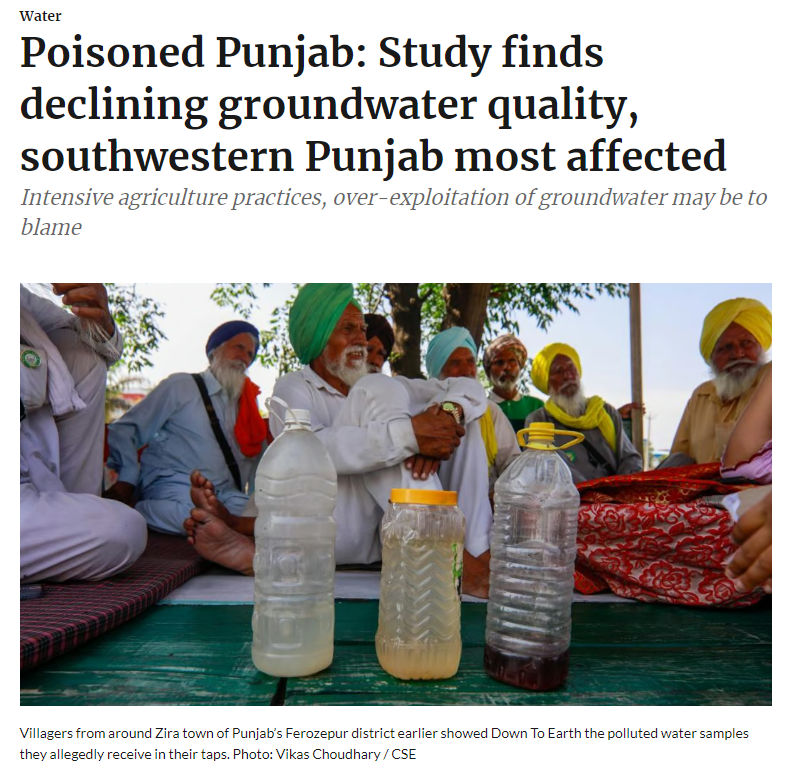
Sikh-led movement aims to tackle Ludhiana “black water” pollution

The Kale Pani Da Morcha (Black Water Protest), an environmental protest led predominantly by Sikhs of Punjab,
has brought urgent attention to the severe pollution of the Buddha Dariya (Buddha Nullah/Nala) stream.

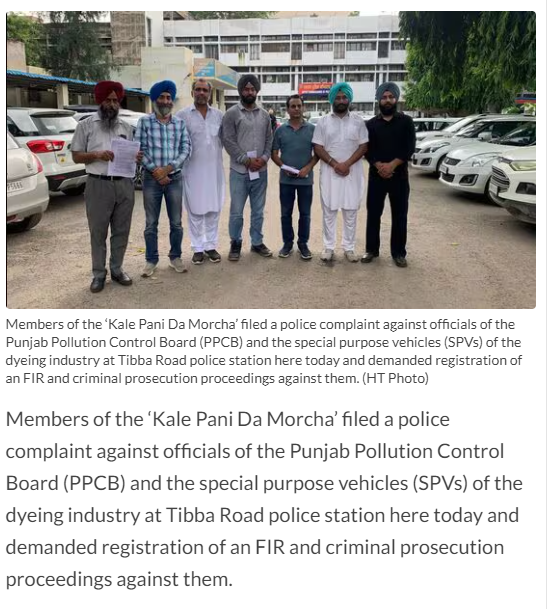
The latest move by the Kale Pani Da Morcha group has seen an official police complaint lodged against the Punjab Pollution Control Board (30th August), as activists demand prosecutions for the lack of action taken against corporations polluting the stream, which is connected to one of Punjab’s famous five rivers (the Sutlej river).

The movement, which officially began in early July but has now picked up more support, is not only a call for environmental justice, but also a challenge to the authorities who have long ignored the worsening crisis, which is blamed for spreading disease within communities of Punjab and Rajasthan. For decades, toxic waste has been seeped into the stream by surrounding industrial factories, which has severely contaminated the water of the 42km stream, posing serious health risks to locals as this is part of the water filtered for drinking and other use in local villages.

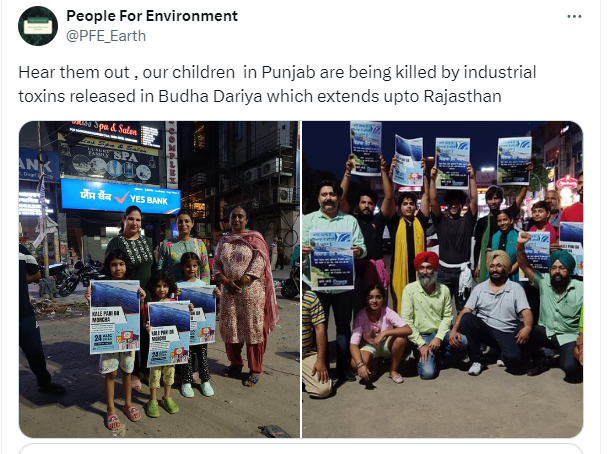
The protest, which gathered a large number of activists, environmentalists, and concerned citizens, saw a mass rally go through Ludhiana last week (24th August), highlighting the community’s determination to confront the ongoing pollution. Sikh leaders and activists have been at the forefront of this movement, advocating for the protection of Punjab’s water resources. Support for the movement has been garnered through emphasising how care of nature is an important part of Sikhi.

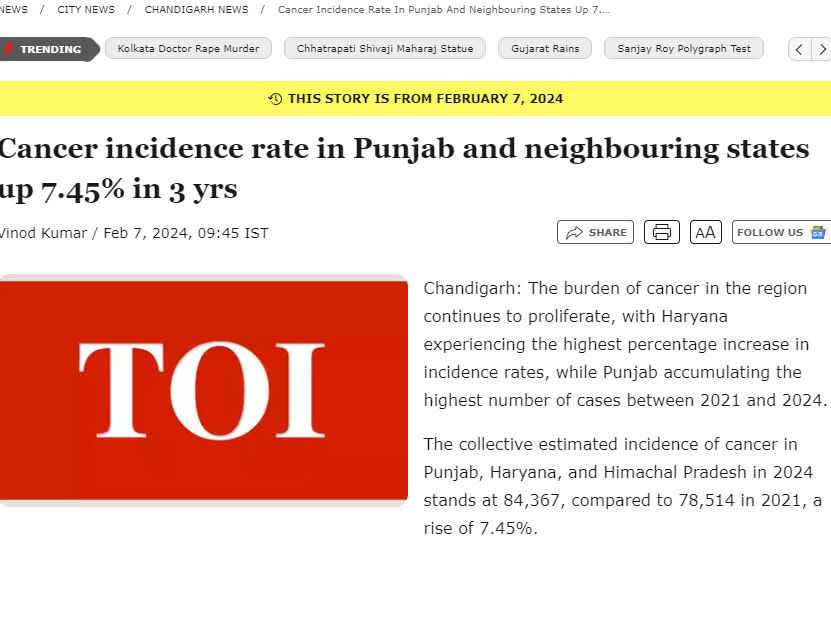
Punjab has historically been called “the cancer capital of India” due to a high rate of cancer cases, and the situation is worsening. There is evidence that the air and water in Punjab is being contaminated by factories and pesticide usage, and the consumption of this is severely impacting health.

The Sikh-led “Kale Pani Da Morcha” is not just about environmental protection; it is a call for accountability according to its leaders. The failure of the government to act decisively reflects a troubling disregard for Punjabi people’s needs in favour of corporate interests. The protesters are demanding that those who fail to act, including top officials and politicians, be held accountable and that resignations follow if they cannot fulfill their responsibilities.

Chief Minister Bhagwant Mann previously laid the foundation for a water treatment plant, a project that remains ongoing but as of yet inoperative. Currently, the streams remain polluted, and the public continues to suffer while leaders offer excuses and shift blame onto officers.

Member of Parliament Malvinder Singh Kang has publicly exposed confirmed violations by textile and dyeing industries which remain unchallenged. According to Kang, these industries have flagrantly disregarded environmental guidelines, contributing massively to the pollution of Buddha Dariya. Kang has also called for urgent action against officials who have failed in their duty to enforce regulations, questioning how long it will take for Punjab’s Chief Minister Bhagwant Mann to address the crisis.

As the protest continues to grow, the demand for clean water and responsible governance in Punjab becomes louder. The Kale Pani Da Morcha has issued a clear warning: if the government does not take immediate action within two weeks, the community will take matters into their own hands, including plans to shut down the toxic drain on the 15th of September.

The situation is a critical test for Punjab’s leaders, whose inaction could lead to severe consequences not only for the environment but also for their political futures. However, Sikh groups remain concerned that the demonstrations could lead to classic Indian State violent retaliation, to prevent further focus on the incompetency and corruption the government is accused of.

“Anti-Sikh” Indira Gandhi biopic “should be banned immediately” say leading Sikh body

Leading Sikh body the Shiromani Gurdwara Parbandhak Committee (SGPC) have released a statement calling for a new biographic film based on former India Prime Minister Indira Gandhi to be “banned immediately” for being “anti-Sikh”.

The SGPC made the statement (21st August) after recently released clips show Sikh characters as bloodthirsty terrorists attacking the Indian public. Indira Gandhi was famously assassinated in 1984 by her own bodyguards who are now revered Sikh Shaheeds (martyrs) for ordering India’s infamous attack on holy Sikh site Sri Harmandir Sahib.

The film “Emergency” (to be officially released on 6th September) depicts periods of Gandhi’s rule which includes when she declared “a state of emergency” across India in 1975 after she was convicted of election fraud. The film also covers her tyrannical overseeing of the beginning of India’s Sikh genocide, when India sent over 100,000 troops to Sri Harmandir Sahib in an effort to crush growing Sikh activism and dissent against India’s ruling regime in what became the “Battle of Amritsar”.

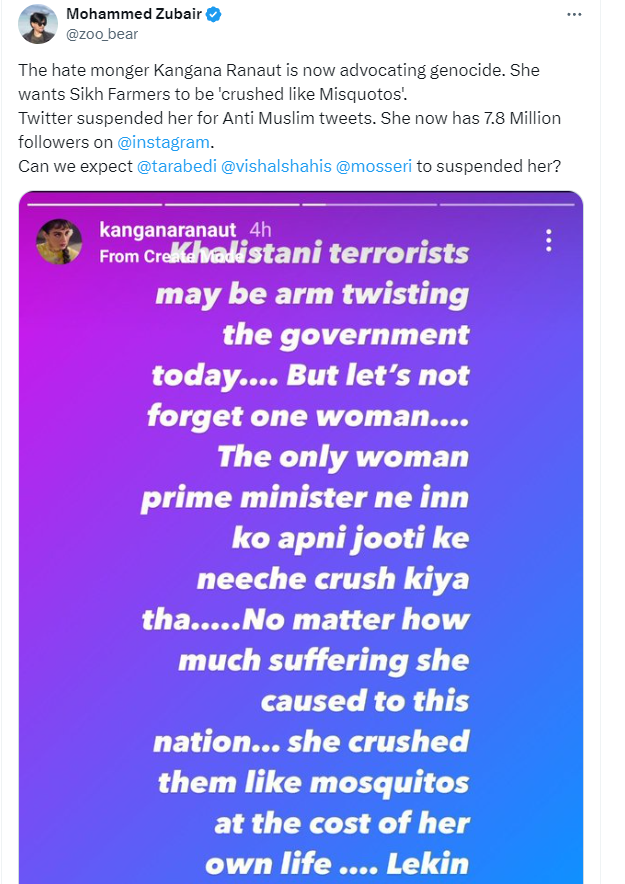
The film stars and is directed and produced by notorious anti-Sikh actor Kangana Ranaut, who has become known for spouting hate against Sikhs and Punjabis (those of Punjab, the motherland of Sikhi) since the 2020 #FarmersProtest. In their statement the SGPC call for Kangana – who plays Gandhi herself – to be cited with an FIR (First Incident Report – criminal report) for furthering hate against Sikhs, noting that “Kangana Ranaut has often deliberately made expressions that provoke the sentiments of Sikhs”.

The timing of the film’s release has also prompted comment from many Sikhs. There have been mass global Sikh efforts to mark the #SikhGenocide this year (2024), as it is 40-years since the 1984 Sikh Genocide. Thus, the release of a film glorifying its lead instigator is seen as efforts to whitewash Indira Gandhi as Sikhs continue to raise awareness of her most heinous act.

Reasons various other communities also feel the glorification of Indira Gandhi is hiding the truth of her tyranny include how she:

The SGPC statement, coming via President Harjinder Singh Dhami, also highlighted how a film on revered Sikh Shaheed (martyr) Jaswant Singh Khalra is facing issues in getting released in India due to its depiction of the state’s genocide of Sikhs, whilst this film faced no such barriers in projecting anti-Sikh sentiments. The statement ends with a call for India’s Central Board of Film Certification to include Sikhs as right now it is making “biased decisions” in favor of Hindu nationalist positions and not the minority Sikh community.

As build up to the film’s release continues, the situation is likely to yield more direct objections from Sikh groups across the world.

Media inquiries- media@sikhpa.com

Assassination attempt reported on US Sikh activist

Community political advocacy org Sikhs For Justice have reported there was a failed assassination attempt on a respected USA based activist who was an associate of Shaheed (martyr) Bhai Hardeep Singh Nijjar.

The incident occurred last week (11th August), involving volunteer organizer of the Khalistan (free Sikh homeland) Referendum Satinder Pal Singh Raju, whose vehicle was “sprayed with bullets” on interstate 505 near San Francisco, according to a release from Sikhs For Justice. A video of Raju’s vehicle shows bullet holes through a window and further damage in the interior. Raju escaped with no serious injuries.

Image

The shooting is the latest in a long series of assassinations and assassination attempts targeting Khalistan activists across the globe, including the failed assassination attempt of Sikhs For Justice General Counsel Gurpatwant Singh Pannun last year in New York and the shooting of the home of Brampton based activist Inderjeet Singh Gosal in February, shortly before another alleged assassination of a Khalistan Referendum organizer in Italy. Further incidents in India continue to point at a likely Indian State killing spree targeting Sikh critics by the far-right BJP regime.

The assassination of Shaheed Nijjar last year in Surrey (BC, Canada) triggered a major geopolitical fallout which has seen Canada, the USA and global intelligence network Five Eyes confirm issues of Indian transnational repression targeting Sikhs. The Indian State assassins of Nijjar are currently in the process of trial in Canada.

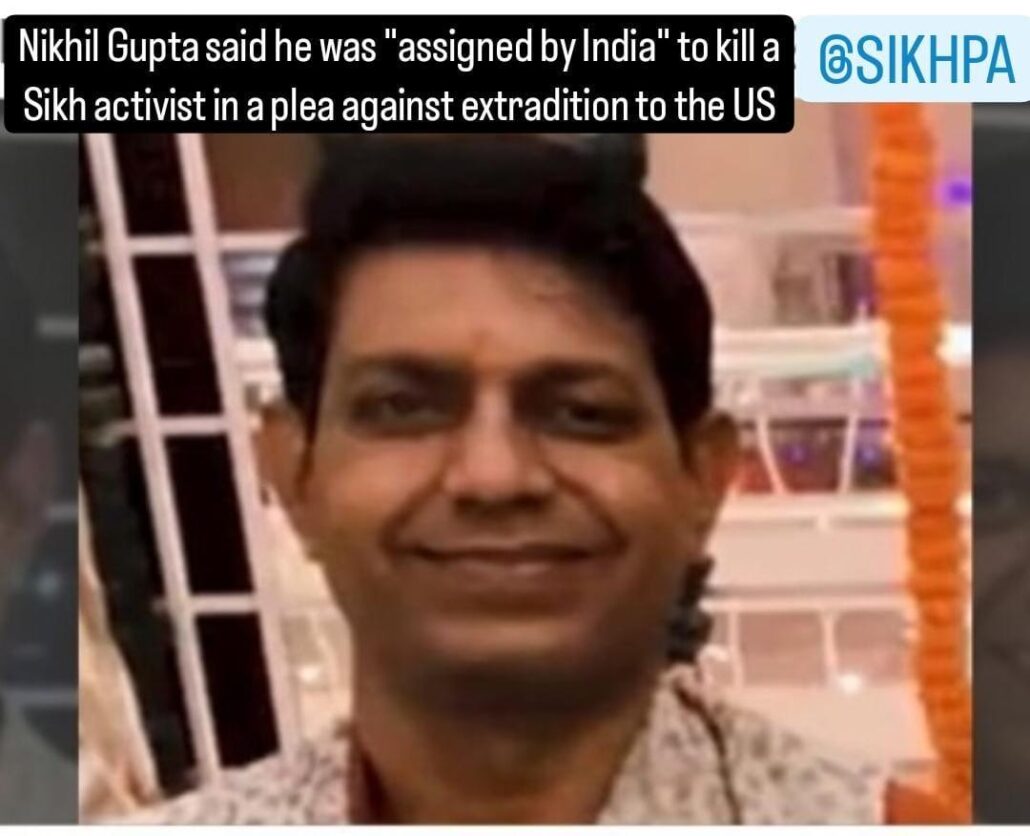
Indian State terrorist Nikhil Gupta is currently going through trial in the US for his role in the attempted murder of Pannun, and recently said in court that he was acting on a “mission assigned by the Indian government” in a plea for leniency.

Further adding weight to beliefs India is behind the targeting of the Sikh diaspora activists is the words of figures like Major Gaurav Arya, a military figure who has become the country’s leading source of intelligence and security issues of India. Last year Arya stated India are looking to pay “underworld…mafia” to attack Khalistanis in overseas countries. This kind of rhetoric has since been repeated and supported by major Indian State figures including Prime Minister Narendra Modi, Home Minister Amit Shah and Foreign Affairs Minister Rajnath Singh. Arya also recently said India are funding right-wing Canadian thinktanks and political parties in hope of using them to further target Khalistanis.

Most notoriously, Arya also said India would “eliminate” UK Sikh activist Shaheed Bhai Avtar Singh Khanda last year in May, just months before he died of suspected poisoning, in a case being dubbed England’s “Litvinenko Part 2”. The UK are yet to properly look into India’s transnational repression and interference in the country, despite other western nations doing so.

The Sikhs For Justice release details Raju’s extensive involvement in the organization of North American Khalistan Referendum events. The non-binding democratic referendum aims to offer diaspora Sikhs a chance to vote either for-or-against Punjab becoming a free Sikh homeland, something many major Sikh groups have officially advocated for since at least 1986. Sikhs For Justice have also held the referendum across Australia and Europe, with tens of thousands of participants in all events. Results of the referendum will be tallied and possibly presented to the United Nations, for support for a possible binding referendum in India.

Despite the democratic nature of the referendum campaign, India has banned it and designated the group – led by New York based lawyer Pannun – a terror outfit, a ruling which they cemented for at least the next five years just recently.

The attempted assassination will only intensify efforts from various Sikh groups including The Sikh Coalition USA to have US authorities immediately act on Indian interference and transnational repression.

Media inquiries- media@sikhpa.com

Parliament petition based on “Sikh belief” launched for “fresh inquiry” on Air India bombing

A petition calling for Canadian parliament to order a “fresh inquiry into Air India” (the 1985 Air India Kanishka flight bombing) has been sponsored by Liberal Party MP Sukh Dhaliwal on behalf of members of his Surrey-Newton (British Columbia) constituency.

The petition has been pushed by local media figure Gurpreet Singh who is a leading voice questioning the official narrative around the incident, echoing wider beliefs the Indian State was involved in the tragic massacre. Dhaliwal (MP since 2015) met with Gurpreet Singh about the petition on 30th July, before officially sponsoring it on 13th August. It is now available to sign on the official Canadian commons website.

As part of his official sponsoring of the petition, Dhaliwal signed off on statements including “The Sikhs in Canada widely believe that this was the handiwork of a foreign intelligence to discredit their political activism and undermine their advocacy work for human rights in India”.

Image

The 1985 Air India bombing is the biggest terrorist attack in Canada’s history. Whilst a mainstream narrative suggests it was carried out by Khalistanis (free Sikh homeland supporters), those accused of being involved have always denied this and the trial regarding the incident yielded obscure results. Many Sikh groups and activists have long stated the incident was a “false-flag” by the Indian State in an attempt to malign the Khalistan movement. It has also been noted such terrorism does not align with other openly celebrated acts of Khalistan resistance, which targeted individuals involved with the Indian State (politicians, police, army).

Reasoning behind beliefs the Khalistan movement was framed for the tragic act of terrorism has been intricately relayed by various Sikh figures, to the extent that many groups also openly call for reinvestigation into the incident, especially given ongoing revelations about Indian interference in Canada. The issue has even been raised by former Canadian diplomat Bhupinder Singh Liddar. Detailed long lists of discrepancies which point away from a simple “Khalistani act of terror” are the basis for the ongoing Sikh calls for the incident to be reinvestigated.

Image

The book “Soft Target” which explores the complexity of the Air India trial is also regularly referenced by Sikhs regarding the bombing, with many highlighting quotes from the book which relay Canadian intelligence belief of India’s involvement.

Panth (Sikh community/path) focused news outlet Baaz also confirmed earlier this year that RCMP (Royal Canadian Mounted Police) say their investigation into the bombing is still open.

Depending on the amount of signatures the petition receives, an official inquiry and reinvestigation may gain official parliamentary support by next year, when it will be the 40th anniversary since the tragic incident. The petition closes on 11th December.

Sikh NY cab driver arrested for kirpan “discrimination”

An Amritdhari (initiated) Sikh was arrested outside the JFK airport in New York (USA) for his kirpan (small sword, part of Amritdhari uniform) in a scene of religious discrimination.

The incident occurred on 2nd August, when Ruppenjot Singh, 23, was apprehended by New York Port Authority officers whilst waiting for customers at Terminal 4. Officers were allegedly called by a dispatcher (person employed to arrange rides for cab drivers) when he spotted Singh’s kirpan on his waist, as is normal for Amritdharis.

After calling police, the dispatcher allegedly then claimed Singh was threatening him with the kirpan, something vehemently denied by Ruppenjot who is welcoming examining video footage of his exchange with the dispatcher. Police asked Singh to remove his kirpan and hand it over to them, which he refused to do as per standard practice of Amritdharis, who are mandated never to be without any of the punj kakkar (five ks). Singh also later revealed he was asked to remove his dastaar (Sikh turban), something which many Sikhs will deem as unnecessary humiliation and bigoted.

Ruppenjot Singh, who is working as a driver to put himself through college, said the incident was “discrimination” in speaking to CBS reporter Naveen Dhaliwal.

Speaking with police, in a scene partially caught on what is now viral video, Ruppenjot Singh emphasized his right to wear the kirpan, for which there is legal precedent – specifically the 1987 case of People vs Singh – that established a Sikh’s right to lawfully carry a kirpan. Despite this, authorities still say Singh faces charges Singh of menacing, harassment, and criminal possession of a weapon, saying this was based on “a threat of violence” and not merely Singh wearing the kirpan.

New York based Sikh community advocate Japneet Singh has helped coordinate legal support and advice for Ruppenjot. Speaking to media, Japneet Singh said “We want a complete dismissal of the charge. Second, we need a way to mandate some kind of religious-based training of diversity-based training for Port Authority as well as other city and state agencies.”

Via social media, Japneet also said he was “disgusted…we need to fight for our existence”, whilst calling on New York Mayor Eric Adams and other senior political figures of the city to intervene in the situation.

A “Rapid Response Call To Action” meeting was held on 4th August in nearby Sikh Center Gurdwara in South Richmond Hill to address the issue. With Ruppenjot Singh due back in court on 22nd August, an update on this situation is incoming.

Media inquiries- media@sikhpa.com.

#FarmersProtest2020 icon reveals four-month torture ordeal amid #FarmersProtest2024

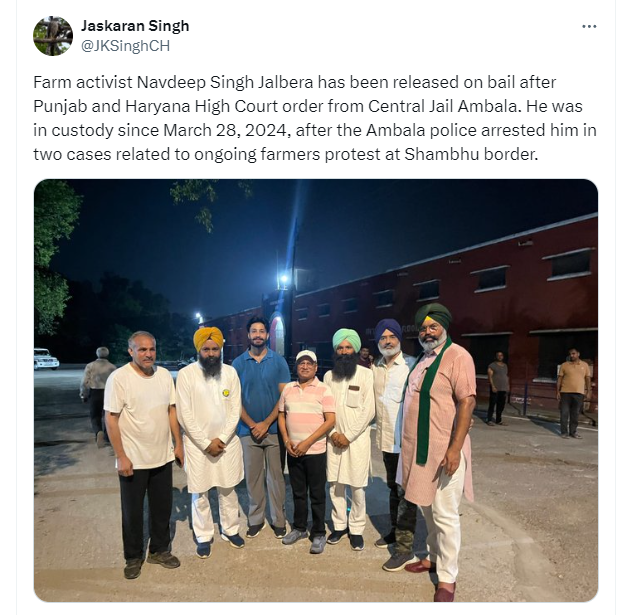
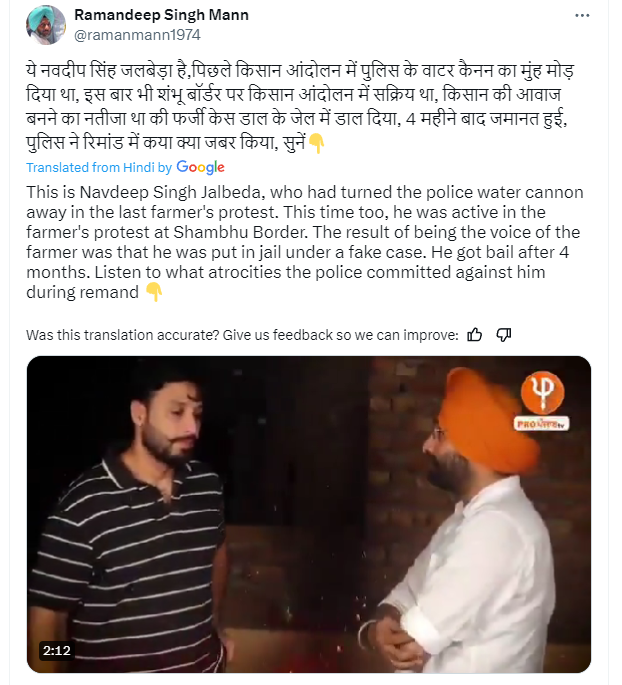
A globally renowned Sikh activist exposed the severe torture he experienced at the hands of the Indian authorities in an interview with Pro Punjab TV.

26-year-old Navdeep Singh, a farmer turned respected activist speaking on Punjab’s rights, hailing from Ambala, was hailed as a hero after a video of him turning off a police water cannon during the 2020 Farmers Protest went viral. He was arrested on the 28th of March 2024, even though he performed his celebrated act the 25th of November 2020. After four months without trial, he was released on bail on the 16th of July 2024.


Within two days of being released on bail, Navdeep Singh spoke out about the torture he had experienced. This included officers forcibly removing his turban and clothes, holding his head under water so he could not breath and threatening the lives of his family members. Singh also reported being tied to a chair and having weight put on his legs to force them apart, making him unable to stand for hours and leaving Navdeep Singh thinking he was going to die.

The authorities asked him why he was being such a hero, and who was paying him, seizing
access to his accounts. Several members of the Indian authorities, from the NIA, CID and others, were complicit in
this torture, including Police inspector Harjinder Khehra according to local reports.

Navdeep Singh is currently on bail for two cases, but because of his heroic actions during the protest he has consistently been harassed and charged by the police. When the incident first occurred during the Farmers Protest 2020, Navdeep Singh was charged with attempt to murder. He, along with Bharatiya Kisan Union (BKU) president Gurnam Singh Chaduni, were accused of breaking police barricades and attempting to run over policemen with a tractor trolley.

Additionally, Navdeep faced charges of violating COVID-19 norms. These charges were based on a complaint from head constable Pardeep Kumar and included sections for rioting, unlawful assembly, obstructing public servants, and
negligent acts likely to spread infection.

The FIR claimed that some police officers narrowly escaped being run over by tractors. Navdeep’s actions, which were captured on camera, included jumping off his tractor to turn off the water cannon and then being chased by a policeman, contradicting police statements. He then managed to escape back to his tractor.

The incident drew widespread criticism on social media regarding the treatment of the
farmers, with major political figures like Arvind Kejriwal, Rahul Gandhi, Priyanka Gandhi, and
Capt Amarinder Singh speaking on Navdeep Singh’s case, which is cited as yet another story of the persecution of a Sikh activist rendered into a political prisoner.

You can read more about the Farmers Protest 2020 here, and see how this has developed
into the Farmers Protest 2024 here.

Slough Council veto transnational repression motion, locals outraged and “misrepresented”

Slough (Berkshire, UK) Council vetoed a motion calling on them to raise concerns about Indian anti-Sikh transnational repression last week, visibly angering locals and prompting a statement from Slough Singh Sabha Gurdwara management about being “misrepresented” through the process.

The decision – based on the motion which also included recognition of the 1984 Sikh genocide and the arbitrary imprisonment of Jagtar Singh Johal – came during a public meet on the motion on 25th July, after it was tabled the week earlier by Slough Councillors Waqas Sabah and Sabia Akram, both of whom who are independent after quitting the Labour Party in June in wake of “disillusionment” around the party’s position on the Gaza Genocide by Israel.

The incident saw shouts of ‘If they are murdered it is your fault” and chants in support of Khalistan (free Sikh homeland) after Conservative council leader Dexter Smith refused to allow the motion go to debate, referencing a petition signed by just 57 people that branded the motion “divisive“. At least one signatory claimed to be signing the petition as a representative of Slough Singh Sabha Gurdwara. During the meeting, Councillor Smith claimed regarding the motion, “it sounds anti-Sikh, anti-Indian, or even anti-Indian government.”

Sources have revealed to Sikh PA that at least one of the figures involved in the petition is also involved with pro-India advocacy and has business ties in India, something seen as a conflict of interest which can often be a barrier towards reflecting authentic Sikh sentiment around India’s human rights abuses. On-the-ground reports from Sikh activists have previously revealed how these relationships can be used to manipulate Sikh figures into speaking against community sentiment which is critical of India. Note- in order to avoid personally branding any individuals responsible for this outcome, Sikh PA will not be sharing details of those with these links on this occasion.

The original motion was widely supported, as seen with letters of support from the likes of Guru Nanak Gurdwara Smethwick and the Federation of Sikh Orgs.

Image

Councillor Akram attempted to push back against the move to dismiss the motion, saying “We as councillors are duty-bound to raise and demand answers on behalf of our citizens” in relation to raising “The fact that security agencies have contacted families in Slough where two members and their families – British citizens – lives’ are at risk”.

Despite this, representatives of the Conservative Party and the Liberal Democrats both voted against the motion being debated, whilst several Labour reps – including Sikh councillors – abstained, leading to the debate being dismissed and thus the motion not going through, much to the ire of Sikh locals. Only non-Sikh councillors – most of whom were part of the delegate which resigned from Labour – supported the motion. As attendees shouted regarding the outcome, the meeting was temporarily cancelled before starting up again.

See a full video of it here.

The disdain saw some Sikh groups go as far as calling these Sikh Labour reps “traitors”. The strong sentiment against the motion partly comes from concerns about targeting of the Sikh community by the Indian State, as seen with the assassination of Shaheed (martyr) Hardeep Singh Nijjar in Surrey (BC, Canada) last year.

Two local Sikh activists, prominent supporters of the Khalistan (free Sikh homeland) movement named as Kamaljit Kaur and Gurcharan Singh have been linked with being targets of the Indian State’s ongoing anti-Sikh transnational repression campaign.

Following the outcome, the Sikh Federation highlighted how Councillor Smith’s decision to dismiss the motion was criticised by his fellow Conservative rep Adil Iftarkhar, before going on to say an “amended” motion would be re-tabled, whilst also offering advice on future such motions.

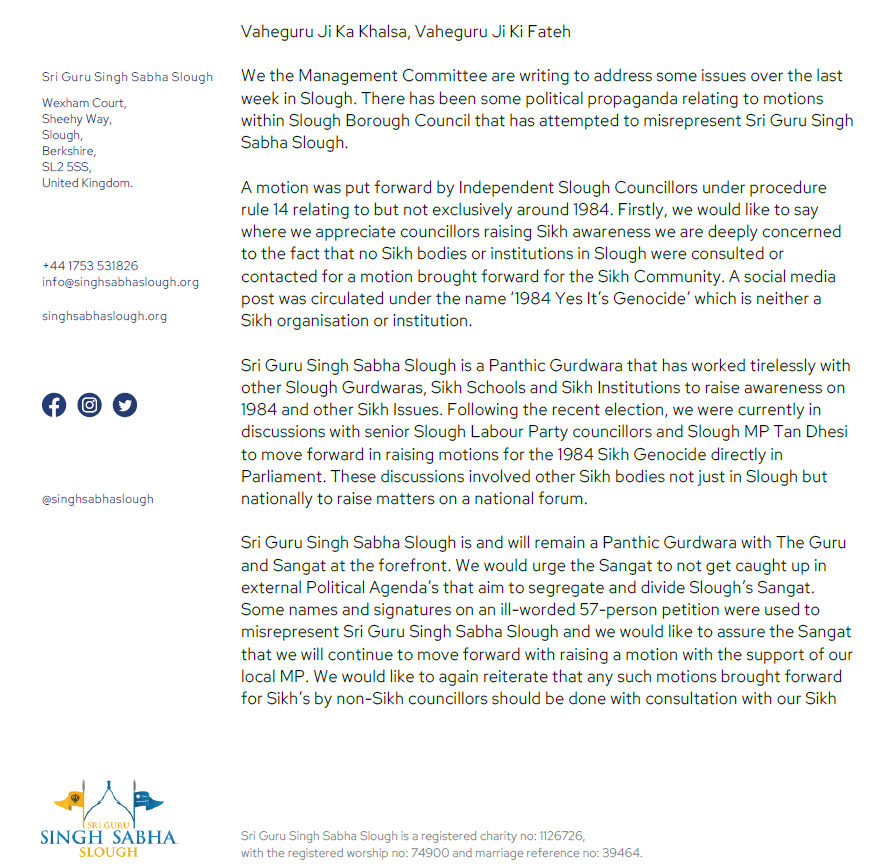
However, post the dismissal of the motion, Singh Sabha Slough Gurdwara Slough released a statement which stated they are “deeply concerned” to not be consulted for the motion, which came about directly from sangat (Sikh congregation) engagement with Councillors Akram and Sabah.

In perhaps the most revealing part of the Singh Sabha Slough statement, the Gurdwara management said “we were currently in discussions with senior Slough Labour Party councillors and Slough MP Tan Dhesi to move forward in raising motions for the 1984 Sikh Genocide directly in Parliament.” The statement goes on to call the petition against the motion “ill-worded” which was used to “misrepresent” Slough Singh Sabha.

A local insider who wished to remain anonymous said to Sikh PA about the fallout, “The sentiments of the local Sikhs behind the motion on this occasion came second to efforts to consolidate the Labour Party’s power in Slough, which Labour’s Sikh reps are supporting. These independent councillors who left Labour as seen as a threat to the party, especially in wake of the general election which saw seats that Labour were favourites for won by independent Muslim candidates, working largely on foreign policy issues to do with Gaza. Labour are concerned this could translate into something similar with Sikh sentiments regarding India, and thus they are trying to stop this at its root, which is in local council affairs such as what we saw with this incident.

“The idea in theory could be right. There is a strong Sikh presence in modern Labour, and channeling community efforts through them could be seen as a great way to further (Sikh community/path focused) influence in government. However, some Sikh orgs believe this will not be the case and Labour will simply not fulfill the expectations of Sikhs as they are posturing to do.

“Now then, many Sikhs will be anticipatedly waiting on both the retabling of such motions in Slough, but also other promises by Labour regarding Sikhs, such as the promise for an independent inquiry into the UK’s role in the 1984 Sikh genocide. But after the recent Labour u-turn around Jagtar Singh Johal, Sikh communities are growing increasingly concerned about how the party represents such issues.”

A new motion is expected to be tabled before the end of 2024.

Media inquiries- media@sikhpa.com.